
保境安民

Search documents
保俶塔下忆千年
Xin Lang Cai Jing· 2026-02-05 23:23
Core Viewpoint - The article reflects on the historical significance of the Baoshu Tower and the choices made by Qian Chuo during the Five Dynasties and Ten Kingdoms period, emphasizing the importance of peace and unity in Chinese history [1][2][3][4]. Historical Context - The Baoshu Tower symbolizes the historical struggles and aspirations of the people during a time of chaos, representing a deep-rooted desire for stability and peace [1][2]. - The era of the Five Dynasties was marked by fragmentation and conflict, with the common people suffering greatly from wars and instability [1][2]. Qian Chuo's Contributions - Qian Chuo's decision to submit to the Song Dynasty was a significant act that prioritized the welfare of the people over personal power, showcasing a commitment to peace and unity [2][4]. - His governance in the Jiangnan region focused on agricultural development and the well-being of the populace, contrasting sharply with the prevailing violence of the time [2]. Lessons from History - The article suggests that understanding historical struggles is essential to appreciating the value of peace and the necessity of unity in contemporary society [3][4]. - The narrative of Qian Chuo serves as a reminder that true strength lies not in military might but in the ability to unite and care for the people [4].
钱氏家族为何选择“纳土归宋”?兵不血刃而天下安
Xin Lang Cai Jing· 2026-01-27 11:36
Core Viewpoint - The historical drama "Tai Ping Nian" focuses on the late Five Dynasties period, highlighting the story of Qian Hongzhu, the last ruler of the Wuyue Kingdom, and his policies that led to a peaceful integration into the Song Dynasty, providing a significant perspective on this tumultuous era [1][9]. Group 1: Historical Context - The Five Dynasties and Ten Kingdoms period was marked by significant political fragmentation and military conflict, with numerous regional powers emerging amidst the chaos [1]. - The Wuyue Kingdom, established by Qian Liu, began during the turmoil of the late Tang Dynasty and lasted for 72 years, characterized by a pragmatic governance style that emphasized stability and economic development [5][10]. Group 2: Governance and Policies - Qian Liu's governance philosophy focused on "serving the Central Plains as the legitimate authority" and "protecting the territory and ensuring the welfare of the people," which laid the foundation for Wuyue's stability and prosperity [5][9]. - Under Qian Hongzhu's leadership, the Wuyue Kingdom maintained social stability and economic prosperity, becoming one of the most densely populated and economically developed regions of the time [7]. Group 3: Integration into the Song Dynasty - The decision to integrate into the Song Dynasty, known as "Na Tu Gui Song," was a calculated political move by Qian Hongzhu, aimed at preserving the welfare of his people and avoiding conflict [9][10]. - This integration was marked by Qian Hongzhu's submission of territories and military forces to the Song, which was seen as a strategic choice to ensure the survival of his dynasty and the well-being of the populace [8][9]. Group 4: Legacy - The Qian family continued to thrive in the Song Dynasty, producing notable figures and maintaining a prominent status, reflecting the long-term benefits of their peaceful integration [10]. - The history of the Wuyue Kingdom serves as a microcosm of the Five Dynasties period, illustrating the importance of internal development and external pragmatism for the survival of regional powers [10].

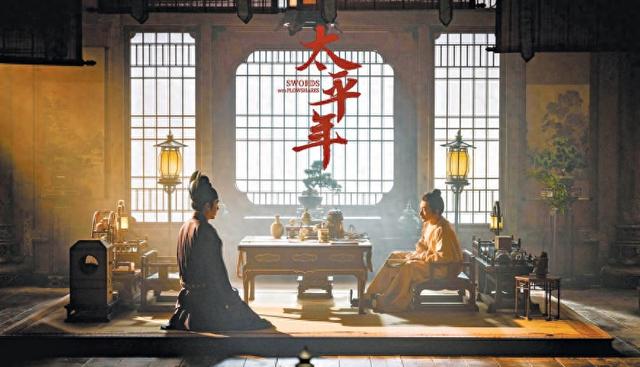
太平年钱弘俶纳土归宋
Xin Lang Cai Jing· 2026-01-24 05:12
Core Viewpoint - The upcoming historical drama "Tai Ping Nian" focuses on the late Five Dynasties period, highlighting the story of Qian Hongzhu, the last ruler of the Wu-Yue Kingdom, and his policies aimed at peace and stability during a time of chaos [1] Group 1: Historical Context - The Five Dynasties and Ten Kingdoms period was marked by significant political fragmentation and instability in China, with rapid changes in dynasties and numerous regional powers emerging [1] - This era, characterized by military rule and conflict, also served as a transitional phase for economic and cultural development, ultimately leading to opportunities for unification [1] Group 2: Key Figures and Contributions - Historian Tao Maobing has extensively researched the Five Dynasties period, producing works that provide a comprehensive view of the social landscape during this time [1] - His book "Luan Shi Li Ge: Five Dynasties History Overview" offers insights into the political, economic, and cultural aspects of the era, as well as the interactions with surrounding ethnic groups [1] Group 3: Significance of Wu-Yue Kingdom - The Wu-Yue Kingdom, under the Qian family, is portrayed as a model of peaceful unification without bloodshed during the tumultuous Five Dynasties period [1] - Qian Hongzhu's governance strategy, which emphasized "protecting the territory and ensuring the people's safety," is highlighted as a significant approach to maintaining stability [1]