
五代十国

Search documents
应警惕《太平年》式的“智慧”
虎嗅APP· 2026-02-19 09:20
Core Viewpoint - The article discusses the success of the drama "Tai Ping Nian," highlighting its unique narrative style and the historical context it portrays, while also critiquing its approach to storytelling and character development [5][22]. Summary by Sections Historical Context and Themes - The drama "Tai Ping Nian" reflects on the tumultuous period of the Five Dynasties and Ten Kingdoms, emphasizing the struggles and aspirations of people living in chaotic times, which resonates with modern audiences [6][12]. - The narrative explores the duality of peace and chaos, showcasing the fragile nature of stability in the Wu-Yue Kingdom amidst external threats and internal conflicts [12][13]. Narrative Techniques - The show employs a dual narrative structure, contrasting the chaotic power struggles in the central plains with the seemingly stable yet internally conflicted Wu-Yue Kingdom [12]. - The use of "strange history" and "strong stimulation" in storytelling captures audience attention, making historical events feel fresh and engaging [8][9]. Character Development - Key characters like Feng Dao and Zhang Yan Ze are designed to embody the themes of the narrative, but their development raises questions about coherence and depth in storytelling [11][14]. - The portrayal of historical figures is critiqued for being overly simplistic, reducing complex historical events to personal relationships and moral choices [16][17]. Critique of Artistic Approach - The article warns against the superficiality of the drama's success, suggesting that it prioritizes entertainment over meaningful historical representation [19][20]. - It highlights the danger of creating a narrative that sacrifices historical accuracy for dramatic effect, leading to a diluted understanding of the past [21][22].

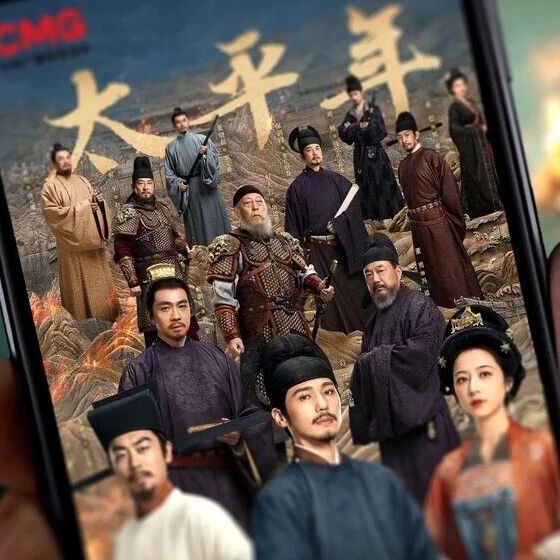
播客|《太平年》大结局,董勇谈冯道
Xin Lang Cai Jing· 2026-02-12 23:43
Core Viewpoint - The character Feng Dao, portrayed by Dong Yong in the historical drama "Tai Ping Nian," has sparked extensive discussion among viewers regarding his complex nature and ultimate fate in a tumultuous era [1]. Group 1: Character Analysis - Dong Yong was deeply impressed by the script and felt compelled to portray Feng Dao, emphasizing the character's significance in the historical context of the Five Dynasties and Ten Kingdoms [2]. - Feng Dao is depicted as a crucial figure who served under multiple emperors, with his role being essential for gaining public recognition [2]. - The portrayal aims to capture the essence of Feng Dao's soul rather than just his outward appearance, highlighting the depth of the character [2]. Group 2: Insights from the Actor - Dong Yong shared that the character's final outcome is interpreted as a "good ending," reflecting the complexities of survival in a chaotic world [2]. - He noted that the historical depiction of Feng Dao in records describes him as a thin individual, which contrasts with his own physical portrayal [2]. - The actor discussed the challenges of embodying a historical figure, including the physical transformations required for the role [2].
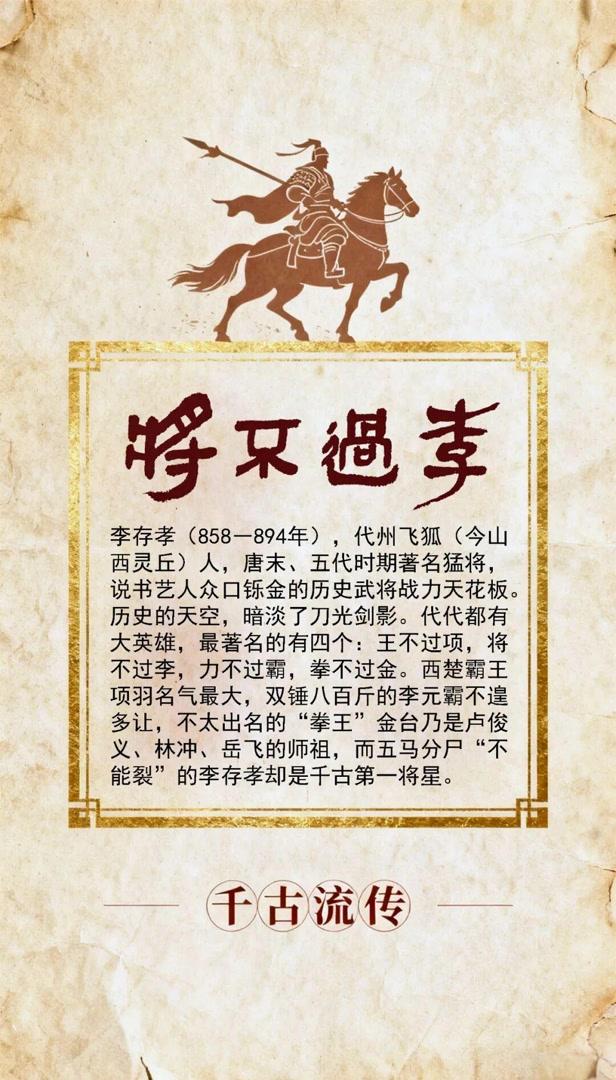
五代十国大传:李存孝悲歌(1)——真正的太平年
Xin Lang Cai Jing· 2026-02-10 11:50
Core Viewpoint - The narrative revolves around the life of Li Cunxiao, a legendary figure born during a tumultuous period, highlighting his struggles, growth, and commitment to protecting the people amidst chaos and suffering [1][2][3]. Group 1: Early Life and Struggles - Li Cunxiao was born into a difficult environment marked by war and hardship, with his mother, Deng, enduring significant suffering to raise him [1]. - After the death of his mother, Li Cunxiao faced the harsh realities of being an orphan in a chaotic world, struggling for survival while dealing with the dangers of wild animals and malevolent forces [2]. - Despite his young age, he exhibited remarkable courage and resilience, awakening a latent power within him that allowed him to confront threats like a fierce tiger [2]. Group 2: Growth and Development - Over the years, Li Cunxiao honed his physical abilities and awakened his celestial powers, becoming a formidable figure capable of defending the villagers from various dangers [3]. - His strength and skills grew to the point where he could perform extraordinary feats, such as moving heavy stones and defeating wild beasts, earning the respect and admiration of the local populace [3]. - Despite his power, Li Cunxiao remained humble, continuing to live simply and dedicating himself to the welfare of the people, often reflecting on his mother's teachings and his promise to protect the suffering [3].
《太平年》中“可供考据的历史肌理”
Xin Lang Cai Jing· 2026-02-04 09:12
Core Viewpoint - The historical drama "Tai Ping Nian" has gained popularity by vividly presenting the relatively lesser-known history of "Na Tu Gui Song," leading to increased public interest in the Five Dynasties and Ten Kingdoms period [1] Group 1: Historical Context - The Five Dynasties and Ten Kingdoms period is rich in cultural anecdotes, particularly those related to the founding monarch of Wu Yue, Qian Liu, who is the grandfather of the character Qian Hongchao in the drama [1] - Notable cultural references include the famous line "A sword frost cold across fourteen states," which praises Qian Liu's power and reflects on the political situation of the time [1] - Another poignant phrase, "Flowers bloom on the path, one may return slowly," originates from a letter Qian Liu wrote to his wife, expressing his longing for her during the spring season [1] Group 2: Artistic Representation - The drama features four significant "yellow robe ascension" scenes, including the ascensions of Liu Zhiyuan, Guo Wei, Zhao Kuangyin, and Qian Hongchao, with the latter being an artistic fabrication [2] - The artistic contributions of Southern Tang's last ruler, Li Yu, are highlighted, including his unique calligraphy style and his renowned painting "Han Xizai's Night Banquet," which captures the essence of ancient character portrayal [2] - As the series progresses, it remains uncertain whether Li Yu's poetry and the painting "Han Xizai's Night Banquet" will be featured [2]
钱氏家族为何选择“纳土归宋”?兵不血刃而天下安
Xin Lang Cai Jing· 2026-01-27 11:36
Core Viewpoint - The historical drama "Tai Ping Nian" focuses on the late Five Dynasties period, highlighting the story of Qian Hongzhu, the last ruler of the Wuyue Kingdom, and his policies that led to a peaceful integration into the Song Dynasty, providing a significant perspective on this tumultuous era [1][9]. Group 1: Historical Context - The Five Dynasties and Ten Kingdoms period was marked by significant political fragmentation and military conflict, with numerous regional powers emerging amidst the chaos [1]. - The Wuyue Kingdom, established by Qian Liu, began during the turmoil of the late Tang Dynasty and lasted for 72 years, characterized by a pragmatic governance style that emphasized stability and economic development [5][10]. Group 2: Governance and Policies - Qian Liu's governance philosophy focused on "serving the Central Plains as the legitimate authority" and "protecting the territory and ensuring the welfare of the people," which laid the foundation for Wuyue's stability and prosperity [5][9]. - Under Qian Hongzhu's leadership, the Wuyue Kingdom maintained social stability and economic prosperity, becoming one of the most densely populated and economically developed regions of the time [7]. Group 3: Integration into the Song Dynasty - The decision to integrate into the Song Dynasty, known as "Na Tu Gui Song," was a calculated political move by Qian Hongzhu, aimed at preserving the welfare of his people and avoiding conflict [9][10]. - This integration was marked by Qian Hongzhu's submission of territories and military forces to the Song, which was seen as a strategic choice to ensure the survival of his dynasty and the well-being of the populace [8][9]. Group 4: Legacy - The Qian family continued to thrive in the Song Dynasty, producing notable figures and maintaining a prominent status, reflecting the long-term benefits of their peaceful integration [10]. - The history of the Wuyue Kingdom serves as a microcosm of the Five Dynasties period, illustrating the importance of internal development and external pragmatism for the survival of regional powers [10].
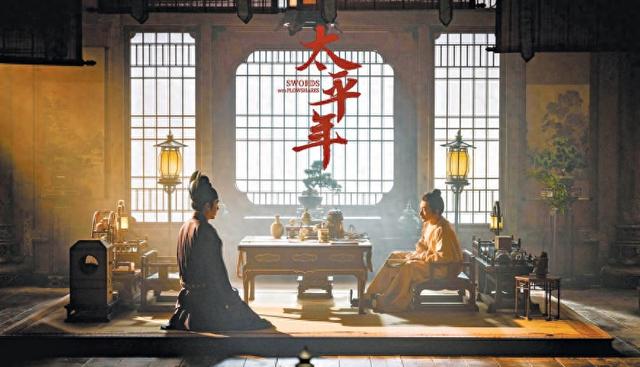
太平年钱弘俶纳土归宋
Xin Lang Cai Jing· 2026-01-24 05:12
Core Viewpoint - The upcoming historical drama "Tai Ping Nian" focuses on the late Five Dynasties period, highlighting the story of Qian Hongzhu, the last ruler of the Wu-Yue Kingdom, and his policies aimed at peace and stability during a time of chaos [1] Group 1: Historical Context - The Five Dynasties and Ten Kingdoms period was marked by significant political fragmentation and instability in China, with rapid changes in dynasties and numerous regional powers emerging [1] - This era, characterized by military rule and conflict, also served as a transitional phase for economic and cultural development, ultimately leading to opportunities for unification [1] Group 2: Key Figures and Contributions - Historian Tao Maobing has extensively researched the Five Dynasties period, producing works that provide a comprehensive view of the social landscape during this time [1] - His book "Luan Shi Li Ge: Five Dynasties History Overview" offers insights into the political, economic, and cultural aspects of the era, as well as the interactions with surrounding ethnic groups [1] Group 3: Significance of Wu-Yue Kingdom - The Wu-Yue Kingdom, under the Qian family, is portrayed as a model of peaceful unification without bloodshed during the tumultuous Five Dynasties period [1] - Qian Hongzhu's governance strategy, which emphasized "protecting the territory and ensuring the people's safety," is highlighted as a significant approach to maintaining stability [1]