
纳土归宋

Search documents
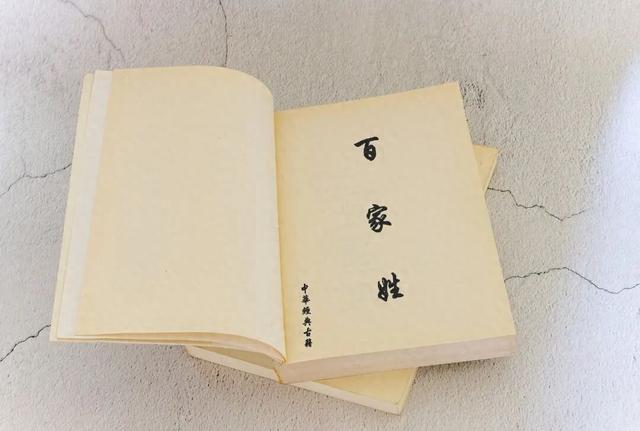
为什么《百家姓》开头是赵钱孙李?
Xin Lang Cai Jing· 2026-02-06 06:35
Group 1 - The article discusses the significance of the characters in the popular TV drama "Tai Ping Nian," particularly how their surnames correspond to the opening line of "Bai Jia Xing" (Hundred Family Surnames) [1][5] - "Bai Jia Xing" was compiled in the early Northern Song Dynasty and originally included 411 surnames, later expanded to 504, serving as an important educational text for children [3][13] - The ordering of surnames in "Bai Jia Xing," specifically "Zhao Qian Sun Li," reflects the political landscape and historical context of the Northern Song Dynasty, prioritizing royal families over noble clans [5][11] Group 2 - The surname "Qian" ranks second after "Zhao" due to historical significance, particularly the contributions of Qian Liu, the founder of the Wuyue Kingdom, who played a crucial role in maintaining stability during the chaotic Five Dynasties and Ten Kingdoms period [7][9] - The article highlights the legacy of the Qian family, noting that many prominent figures have emerged from this lineage, including over a hundred academicians in contemporary times [9][11] - The evolution of surname rankings in modern times reflects a shift from a political to a statistical significance, indicating a move towards egalitarianism in Chinese surnames [15]

《太平年》中“可供考据的历史肌理”
Xin Lang Cai Jing· 2026-02-04 09:12
Core Viewpoint - The historical drama "Tai Ping Nian" has gained popularity by vividly presenting the relatively lesser-known history of "Na Tu Gui Song," leading to increased public interest in the Five Dynasties and Ten Kingdoms period [1] Group 1: Historical Context - The Five Dynasties and Ten Kingdoms period is rich in cultural anecdotes, particularly those related to the founding monarch of Wu Yue, Qian Liu, who is the grandfather of the character Qian Hongchao in the drama [1] - Notable cultural references include the famous line "A sword frost cold across fourteen states," which praises Qian Liu's power and reflects on the political situation of the time [1] - Another poignant phrase, "Flowers bloom on the path, one may return slowly," originates from a letter Qian Liu wrote to his wife, expressing his longing for her during the spring season [1] Group 2: Artistic Representation - The drama features four significant "yellow robe ascension" scenes, including the ascensions of Liu Zhiyuan, Guo Wei, Zhao Kuangyin, and Qian Hongchao, with the latter being an artistic fabrication [2] - The artistic contributions of Southern Tang's last ruler, Li Yu, are highlighted, including his unique calligraphy style and his renowned painting "Han Xizai's Night Banquet," which captures the essence of ancient character portrayal [2] - As the series progresses, it remains uncertain whether Li Yu's poetry and the painting "Han Xizai's Night Banquet" will be featured [2]
《太平年》渐入佳境
Xin Lang Cai Jing· 2026-01-27 15:51
Core Viewpoint - The drama "Tai Ping Nian" has gained positive audience feedback as it progresses, transitioning from initial confusion about its complex plot and historical context to a growing engagement with its narrative and characters [2][4]. Group 1: Historical Context and Themes - "Tai Ping Nian" uniquely fills a gap in the portrayal of the Five Dynasties and Ten Kingdoms period, systematically depicting the significant historical event of "Na Tu Gui Song" [2]. - The series explores the theme of "Tai Ping," emphasizing the pursuit of peace and stability amidst chaos, as articulated by the screenwriter who highlights the complexity of the historical narrative [3]. Group 2: Narrative Structure and Character Development - The show employs a multi-threaded narrative structure, effectively weaving together various historical events and character arcs, particularly focusing on the transformation of Qian Hongchu as he navigates the tumultuous political landscape [5][6]. - A diverse cast of characters is portrayed, each contributing to the narrative's depth, with particular emphasis on the female character Sun Taizhen, who embodies resilience and intelligence in a male-dominated era [6]. Group 3: Production Quality and Historical Authenticity - The production team has meticulously researched historical details to create an authentic visual experience, from costumes to set design, enhancing the overall realism of the series [3][6]. - The series utilizes various narrative techniques, such as voiceovers and significant plot events, to help viewers understand the complex historical context without disrupting the flow of the story [8].
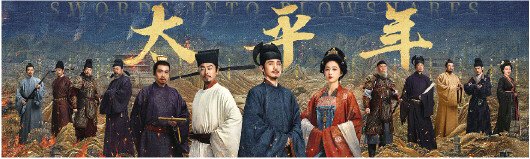
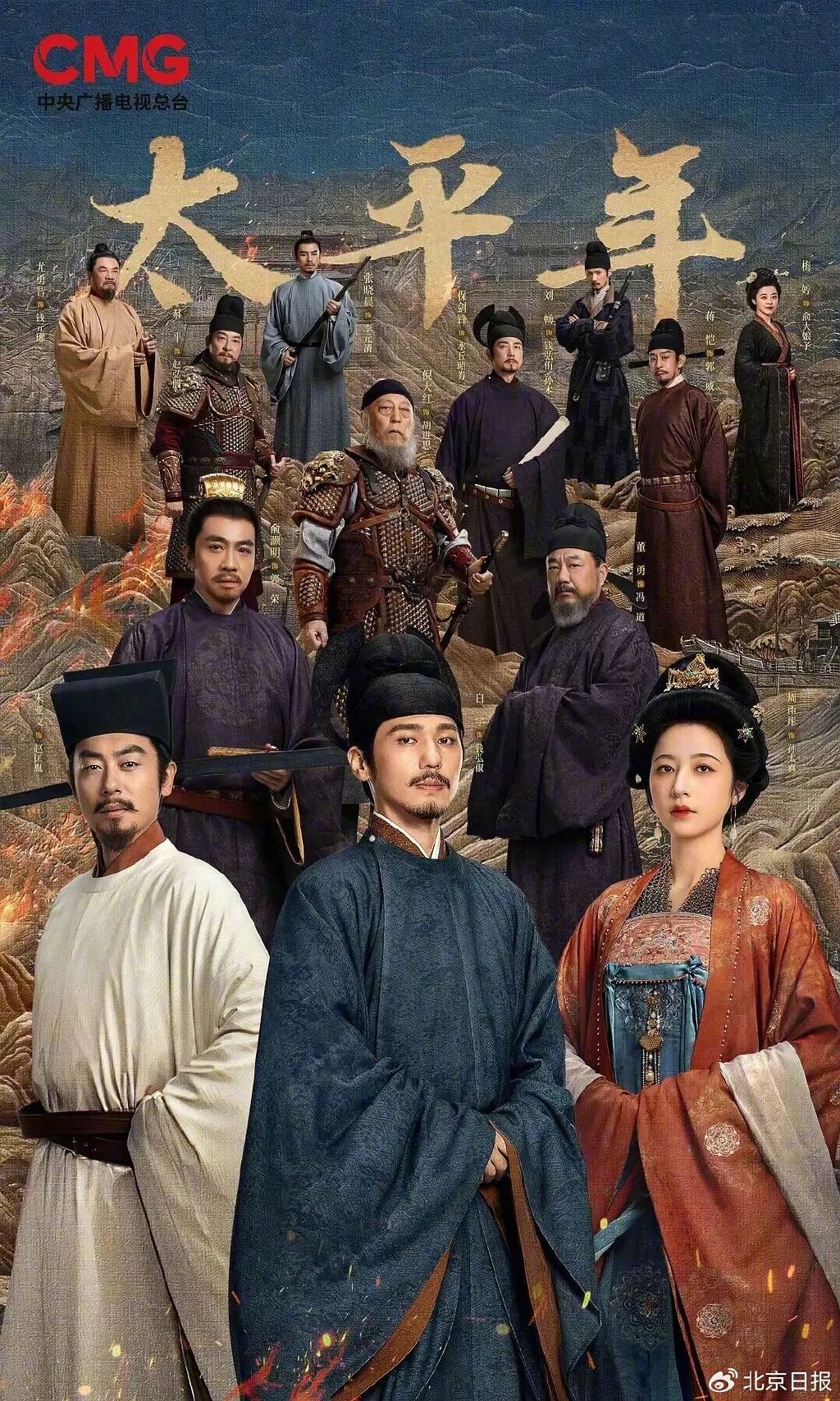
《太平年》:戏骨云集,每一帧都值得细翻历史书
Xin Lang Cai Jing· 2026-01-24 16:31
Core Viewpoint - The historical drama "Tai Ping Nian" explores the chaotic period of the Five Dynasties and Ten Kingdoms, focusing on the political struggles and choices that shaped the era, particularly through the lens of the Wu-Yue Kingdom and its eventual unification under the Song Dynasty [4][21]. Summary by Sections Historical Context - The drama is set in the aftermath of the Five Dynasties and Ten Kingdoms, a time marked by political instability and power shifts, where every decision could mean life or death [4]. - The narrative begins with a dual storyline, depicting the dire conditions in the north and the political intrigues in the south, establishing a backdrop of chaos and survival [8]. Plot Development - The first four episodes serve as a prologue, introducing key characters and the political landscape, including a grain shortage in the north and a scandal involving the sale of military gear in the south [10]. - The sudden death of the Wu-Yue king triggers a power struggle, leading to the ascension of the young prince Qian Hongzuo, while the main character, Qian Hongqi, is still in his formative years [12]. Character Dynamics - The series features a complex web of characters, including power-hungry officials and young princes, with the narrative focusing on their political maneuvers and personal sacrifices [15][21]. - The portrayal of the Wu-Yue Kingdom emphasizes its unique approach to governance during a tumultuous time, opting for a policy of retreat to maintain peace and stability [21]. Audience Reception - "Tai Ping Nian" has received polarized reviews, with some praising its cinematic quality and historical accuracy, while others criticize its complexity and high viewing threshold due to the multitude of characters introduced [17][18]. - The show challenges viewers to engage deeply with its historical context, requiring a level of familiarity with the era to fully appreciate the narrative [22]. Historical Significance - The series highlights the ultimate goal of "Tai Ping," representing a deep-rooted aspiration for peace in Chinese culture, and showcases the sacrifices made by individuals for the greater good [21][24]. - The historical backdrop of the Wu-Yue Kingdom's eventual submission to the Song Dynasty is portrayed as a significant moment in Chinese history, marking the end of fragmentation and the beginning of a unified state [24][26].
“纳土归宋”照见中国统一智慧
Xin Lang Cai Jing· 2026-01-24 13:23
Core Viewpoint - The historical drama "Tai Ping Nian" reflects the significant historical choice of "Na Tu Gui Song" made by Qian Chu, the last ruler of the Wu-Yue Kingdom, during a turbulent period in Chinese history, emphasizing the importance of peaceful unification in a time of chaos [1][2][3]. Historical Context - After the Tang Dynasty, China entered a period of instability known as the Five Dynasties and Ten Kingdoms, characterized by frequent regime changes and wars, leading to societal and civilizational disruptions [2]. - The Wu-Yue Kingdom, under Qian Liu, established a relatively stable regime in the south, maintaining ties with the central authority and ensuring the welfare of its people [2]. Key Historical Decision - The decision of "Na Tu Gui Song" occurred when the Northern Song had unified the north, and Qian Chu chose to peacefully integrate his territory into the Song Dynasty, thus avoiding potential warfare and preserving the socio-economic and cultural fabric of the region [2][3]. Cultural Significance of "Tai Ping" - The term "Tai Ping" embodies a deep cultural aspiration for stability and order, representing a collective desire for a return to normalcy amidst chaos, which was severely disrupted during the Five Dynasties and Ten Kingdoms period [5][6]. - The Wu-Yue Kingdom's commitment to peace and stability positioned it uniquely among other regional powers, highlighting a rational and long-term approach to governance [5][9]. Modern Relevance - The historical choice of "Na Tu Gui Song" serves as a contemporary lesson on the value of peace and rational decision-making in resolving conflicts, emphasizing that unity can be achieved without violence [8][9][11]. - In today's context, the experience of the Wu-Yue Kingdom offers insights into addressing modern challenges through cooperation and dialogue rather than division and confrontation [9][11].
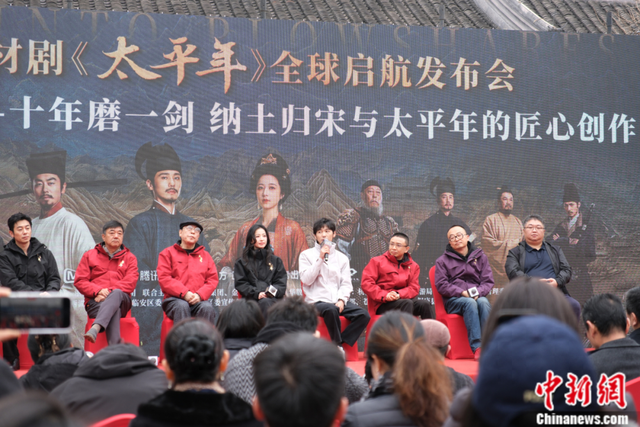
东西问丨王旭烽:《太平年》热播,“纳土归宋”这样照见中国统一智慧
Xin Lang Cai Jing· 2026-01-24 12:26
Core Viewpoint - The historical drama "Tai Ping Nian" reflects the wisdom of Chinese unification through the narrative of "Na Tu Gui Song," showcasing a significant historical choice made during a turbulent period in Chinese history [3][4]. Historical Context - The drama is set during the Five Dynasties and Ten Kingdoms period, characterized by frequent regime changes and wars, leading to a fragmented society [4]. - The Wu-Yue Kingdom, under the leadership of Qian Chu, maintained relative stability and a connection to the central authority, making it a unique entity during this chaotic time [4][5]. Key Historical Decision - "Na Tu Gui Song" occurred when the Northern Song had unified the north, and Qian Chu chose to peacefully integrate his territory into the Song dynasty, thus avoiding potential warfare in the southern regions [4][5]. - This decision preserved the social and cultural fabric of the southern regions, laying the groundwork for Hangzhou to become a significant cultural center during the Song dynasty [4][5]. Cultural Significance of "Tai Ping" - The term "Tai Ping" embodies a deep cultural aspiration for stability and order, representing a collective desire for peace during a time of chaos [7]. - The Wu-Yue Kingdom's commitment to avoiding unnecessary conflict and maintaining stability is highlighted as a crucial aspect of its historical significance [7][8]. Modern Relevance - The lessons from "Na Tu Gui Song" emphasize the importance of peaceful resolution and rational decision-making in the face of conflict, offering insights applicable to contemporary global challenges [10][12]. - The historical narrative serves as a reminder that unity can be achieved through cooperation and understanding rather than confrontation, which is relevant in today's increasingly polarized world [10][12].
太平年钱弘俶纳土归宋
Xin Lang Cai Jing· 2026-01-24 05:12
Core Viewpoint - The upcoming historical drama "Tai Ping Nian" focuses on the late Five Dynasties period, highlighting the story of Qian Hongzhu, the last ruler of the Wu-Yue Kingdom, and his policies aimed at peace and stability during a time of chaos [1] Group 1: Historical Context - The Five Dynasties and Ten Kingdoms period was marked by significant political fragmentation and instability in China, with rapid changes in dynasties and numerous regional powers emerging [1] - This era, characterized by military rule and conflict, also served as a transitional phase for economic and cultural development, ultimately leading to opportunities for unification [1] Group 2: Key Figures and Contributions - Historian Tao Maobing has extensively researched the Five Dynasties period, producing works that provide a comprehensive view of the social landscape during this time [1] - His book "Luan Shi Li Ge: Five Dynasties History Overview" offers insights into the political, economic, and cultural aspects of the era, as well as the interactions with surrounding ethnic groups [1] Group 3: Significance of Wu-Yue Kingdom - The Wu-Yue Kingdom, under the Qian family, is portrayed as a model of peaceful unification without bloodshed during the tumultuous Five Dynasties period [1] - Qian Hongzhu's governance strategy, which emphasized "protecting the territory and ensuring the people's safety," is highlighted as a significant approach to maintaining stability [1]