信用卡行业调整

Search documents
信用卡发卡量近四年减少1亿张
21世纪经济报道· 2026-03-13 15:31
Core Insights - The credit card market in China is undergoing significant adjustments, with the total issuance of credit cards dropping to 696 million, marking a three-year decline and the lowest level in nearly seven years [1][3]. - Credit card benefits are being widely reduced, with changes affecting all categories of benefits, indicating a departure from the previous era characterized by high issuance, high benefits, and high limits [1][11]. Group 1: Market Trends - The decline in credit card issuance has been consistent, with numbers falling from 798 million at the end of 2022 to 767 million in 2023, and projected to reach 727 million in 2024 and 696 million in 2025, resulting in a loss of over 100 million cards in just a few years [3][6]. - The consolidation of credit card channels among banks is accelerating, with 66 credit card centers shutting down by 2025, including 58 from the Bank of Communications, as banks aim to reduce costs and improve efficiency [5][6]. Group 2: Regulatory Impact - Regulatory measures have been implemented to address the issue of "sleeping cards," with a requirement that the proportion of such cards must not exceed 20%, prompting banks to actively clean up inactive accounts [6][7]. - The shift from a focus on quantity to quality in credit card issuance is evident, as banks are now required to prioritize genuine market demand over sheer volume [7][9]. Group 3: Consumer Behavior - Consumers are adapting to the changing landscape, with many opting to simplify their credit card usage, reducing the number of cards they hold due to rising fees and diminishing benefits [14][19]. - Different consumer segments are emerging, including those who prefer minimal card usage, those who rely on internet credit products, and those who still maintain multiple cards for various benefits [19][20]. Group 4: Benefits and Adjustments - The reduction in credit card benefits has led to a phenomenon termed "warm upgrade," where banks describe benefit cuts as enhancements, causing frustration among users [11][12]. - The shrinking of benefits is seen as a strategy to push out users who exploit credit card rewards without genuine spending, thereby retaining more valuable customers [12][20].


中小银行跟进“停卡潮” 信用卡行业驶入存量竞争新航道
Xin Lang Cai Jing· 2025-12-12 01:24
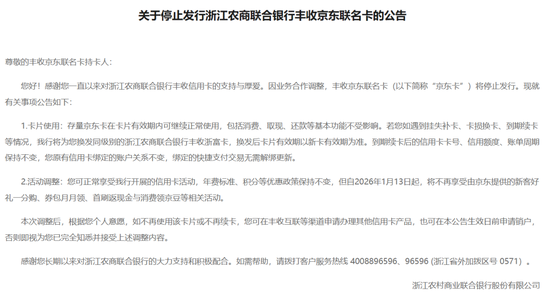
Core Viewpoint - The credit card market is undergoing significant adjustments, with many banks, especially smaller ones, halting the issuance of co-branded credit cards due to rising costs and risks associated with these products [1][5][6]. Group 1: Market Trends - The trend of halting credit card issuance is not isolated, as it has become a common practice among both national and regional banks throughout the year [1][6]. - Major banks, including China Construction Bank and Postal Savings Bank, have collectively stopped issuing over 100 credit card products since the beginning of 2025, with co-branded cards being a significant portion of these [6][11]. - The total number of credit cards in circulation has decreased by 100 million over the past three years, indicating a shift away from the previous era of aggressive expansion [10][11]. Group 2: Bank Strategies - Banks are transitioning from a focus on quantity to quality in their credit card offerings, prompted by regulatory changes and market dynamics [11][12]. - The recent adjustments include the closure of credit card centers and the integration of credit card functionalities into main banking apps, reflecting a strategic shift towards efficiency and cost reduction [14][15]. - The halting of co-branded cards is seen as a necessary step for banks to concentrate resources on more viable products and improve operational efficiency [8][9]. Group 3: Future Directions - The future of credit card business is expected to focus on three main transformation directions: integrating various service scenarios, upgrading technology for better digital experiences, and deepening customer segmentation to enhance value creation [16].