假洋牌

Search documents
“假洋牌”爷爷的农场赴港上市,员工社保未缴足股东却在分红
Nan Fang Du Shi Bao· 2026-01-16 09:39
Core Viewpoint - Grandpa's Farm International Holdings Limited has submitted its prospectus to the Hong Kong Stock Exchange, revealing growth in revenue and profit, but facing challenges in its core baby food business with declining average prices and signs of fatigue in the supplementary food segment [1][13][15]. Financial Performance - Revenue for 2023 and 2024 is projected at 622 million RMB and 875 million RMB respectively, with a 23.2% year-on-year growth in the first three quarters of 2025 [13][15]. - The company has a total of 195 baby food and 74 family food products under its own brand [13]. - The average selling price of baby food is declining, attributed to the introduction of lower-priced snack products [15][16]. Business Structure and Controversies - The company claims to be a high-quality European imported baby food brand, but has faced accusations of being a "fake brand" due to its actual origins in Guangzhou [4][5][6]. - There are significant concerns regarding the company's failure to fully pay employee social insurance and housing funds, with a cumulative shortfall of 22.5 million RMB over three years [19][20]. Shareholder Dividends - Despite the financial success, the company has distributed substantial dividends to shareholders, totaling 63 million RMB in the first three quarters of 2025, while failing to meet employee social security obligations [19][20]. Supply Chain and Production - The company outsources nearly all production to 62 OEM manufacturers, which raises concerns about quality control and production reliability [27][28]. - The pricing of Grandpa's Farm products is higher than competitors, despite using the same manufacturing facilities [29][31]. Marketing and R&D Expenditure - Marketing expenses significantly exceed R&D investments, with marketing costs accounting for over 32% of total revenue, while R&D spending remains below 4% [33][34]. - The company has faced product recalls and quality issues in the past, raising questions about its supply chain management [35].

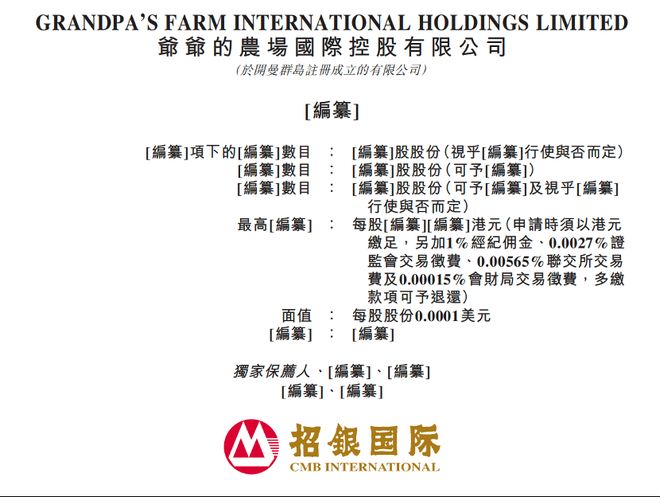
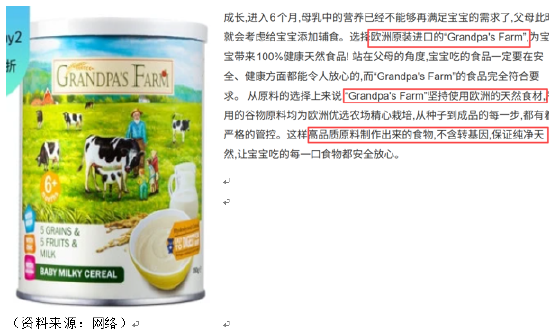
又一个洋老头?爷爷的农场早期市场开拓疑打假洋牌擦边球 产品近乎全靠代工多次抽检不合格被监管处罚
Xin Lang Cai Jing· 2026-01-15 09:38
Core Viewpoint - The brand "Grandpa's Farm" has submitted its prospectus to the Hong Kong Stock Exchange, aiming to become the second major player in the infant complementary food market, but faces significant challenges related to brand identity and product quality issues [1][19]. Group 1: Company Overview - "Grandpa's Farm" was launched in 2015 and introduced its first infant complementary food product in 2018, expanding into the family food sector in 2021 [3][20]. - The company plans to use the funds raised from the IPO to enhance product development, invest in supply chain improvements, strengthen internal production capabilities, and expand brand marketing and sales networks [1][19]. Group 2: Brand Identity Controversy - There is ongoing confusion among consumers regarding whether "Grandpa's Farm" is a Dutch or Chinese brand, largely due to early marketing emphasizing European origins and packaging predominantly in English [3][20]. - The brand's identity controversy is heightened by its founder's rapid establishment of companies in both the Netherlands and China, leading to allegations of "fake foreign brand" practices [11][27]. Group 3: Quality Control Issues - The company relies heavily on third-party OEM manufacturers for nearly all its product production, which has led to multiple regulatory penalties for product quality issues [2][29]. - From 2019 to 2021, "Grandpa's Farm" faced numerous quality complaints, including products failing safety inspections and consumer reports of contamination and spoilage [14][30]. - The reliance on a complex supply chain and outsourcing has resulted in frequent quality control problems, which are particularly critical in the infant food sector [29][33].
不让“假洋牌”有可乘之机
Jing Ji Ri Bao· 2025-07-09 21:51
Core Viewpoint - The article emphasizes the need for collaboration between live streaming platforms and regulatory authorities to combat the rampant issue of "fake foreign brands" in e-commerce, which misleads consumers and undermines local brands [1][2]. Group 1: Issues with "Fake Foreign Brands" - The phenomenon of "fake foreign brands" is prevalent in various sectors, including beauty, health products, and food, where low-cost domestic products are marketed as high-end imports, misleading consumers [1][2]. - These brands exploit consumer perceptions that "imported equals high quality," leading to commercial fraud and the sale of substandard products at inflated prices [1][2]. - The presence of "fake foreign brands" not only misleads consumers but also infringes on their rights to informed choices, potentially impacting their health and economic interests [2]. Group 2: Impact on Local Brands - "Fake foreign brands" occupy market space that should belong to legitimate local brands, thereby harming their competitiveness and innovation [2]. - The success of these deceptive brands diminishes the incentive for local companies to improve product quality and brand recognition, ultimately affecting the industry's sustainable development [2]. Group 3: Recommendations for Consumers and Platforms - Consumers are urged to be vigilant and discerning when shopping, avoiding impulsive purchases influenced by live stream presentations, and to verify product origins and ingredients [3]. - Live streaming platforms are called to enhance their responsibility by improving entry management systems and verifying brand backgrounds to prevent the spread of misinformation [2].
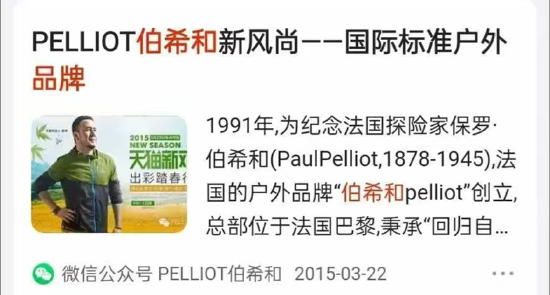
伯希和港股IPO:深陷假洋牌之争、生产全靠代工产品质量问题频发、仅有4项发明专利技术相对薄弱
Xin Lang Zheng Quan· 2025-06-20 08:59
Group 1 - The company PELLIOT, a private outdoor sports group based in Lixin County, has submitted its prospectus to the Hong Kong Stock Exchange for a main board listing, with CICC and CITIC Securities as joint sponsors [1] - PELLIOT faces challenges related to its early marketing strategies, which may have misled consumers about its brand origin, presenting itself as a foreign brand to enhance product pricing [1][2] - The company has a low level of research and development investment, with only four invention patents among a total of 45 patents, indicating a lack of technological accumulation compared to competitors [7][10] Group 2 - PELLIOT's revenue for the years 2022, 2023, and 2024 is projected to be 378 million, 908 million, and 1.766 billion RMB respectively, with net profits of approximately 24.31 million, 152 million, and 283 million RMB [7] - The marketing strategy heavily relies on high-profile celebrity endorsements, with sales and distribution expenses exceeding 30% of total revenue during the same period [7][9] - The company has a significant issue with product quality, as evidenced by a high online return rate of 8.7% in 2024, which is above the industry average of 5% [14] Group 3 - PELLIOT operates on a light asset model, relying on OEM partnerships for production, which may lead to uncertainties in ongoing operations and quality control issues [11][12] - The company has faced numerous consumer complaints regarding product quality, with 453 complaints recorded on a consumer complaint platform, highlighting issues such as poor stitching and material defects [12][13] - Refund liabilities have increased significantly, reaching 44.26 million RMB by the end of 2024, marking a 133.45% growth from 2023 [14][15]