储能市场化容量补偿机制

Search documents
CNESA报告分享 | 《储能市场化容量补偿机制研究》
中关村储能产业技术联盟· 2026-02-04 11:22
Core Viewpoint - The article discusses the research findings on the market-oriented capacity compensation mechanism for energy storage, emphasizing its importance for the sustainable development of the energy storage industry in China [14][15]. Group 1: Industry Development Status and Core Bottlenecks - The new energy storage industry in China has experienced explosive growth, with an installed capacity of 144.7 GW by the end of 2025, marking an 84.8% year-on-year increase [20]. - The cancellation of the prerequisite for capacity leasing has led to a significant reduction in demand for traditional capacity leasing models, resulting in low project returns and negative internal rates of return (IRR) in some provinces [27]. - The current capacity compensation mechanism is not unified across the country, leading to discrepancies in local pilot policies and a lack of standardized reliable capacity accounting [27] [38]. Group 2: Power System Capacity Demand Analysis - By 2030, the total electricity consumption in China is expected to reach 13.5 trillion kWh, with non-fossil energy sources projected to account for 65% of installed capacity [30]. - The demand for energy storage capacity is expected to reach around 300 GW by 2030 to meet the capacity adequacy requirements of the power system [32]. Group 3: Comparison of Domestic and International Capacity Assurance Mechanisms - Various countries have developed capacity assurance mechanisms to address the "missing money" problem in electricity markets, including capacity market mechanisms, scarcity pricing mechanisms, and capacity compensation mechanisms [35]. - China's current capacity assurance mechanism primarily relies on capacity compensation, with limited pilot programs for new energy storage capacity compensation [38]. Group 4: Reliable Capacity Calculation Method Design - Reliable capacity calculation is crucial for the effective operation of capacity mechanisms, aiming to quantify the capacity value of different energy storage technologies and ensure fair market participation [49]. - Several methods for calculating reliable capacity are proposed, including historical output assessments and effective load-carrying capability (ELCC) evaluations [50][51]. Group 5: Phased Implementation Plan for Capacity Pricing Mechanism - The implementation plan for the capacity pricing mechanism is divided into three phases: establishing a unified capacity price compensation mechanism for the generation side, transitioning to a market-based capacity market mechanism, and creating a unified capacity market [58]. - The short-term goal is to establish a unified capacity price compensation mechanism by 2027, while the long-term goal is to create a competitive capacity market by 2035 [61][65].


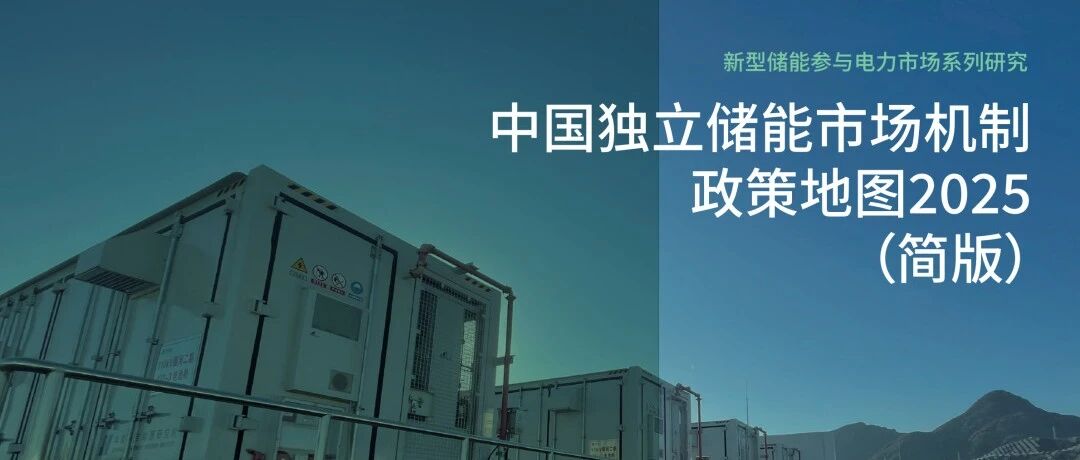
CNESA报告分享 | 《中国独立储能市场机制政策地图2025》
中关村储能产业技术联盟· 2026-02-03 09:12
Core Viewpoint - The report titled "China Independent Energy Storage Market Mechanism Policy Map 2025" aims to provide a comprehensive reference for stakeholders in the energy storage industry, focusing on the characteristics of energy structures, business models, special mechanisms, and revenue assessments across 21 key provinces in China [3][14]. Summary by Sections Introduction - The report is the first of its kind to focus on independent energy storage market mechanisms, designed to assist government departments, energy storage companies, investment institutions, and power industry practitioners in understanding market dynamics and formulating strategies [3][14]. Market Overview - By 2025, China's electricity spot market is expected to be fully covered, with renewable energy entering the market in full volume, and load sides gradually participating [13]. - The report highlights the ongoing evolution of independent energy storage market mechanisms across different regions, emphasizing the significant differences in market structures, revenue models, and pricing mechanisms [13][14]. Provincial Insights - The report provides detailed insights into the energy structure, business models, and special mechanisms for each of the 21 provinces, including: - **Hebei Province**: Notable for its high proportion of renewable energy installations and a unique pricing mechanism that reduces charging costs for independent storage [27]. - **Shanxi Province**: Features a multi-channel profit model including spot markets and frequency modulation, with a high level of market maturity [30]. - **Inner Mongolia**: Leads in renewable energy installations, with a compensation mechanism based on discharge volume [36]. - **Henan Province**: Focuses on integrated projects with a diverse revenue model, including capacity leasing and frequency modulation [41]. - **Hubei Province**: Rich in hydropower resources, with a core revenue source from the spot market and capacity compensation [46]. - **Gansu Province**: High renewable energy share with a capacity compensation standard of 330 yuan per kilowatt per year [54]. - **Ningxia**: Features a compensation mechanism that exempts certain fees, enhancing the profitability of energy storage [60]. - **Jiangsu Province**: Emphasizes peak supply and renewable energy consumption, with a focus on administrative price differences [75]. - **Zhejiang Province**: Active user-side storage demand with a capacity compensation fund to support revenue [81]. - **Shandong Province**: Transitioning from a coal-dominated structure to a more diversified energy market with active market transactions [87]. Conclusion - The report serves as a vital tool for stakeholders to navigate the complexities of the independent energy storage market in China, facilitating informed decision-making and strategic planning [3][14].