新型储能

Search documents
南网储能(600995) - 南方电网储能股份有限公司2025年部分经营数据公告
2026-03-30 12:32
证券代码:600995 证券简称:南网储能 编号:2026-13 | | | 特此公告。 注:①2025 年调峰水电收入同比增加 42.23%,主要原因是调峰水电厂来水较好,发电 量同比增加。 ②2025 年新型储能收入同比增长 28.65%,主要原因是新增投产云南丘北储能电站。 二、调峰水电站经营数据 | 水电站名称 | 装机容量 | | 发电量(万千瓦时) | | 2025 年平均 售电价格(元 | | --- | --- | --- | --- | --- | --- | | | (万千瓦) | 2025 年 | 2024 年 | 同比变动 | /千瓦时,含 税价) | | 天生桥二级电 站 | 132 | 884,031 | 564,542 | 56.59% | | | 鲁布革电厂 | 60 | 315,147 | 226,210 | 39.32% | 0.209 | | 文山小水电站 | 11 | 64,765 | 56,767 | 14.09% | | 1 类型 装机容量(万千瓦) 发电行业主营业务收入(万元) 2025 年底 2024 年底 2025 年 2024 年 同比变动 抽水蓄能 126 ...

中国能建(601868):盈利能力承压,回款改善
Guolian Minsheng Securities· 2026-03-30 10:08
Investment Rating - The report maintains a "Buy" rating for the company [3] Core Views - The company reported a revenue of 452.9 billion yuan for 2025, representing a year-on-year growth of 4%, while net profit attributable to shareholders decreased by 30% to 5.84 billion yuan [1] - The company’s revenue growth shows resilience, but profitability is under pressure due to increased competition and higher effective tax rates [8] - The company is focusing on new energy sectors such as energy storage and hydrogen energy, which are showing strong growth potential [8] Financial Performance Summary - Revenue for 2025 is projected at 452.93 billion yuan, with a growth rate of 3.7% for the year [2] - Net profit attributable to shareholders is expected to be 5.84 billion yuan, with a significant decline of 30.4% [2] - The company’s gross margin for 2025 is reported at 12.2%, a slight decrease of 0.2% year-on-year [8] - The company’s cash flow management has improved, with operating cash flow increasing by 5 billion yuan to 11.55 billion yuan [8] - The projected earnings per share for 2026 is 0.15 yuan, with a price-to-earnings ratio of 20 times [2] Business Segment Performance - The company’s design consulting, engineering construction, investment operation, and industrial manufacturing segments reported revenue growth of 6% each, indicating stable performance across major business lines [8] - The company’s installed power capacity increased by 5.9 GW year-on-year to 23.5 GW, with significant contributions from wind and solar energy [8] - The company has successfully acquired additional renewable energy indicators, increasing its total to 82 GW, reflecting its strategic focus on energy and new energy sectors [8]

消费占比25%、单位GDP二氧化碳排放下降17%、能源综合生产能力
Orient Securities· 2026-03-27 09:45
Group 1: Energy Security - By 2030, China's energy comprehensive production capacity is targeted to reach 5.8 billion tons of standard coal, a 13% increase from 5.13 billion tons in 2025[6] - The energy consumption total is expected to reach 7 billion tons of standard coal by 2030, with a production coverage ratio of approximately 82.9% during the 14th Five-Year Plan period[6] - The oil production is aimed to stabilize at around 200 million tons annually, with natural gas production steadily increasing[6] Group 2: Energy System Construction - The goal is to increase the share of non-fossil energy in total energy consumption to 25% by 2030, up from 16% in 2020 and 21.7% in 2025[13] - The plan includes the construction of major clean energy bases, with a cumulative installed capacity of offshore wind power expected to exceed 100 million kilowatts and nuclear power capacity reaching approximately 110 million kilowatts[15][17] - The new energy system will focus on multi-energy complementarity and innovation mechanisms, with a target of adding over 30 million kilowatts of new energy base capacity during the 15th Five-Year Plan[15] Group 3: Green Low-Carbon Transition - A 17% reduction in carbon emissions per unit of GDP is necessary to achieve the carbon peak by 2030, with projections indicating a decrease to approximately 0.78 tons per 10,000 yuan by that year[18][19] - The plan emphasizes dual control of carbon emissions, focusing on total emissions and intensity, with specific measures for high-energy-consuming industries[24] - Key actions include enhancing energy efficiency in major sectors, promoting circular economy initiatives, and implementing non-CO2 greenhouse gas management[25][27] Group 4: Future Energy Industry Development - The plan aims to foster technological breakthroughs in future energy industries, focusing on smart driving, new solar cells, and energy storage technologies[28] - Hydrogen energy and nuclear fusion are highlighted as key areas for future development, with a focus on creating a comprehensive hydrogen energy ecosystem[29] - The investment in nuclear fusion technology is expected to yield results during the 15th and 16th Five-Year Plans, positioning China at the forefront of future energy technology[29]
媒体报道丨做好“开局之年”经济工作:加快构建新型电力系统
国家能源局· 2026-03-26 09:53
Core Viewpoint - The article emphasizes the importance of building a new power system to achieve carbon neutrality goals, highlighting the need for a low-carbon transition in the power industry while ensuring the stability of electricity supply and prices [2]. Group 1: Construction of Smart Grid - The new power system is characterized by an increasing proportion of renewable energy, necessitating the construction of ultra-high voltage lines and smart grids to ensure effective electricity distribution [4]. - Jiangsu province has undertaken four ultra-high voltage direct current transmission projects, contributing to the "West-to-East Power Transmission" initiative, with a cumulative electricity delivery of 1.08 trillion kilowatt-hours, over 50% of which comes from clean energy [4]. - The national "West-to-East Power Transmission" capacity has reached 340 million kilowatts, optimizing electricity resource allocation across the country [4]. Group 2: Development of New Energy Storage - Energy storage acts as a stabilizer in the new power system, with Shandong province achieving over 10 million kilowatts of new energy storage capacity [7]. - By the end of 2025, the installed capacity of new energy storage nationwide is expected to reach 136 million kilowatts/351 million kilowatt-hours, representing a growth of over 40 times compared to the end of the 13th Five-Year Plan [7]. - The flexibility of new energy storage is increasingly recognized for its role in enhancing the stability and security of the power system [8]. Group 3: Expansion of Green Electricity Applications - The consumption of green electricity is identified as a weaker link compared to its production and transmission, with the need for effective consumption to complete the energy transition [10]. - The rapid growth of electric vehicles (EVs) is driving the need for charging resources to participate in grid regulation, enhancing grid flexibility and renewable energy absorption [10]. - The implementation of the first national standard for vehicle-grid interaction microgrids aims to improve the operational efficiency and flexibility of charging stations, supporting the grid [10]. - New applications such as AI computing, green hydrogen, and zero-carbon parks are emerging, shifting green electricity consumption from "stock exploration" to "incremental expansion" [11].


全球缺电共振与HALO交易崛起-重估新型电力系统
2026-03-22 14:35
Summary of Key Points from Conference Call Records Industry Overview - The focus is on the new power system in the context of global electricity shortages and the rise of HALO trading, with significant investments expected in the power infrastructure sector [1][2]. Core Insights and Arguments - **Investment Growth**: The State Grid's investment during the 14th Five-Year Plan is projected to reach 4 trillion yuan, a 40% increase compared to the previous plan, with an annual growth rate of approximately 5% [1][2]. - **Renewable Energy Dominance**: By the end of 2024, the total installed capacity of wind and solar power is expected to reach 1.4 billion kilowatts, surpassing coal power for the first time. Renewable energy is projected to account for 86% of new installed capacity in 2024, with over 50% of global new installations [1][2][3]. - **Grid Investment Surge**: In 2024, grid investment is expected to reach 608.3 billion yuan, marking a 15.3% year-on-year increase and the first time surpassing 600 billion yuan. This includes the planning of 15 new ultra-high voltage lines [1][2]. - **Automation and Smart Grid Demand**: The demand for automation and smart upgrades in distribution networks is surging due to the integration of large-scale distributed energy sources and flexible loads, becoming a core area for future equipment tenders [1][2][3]. Investment Opportunities - **Power Generation**: The establishment of clean energy as the mainstay of power generation is a key investment area, with a focus on wind and solar energy [2][3]. - **Transmission and Distribution**: The grid construction is entering a golden development period, with significant investments in backbone networks and new distribution systems [2][3]. - **Energy Storage**: By the end of 2024, new energy storage capacity is expected to reach 73.76 million kilowatts, accounting for over 40% of the global total. By 2027, this capacity is projected to exceed 180 million kilowatts, with independent storage and renewable energy storage being the main applications [3]. Additional Important Insights - The power infrastructure has high replacement costs and low risk of technological disruption, making it a defensive yet growth-oriented investment under the backdrop of 4 trillion yuan in planned investments [1][2][3]. - The entire new power system, from upstream clean energy installations to midstream ultra-high voltage and distribution investments, and downstream energy storage growth, presents a favorable investment landscape with high revaluation potential [3].
媒体报道丨新型储能产业迎来关键政策支撑
国家能源局· 2026-03-20 09:22
Core Viewpoint - The recent issuance of the "Notice on Improving the Capacity Price Mechanism for Power Generation Side" establishes a new independent capacity price mechanism for energy storage at the national level, providing clear revenue rules and a market-oriented development path for the future of new energy storage [2][3]. Group 1: Policy Impact - The policy fills the institutional gap for national-level capacity pricing for new energy storage, activating investment vitality in the industry through stable revenue expectations [2]. - The new mechanism is crucial for the development of the new energy storage industry, ensuring its core role in peak supply and renewable energy consumption within the power system [2]. Group 2: Industry Growth - Since the introduction of the "dual carbon" goals, China's new energy storage has seen exponential growth, with installed capacity expected to reach 136 million kilowatts/351 million kilowatt-hours by the end of 2025, a more than 40-fold increase compared to the end of the 13th Five-Year Plan [2]. - The average storage duration is projected to increase to 2.58 hours by 2025, with an expected utilization of 1,195 hours for new energy storage, an increase of nearly 300 hours from 2024 [2]. Group 3: Market Dynamics - The cancellation of the mandatory storage policy for incremental renewable energy has created challenges for independent storage projects, necessitating clear capacity revenue policies to provide stable investment expectations [3]. - The new capacity pricing rules aim to match the capacity value and peak contribution of new energy storage with revenue levels, addressing systemic barriers to industry development [3][4]. Group 4: Future Outlook - The implementation of the new policy is seen as a new starting point for market-oriented development, with the industry expected to accelerate upgrades in long-duration, high-efficiency, and intelligent energy storage [4]. - New energy storage is anticipated to become a core force and foundational guarantee for China's energy transition and the construction of a new power system, supported by the capacity price mechanism and market incentives [4].
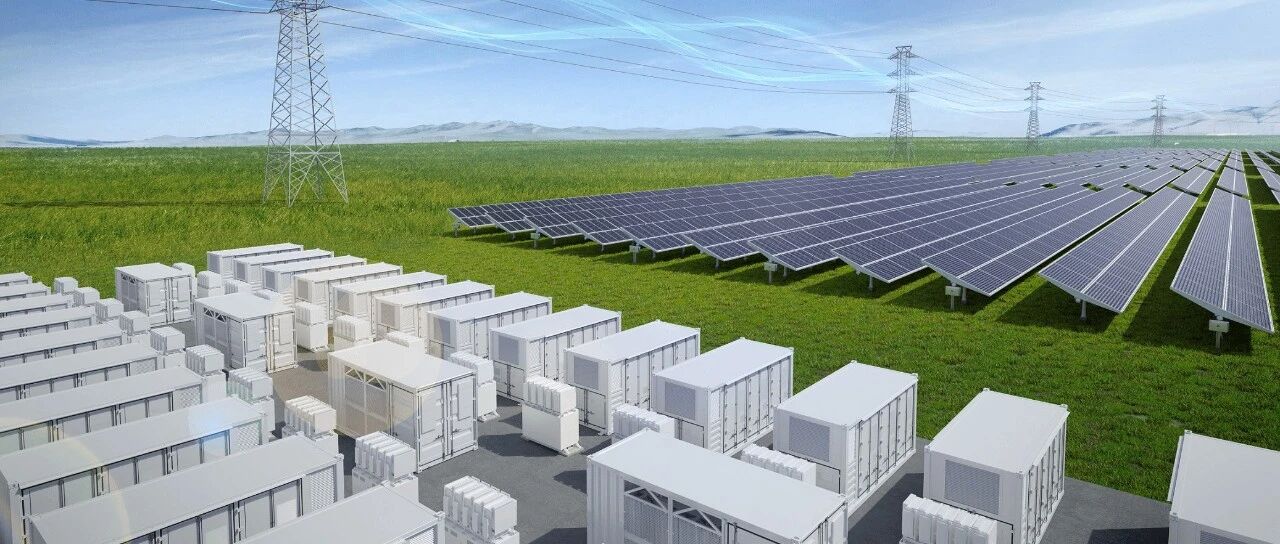
英大证券电力能源行业周报-20260317
British Securities· 2026-03-17 02:38
Investment Rating - The industry investment rating is "Outperform the Market" [1][57] Core Insights - The report highlights a significant growth in the new energy storage sector, with installed capacity and power scale increasing by 182.07% and 472.06% respectively in January-February 2026 compared to the previous year [10][11] - The report indicates that the power equipment index outperformed the CSI 300 index by 4.36 percentage points during the period from March 9 to March 15, 2026, with a rise of 4.55% [12][14] - The report emphasizes the importance of new energy storage as a core infrastructure for the new power system, supported by government policies that provide stable revenue expectations [11] Summary by Sections Industry Events - In January-February 2026, the new energy storage sector saw an addition of 9.51GW in power and 24.18GWh in capacity, marking a year-on-year increase of 182.07% and 472.06% respectively [10] - The report details that 74.76% of the new installations were on the grid side, while 20.84% were on the power side, and 4.4% on the user side [10] Market Performance - The CSI 300 index increased by 0.19% from March 9 to March 15, 2026, while the power equipment index rose by 4.55%, outperforming the CSI 300 [12][14] - Among the sub-sectors, wind power components, lithium batteries, and battery chemicals had the highest increases, with respective rises of 13.37%, 10.84%, and 10.06% [18] Power Industry Operations - In December 2025, the total electricity consumption reached 908 billion kWh, a year-on-year increase of 2.77%, while the total for the year was 1,036.82 billion kWh, up 5.00% [19] - The report notes that the newly installed power generation capacity for the year was 54,617.16 MW, reflecting a growth of 26.07% [21] New Power System Situation Photovoltaics - As of March 11, 2026, the average price of polysilicon was 46.5 yuan/kg, down by 1.50 yuan/kg from the previous week [38] Energy Storage - By the end of December 2025, the cumulative installed capacity of energy storage projects in China reached 213GW, with new energy storage accounting for 144.7GW, a year-on-year increase of 85% [41] Lithium Batteries - As of March 13, 2026, the price of lithium carbonate was 154,000 yuan/ton, an increase of 400 yuan/ton from the previous week [44] Charging Infrastructure - By the end of January 2026, the total number of charging facilities in China reached 20.698 million, a year-on-year increase of 56.65% [49]
向“新”而行,以“质”图强,筑“基”蓄远
Ping An Securities· 2026-03-15 13:50
Core Insights - The "15th Five-Year Plan" emphasizes increased contributions from technology, green initiatives, and social welfare compared to the "14th Five-Year Plan" [5][6] - Key industrial directions include a focus on technological innovation, digital intelligence, green and low-carbon initiatives, and expanding domestic demand [5][6] - The plan aims to enhance the modern industrial system, promote new industries, and deepen the integration of technology and industry [5][6] Summary by Sections Economic Development Goals - GDP growth is targeted to remain within a reasonable range, with an average annual growth rate of 5.0% [6] - Labor productivity is expected to grow at 6.1%, exceeding GDP growth [6] - Urbanization rate is projected to reach 71% by 2025 [6] Innovation and Technology - R&D expenditure is expected to grow by over 7%, with a target of more than 22 high-value invention patents per 10,000 people [6] - The digital economy's core industries are projected to account for 12.5% of GDP [6] Social Welfare - The urban unemployment rate is targeted to be below 5.5% [6] - The number of registered nurses per 1,000 people is expected to increase to 5.1 [6] - The proportion of nursing beds in elderly care institutions is set to reach 73% [6] Green and Low-Carbon Initiatives - Carbon emissions per unit of GDP are expected to decrease by 17% [6] - The share of non-fossil energy in total energy consumption is targeted to reach 25% [6] Industrial Upgrading - The plan emphasizes the development of high-end manufacturing and strategic materials, with a focus on enhancing competitiveness in rare metals and advanced materials [5][11] - New industries such as robotics, smart driving, and innovative solar batteries are highlighted for growth [5][11] Consumption Upgrade - The plan aims to enhance service consumption and promote new consumption patterns, including health and leisure sectors [9][18] - It encourages the development of high-end consumer goods and supports the transformation of old housing to meet modern needs [9][18] Market Impact - The transition from old to new growth drivers is expected to create long-term investment opportunities in sectors such as TMT, machinery, and renewable energy [9][11] - The focus on technological innovation and industrial safety is likely to benefit advanced manufacturing sectors [9][11]
“十五五”规划中的能源要点全梳理!
国家能源局· 2026-03-14 05:11
Core Viewpoint - The article outlines the key energy development goals and strategies for the 14th Five-Year Plan period, emphasizing high-quality development, technological self-reliance, and ecological progress in energy systems [2][4]. Group 1: Major Goals - Significant achievements in high-quality development are expected, with a unified national market and advantages of a super-large-scale market becoming more evident [4]. - The level of technological self-reliance will see substantial improvements, with breakthroughs in key core technologies and an increase in original and leading technological achievements [4]. - Progress in building a beautiful China will be marked by the formation of green production and lifestyle patterns, achieving carbon peak targets, and reducing carbon emissions per unit of GDP by 17% [4][6]. Group 2: Energy Production Capacity - The comprehensive energy production capacity is projected to reach 5.8 billion tons of standard coal [5]. Group 3: Industrial Upgrading - Key industries such as steel, petrochemicals, and shipbuilding will undergo structural adjustments to enhance quality and competitiveness [7]. - The focus will be on developing high-end products and accelerating breakthroughs in critical components and materials [7]. Group 4: Emerging Industries - The development of strategic emerging industries such as new information technology, new energy, and high-end equipment will be accelerated, with an emphasis on creating industry clusters with unique advantages [14][15]. - The article highlights the importance of advancing technologies like quantum science, hydrogen energy, and artificial intelligence as future economic growth points [16]. Group 5: Energy Infrastructure - The construction of a new energy infrastructure will be prioritized, focusing on clean, low-carbon, and efficient energy systems, with a significant push for non-fossil energy sources [20]. - The article mentions the implementation of a ten-year doubling action for non-fossil energy and the establishment of clean energy bases [20]. Group 6: Carbon Neutrality Goals - The plan includes a comprehensive approach to achieving carbon peak and neutrality, with specific measures to control carbon emissions and promote energy efficiency [77][79]. - The goal is to reduce energy consumption per unit of GDP by approximately 10% and to ensure that new electricity consumption is covered by clean energy [80].

十五五规划全文发布,大力发展新型储能
中关村储能产业技术联盟· 2026-03-14 05:07
Core Viewpoint - The article emphasizes the construction of a new energy system in China, focusing on clean, low-carbon, and efficient energy sources, while promoting energy security and the transition from fossil fuels to non-fossil energy sources [3]. Group 1: New Energy Infrastructure - The plan includes accelerating the construction of new energy infrastructure and implementing a ten-year action plan for the doubling of non-fossil energy [3]. - It aims to develop clean energy bases such as wind, solar, hydro, and nuclear power, with a focus on distributed energy and green hydrogen [3]. Group 2: Major Energy Projects - The construction of major hydropower and integrated wind-solar bases in regions like the Yarlung Tsangpo River and the upper reaches of the Jinsha River is prioritized, with an additional installed capacity of approximately 10 million kilowatts for pumped storage stations [5]. - Large-scale wind and solar bases will be developed in desert areas, including the Kubuqi and Ulan Buh deserts, with a focus on energy export [5]. Group 3: Nuclear Power Development - The plan includes advancing coastal nuclear power construction, targeting an operational installed capacity of around 110 million kilowatts [6]. - It also emphasizes the need for comprehensive utilization of nuclear energy and the development of small modular reactors [6]. Group 4: Power Transmission and Distribution - The construction of clean energy power transmission channels in provinces such as Inner Mongolia and Xinjiang is outlined, with a target of over 420 million kilowatts for west-to-east power transmission [6]. - Enhancements in inter-provincial power sharing and cross-grid operations are also part of the strategy [6]. Group 5: Emerging Industries - The article highlights the acceleration of strategic emerging industries, including new generation information technology, new energy, and high-end equipment manufacturing [10]. - It encourages the development of innovative technologies in sectors like biomedicine and aerospace, aiming to create a robust ecosystem for emerging industries [10]. Group 6: Carbon Neutrality Goals - The plan outlines actions to achieve carbon peak and neutrality, including a 10% reduction in energy consumption per unit of GDP and a target to replace 30 million tons of coal consumption annually [16][17]. - It emphasizes the importance of energy efficiency improvements and the promotion of low-carbon technologies across various sectors [16][17].