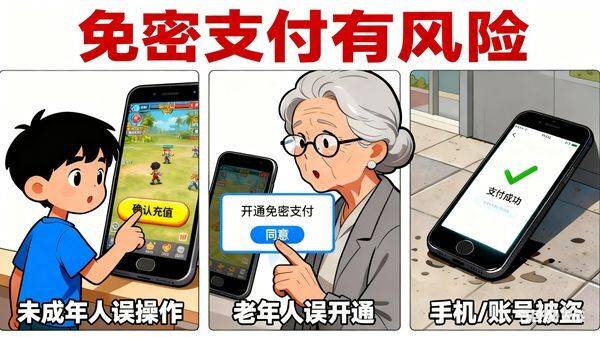
免密支付安全管理

Search documents
“免密支付”莫跟消费者玩“捉迷藏”
Sou Hu Cai Jing· 2025-11-14 00:10
Core Points - The China Payment and Clearing Association has issued an initiative to enhance the security management of "no-password payment" services, responding to public concerns about user rights protection and industry health [2][3] - "No-password payment" allows users to complete transactions without entering a password, significantly reducing transaction time and improving merchant checkout efficiency [2] - The initiative emphasizes the importance of user consent, advocating for the elimination of default activation of "no-password payment" features to respect consumer rights [2] Group 1 - The initiative focuses on the need for payment service providers to clearly communicate terms and options regarding the activation and deactivation of "no-password payment" features [2] - It highlights the risks associated with "no-password payment," particularly for vulnerable groups such as children and the elderly, who may inadvertently incur charges [2][3] - The association encourages consumers to regularly check their transaction statements and report any unauthorized transactions promptly [3] Group 2 - The initiative calls for tailored communication strategies for the elderly, including regular updates on "no-password payment" transactions and easy access to cancellation options [3] - It suggests that relevant authorities should enhance awareness and understanding of "no-password payment" among older adults through education and training [3] - The overall message is that while "no-password payment" can facilitate economic growth, it must be managed properly to maximize its benefits [3]

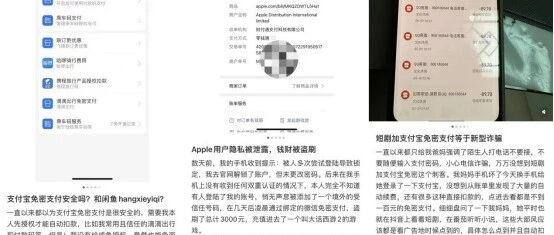
5.49万条投诉背后,免密支付的“隐形收割”
凤凰网财经· 2025-11-13 02:34
Core Viewpoint - The China Payment and Clearing Association has issued an initiative to strengthen the security management of "no-password payment" services, highlighting the growing security risks associated with this convenient payment method [1][2]. Group 1: Initiative Implementation - The initiative acknowledges the convenience of "no-password payment" while warning of existing risks, particularly the need for improved security management by payment service providers and the necessity for users to enhance their security awareness [2]. - It mandates that payment institutions must ensure user consent is clearly confirmed during the activation process, eliminating any form of "default activation" to protect user rights [2][3]. - The initiative emphasizes the establishment of dynamic monitoring and intervention mechanisms to detect unusual transaction behaviors, particularly for vulnerable groups like the elderly [2][3]. Group 2: Industry Issues - There have been over 54,900 complaints related to "no-password payment" on third-party complaint platforms, indicating widespread user frustration and financial loss [4]. - Many users have been unknowingly activated for "no-password payment," leading to unauthorized charges, particularly in e-commerce and subscription services [6][10]. - The difficulty in pursuing accountability after fraudulent transactions is highlighted, as platforms often claim user authorization, complicating the process for users to prove negligence on the part of the service providers [10]. Group 3: Business Dynamics - Despite the risks, platforms continue to promote "no-password payment" due to its impact on consumer behavior, increasing average transaction values by 18% while also raising return rates by 40% [13]. - The automatic deduction feature helps businesses retain customers, as users may forget to cancel subscriptions, leading to stable revenue streams for merchants [13]. - Major platforms have reportedly generated over 10 billion yuan in additional revenue due to the default activation of "no-password payment" features [13]. Group 4: Future Directions - The initiative represents a crucial step towards regulating the industry, but its successful implementation requires collaboration among payment institutions, merchants, users, and regulatory bodies [14]. - Payment service providers are urged to prioritize user rights and safety, ensuring informed consent and accountability in the event of security breaches [14]. - Users are encouraged to enhance their security awareness and regularly check their "no-password payment" settings to mitigate potential risks [14].