支付

Search documents
15 Best Stocks to Buy According to Billionaire Ray Dalio
Insider Monkey· 2026-03-31 22:12
Geopolitical Analysis - Ray Dalio emphasizes the critical geopolitical situation involving the United States, Israel, and Iran, particularly focusing on the Strait of Hormuz as a pivotal battleground for the American-led global order [1][2] - The Strait of Hormuz is identified as a significant strategic vulnerability, carrying approximately 21% of the global oil supply and a substantial portion of liquefied natural gas [2] Military and Economic Implications - Dalio notes a mismatch in warfare strategies, highlighting that while the US and Israel have conventional military superiority, Iran is effectively using low-cost drones and mines to deter shipping, resulting in a 97% collapse in traffic [3] - The potential for Iran to offer safe passage to tankers trading in Chinese Yuan poses a direct threat to the petrodollar system, indicating a shift towards a multipolar world [3] Investment Insights - Bridgewater Associates, led by Dalio, had a 13F portfolio valued at over $27 billion, with significant holdings in financial services and technology sectors [1] - Mastercard Incorporated (NYSE:MA) is highlighted as a key holding, with Bridgewater's stake increasing to 409,000 shares, an 11% rise from the previous quarter [8] - Mastercard is viewed as a compounder stock due to its near-monopoly status and high margins, making it a preferred choice among hedge funds [9]



报告征集 | 2026年全球AI支付行业洞察报告
艾瑞咨询· 2026-03-31 00:04
Core Insights - The article emphasizes the transformative impact of artificial intelligence (AI) on the payment industry, enhancing risk management, transaction efficiency, and user experience through advanced technologies like smart risk control and biometric payments [2] - AI is evolving payment services from mere transactional tools to intelligent assistants capable of cognitive decision-making, driven by the integration of generative AI and large model technologies [2] - Despite initial challenges such as model interpretability and data privacy, the deep integration of AI in payment scenarios is generating significant value, with potential for further advancements in complex areas like cross-border payment compliance and corporate financial management [2] Research Background - The article outlines the background of AI's penetration into the payment industry, highlighting its role in reshaping the underlying logic and ecosystem of payment systems [2] - It notes that AI technologies are enhancing core processes such as transaction processing, fraud prevention, user operations, and settlement, thereby improving risk defense capabilities and transaction flow efficiency [2] AI Payment Development Background - The upcoming report will clarify the concept and core advantages of AI payments, analyzing driving factors from policy, economic, social, and technological perspectives [5] - It aims to articulate the key value of AI as an intelligent transaction closure mechanism and systematically outline its various development stages [5] Current State of AI Payment Industry - The report will provide an overview of the global AI payment industry's current state and future opportunities, mapping the industry and analyzing core application scenarios [6] - It will also objectively assess the risks and challenges faced by AI payments at this stage [6] Future Development Trends and Expert Insights - The report will evaluate the future trends of the AI payment industry from technological and market perspectives, offering strategic advice to industry participants [8] - It will include insights from industry experts, scholars, and seasoned practitioners, summarizing their core viewpoints in a structured format [9] Participation Value - Companies participating in the report will have the opportunity to be included in the industry map of the "Global AI Payment Industry Insight Report," enhancing brand visibility and industry influence [11] - Participants can also be featured in the "iResearch: AI Payment Industry Typical Cases" and contribute their insights to the "iResearch: AI Payment Industry Expert Voices" section [11] Participation Process - The report is open for contributions from market participants and observers in the third-party payment and fintech sectors [14] - The collection period for contributions is from now until May 12, 2026 [15]

连连数字(02598):全球TPV高速增长,净利润略超预期
SINOLINK SECURITIES· 2026-03-27 09:46
Investment Rating - The report maintains a "Buy" rating for Lianlian Digital (02598.HK) [1] Core Insights - Lianlian Digital reported a revenue of 1.733 billion yuan for 2025, representing a year-on-year growth of 31.9%. The net profit attributable to shareholders was 1.664 billion yuan, marking a turnaround from a loss in the previous year. Gross profit reached 873 million yuan, with a gross margin of 50.4%, a slight decline of 1.5 percentage points year-on-year due to significant growth in lower-margin virtual card services [1][2] - The company's global payment business generated 1.045 billion yuan in revenue, up 29.3% year-on-year, with a gross margin of 72.3%. The total payment volume (TPV) for global payments surged by 60.7% to 452.4 billion yuan [2] - The domestic payment business revenue was 405 million yuan, an 18.3% increase year-on-year, with a gross margin of 23.0%, benefiting from a strategic focus on high-value services for Chinese enterprises [2] - The value-added services segment saw a revenue increase of 81.2% to 265 million yuan, although the gross margin fell to 7.2%, down 11.9 percentage points year-on-year due to the rapid growth of low-margin virtual card services [2] - The report highlights effective cost control, with sales expense ratio decreasing by 3.3 percentage points to 16%, management expense ratio down by 4.9 percentage points to 38%, and R&D expense ratio down by 3.5 percentage points to 21% [2] Financial Forecasts and Valuation - Short-term growth in TPV, improved gross margins, and strong momentum in value-added services are expected to support Lianlian Digital's performance in 2025, with profitability anticipated in 2026. Long-term prospects are bolstered by the company's licensing advantages and expected growth in cross-border and domestic payment TPV driven by increasing digital payment demand [3] - The projected sales per share (SPS) for 2026-2028 are 1.51, 1.86, and 2.20 yuan, respectively, with the current price corresponding to price-to-sales (P/S) ratios of 2.5, 2.1, and 1.8 times [3]
连连数字:全球TPV高速增长,净利润略超预期-20260327
SINOLINK SECURITIES· 2026-03-27 08:24
Investment Rating - The report maintains a "Buy" rating for Lianlian Digital, expecting a price increase of over 15% in the next 6-12 months [1]. Core Insights - Lianlian Digital reported a revenue of 1.733 billion HKD for 2025, representing a year-on-year growth of 31.9%. The net profit reached 1.664 billion HKD, marking a turnaround from a loss in the previous year [1]. - The company's gross profit was 873 million HKD, with a gross margin of 50.4%, slightly down by 1.5 percentage points due to significant growth in lower-margin virtual card services [1]. - The global payment, domestic payment, and value-added services segments saw revenue growth of 29.3%, 18.3%, and 81.2% respectively, contributing 60%, 23%, and 15% to total revenue [1]. Business Segment Analysis Global Payment Business - In 2025, the global payment business generated 1.045 billion HKD, a 29.3% increase year-on-year, with a gross margin of 72.3%, up by 0.3 percentage points. The total payment volume (TPV) surged by 60.7% to 452.4 billion HKD, with a slight decrease in the comprehensive service fee rate to 0.23% [2]. - The company holds 66 payment licenses globally, covering 100 countries and regions, and supports over 130 currencies, positioning it for continued growth [2]. Domestic Payment Business - The domestic payment business achieved a revenue of 405 million HKD, reflecting an 18.3% year-on-year growth, with a gross margin of 23.0%, up by 3.3 percentage points. This growth is attributed to a strategic focus on high-value services for Chinese enterprises going global [2]. Value-Added Services - Revenue from value-added services reached 265 million HKD, showing a significant growth of 81.2%. However, the gross margin decreased by 11.9 percentage points to 7.2%, primarily due to the rapid growth of low-margin virtual card services [2]. Financial Forecast and Valuation - The report anticipates that the growth in TPV, improvement in gross margins, and strong momentum in value-added services will support Lianlian Digital's performance in 2025. The company is expected to achieve profitability in 2026 [3]. - Long-term prospects are bolstered by the company's licensing advantages, with both cross-border and domestic payment TPV expected to benefit from increasing digital payment demand. Projected sales per share (SPS) for 2026-2028 are 1.51, 1.86, and 2.20 HKD, with corresponding price-to-sales (P/S) ratios of 2.5, 2.1, and 1.8 [3].
PSQ (PSQH) - 2025 Q4 - Earnings Call Transcript
2026-03-17 14:00
Financial Data and Key Metrics Changes - The company reported net revenue from continuing operations of $18.2 million for 2025, an 81% year-over-year increase compared to $10.1 million in 2024, exceeding previous guidance of $16.5 million [11] - Gross merchandise volume (GMV) grew 411% year-over-year, driven by the growth of the payments business [12] - Operating loss improved to $9.7 million in Q4 2025, compared to a $32 million operating loss for the year, with $16.7 million of the loss related to non-cash stock-based compensation and depreciation [15] Business Line Data and Key Metrics Changes - Financial technology revenue, including payment processing and credit offerings, reached $7.3 million in Q4 2025, a 109% increase from the prior year [12] - Credit business revenue in Q4 increased by $1.5 million or 47% year-over-year to $4.8 million [12] - Repeat customer rates for the Credova platform increased by 25% compared to 2024, indicating stronger customer engagement [12] Market Data and Key Metrics Changes - The firearms industry showed growth despite broader market softness, with a 3.4% year-over-year decline in NSSF adjusted NICS checks in December 2025 [5] - The company is focusing on underserved industries, particularly in e-commerce, which benefits its payments and credit businesses [5] Company Strategy and Development Direction - The company is simplifying its operations and focusing on financial infrastructure, with four core themes: strategic focus, operational accountability, cash efficiency, and higher revenue per employee [4] - The strategy includes leveraging AI to improve underwriting performance and operational efficiency, with a goal of increasing revenue per employee significantly throughout 2026 [6][7] - The company is evaluating divestitures of non-core assets and focusing on building an integrated financial platform for merchants and consumers [9][10] Management's Comments on Operating Environment and Future Outlook - Management emphasized the importance of executional discipline and strategic focus, with a commitment to reducing operating cash burn while growing the financial technology platform [11] - The company expects to see significant disintermediation in the payments ecosystem, creating opportunities for new platforms that provide integrated financial services [8] - Management expressed confidence in the company's ability to deliver long-term shareholder value through operational discipline and market share growth [18] Other Important Information - The company reduced SG&A expenses by $9.9 million year-over-year, reflecting strong expense discipline [14] - Cash and restricted cash as of December 31, 2025, totaled $16.1 million, with net cash for operating activities decreasing by $14.2 million during 2025 [17] Q&A Session Summary Question: Why was now the appropriate time for the management change? - The management change was a deliberate decision made by the board to align with the strategic pivot into Fintech, leveraging the new CEO's background in financial technology [22] Question: How will the go-to-market strategy change for the company's fintech efforts? - The strategy will focus on executing what is working, particularly in credit and payment products for underserved industries [25][26] Question: What are the capital priorities moving forward? - The focus will be on running a capital-efficient business, driving revenue per employee, and moving towards profitability before considering debt repayment or strategic M&A [27][28] Question: Where do you see the biggest opportunity in payments and credit? - The company sees opportunities in the 501(c)(3) and 501(c)(4) space, as well as in the lending industry, where traditional fintech has shied away [34][35] Question: What is the focus regarding digital assets? - The focus is on stablecoins and new payment rails that can improve transaction speed and reduce costs for merchants [37] Question: How will AI be integrated into the business? - AI will be used internally to increase cognitive capacity and improve efficiency, with a comprehensive strategy being developed [39][40] Question: How will proceeds from the sale of the brand segment be used? - Proceeds will be used to execute the product roadmap and focus on revenue that has good unit economics [45][46] Question: What KPIs should be followed to measure success? - Key metrics include top-line growth, adjusted EBITDA loss reduction, operating cash flow, and revenue per employee [47][48]

市值缩水80%,“世界的支付宝”要被卖了?
创业邦· 2026-03-11 04:43
Core Viewpoint - The article discusses the significant decline of PayPal from its peak valuation and the potential implications of its rumored acquisition, highlighting the uncertainty and risks faced by cross-border sellers who rely on PayPal for transactions [4][5][9]. Group 1: PayPal's Decline - In 2021, PayPal reached a market value of over $360 billion, benefiting from a surge in online transactions due to the pandemic [6]. - By 2026, its market value plummeted to approximately $43 billion, a decline of over 80% [9]. - The slowdown in online payment growth, competition from rivals like Apple Pay and Stripe, and ineffective integration of acquired companies have contributed to this decline [10][12]. Group 2: Acquisition Rumors - The potential acquisition by Stripe, valued at $159 billion, could create a "super payment platform" but faces challenges such as antitrust scrutiny and technical integration difficulties [12][15]. - PayPal's board is preparing to resist hostile takeovers, indicating a turbulent period ahead for the company [15][17]. Group 3: Importance for Cross-Border Sellers - PayPal remains a critical payment processor for Chinese cross-border sellers, holding a 53% market share in China, significantly ahead of competitors like Shop Pay (12%) and Apple Pay (8%) [18][21]. - The reliance on PayPal not only provides a payment option but also serves as a trust signal for consumers, making it essential for sellers to maintain this payment method [21][24]. Group 4: Risks of Dependence on PayPal - Sellers face potential increases in payment fees and risks of account freezes, which could severely impact their operations [24]. - The article emphasizes the need for sellers to diversify their payment systems to avoid over-reliance on a single provider, especially in light of the evolving payment landscape [26][30]. Group 5: Evolving Payment Landscape - The global payment market is becoming increasingly competitive, with new players like Shop Pay and BNPL services gaining traction [26][28]. - Regional payment systems are emerging, reshaping local markets and making it difficult for foreign giants to penetrate [29]. - The article advocates for sellers to adopt a multi-faceted payment strategy to navigate the complexities of the current payment ecosystem [30].

第一创业晨会纪要-20260309
First Capital Securities· 2026-03-09 04:10
Macro Economic Group - The U.S. labor market showed signs of weakness in February, with a seasonally adjusted non-farm payroll decrease of 92,000, significantly below the expected increase of 59,000 [3][4] - The unemployment rate rose to 4.4%, higher than the expected 4.3%, while the labor force participation rate fell to 62%, the lowest since 2022 [3][4] - Average hourly wages increased by 3.8% year-on-year, slightly above the expected 3.7%, indicating ongoing wage pressures [3][4] Industry Comprehensive Group - Kimi's personal subscription user payment order volume surged, with a month-on-month increase of 8280% in January and a further 123.8% in February, propelling it to the 9th position in Stripe's global rankings [8] - The rise of AI applications like OpenClaw is expected to drive significant growth in cloud service demand, benefiting major cloud providers listed in Hong Kong [8] - The Chinese government plans to invest over 7 trillion yuan in key infrastructure areas, with a focus on computing and new communication networks, which are expected to see substantial growth [8] Consumer Group - JD Group's revenue for 2025 is projected to reach 1,309.1 billion yuan, a year-on-year increase of 13.0%, despite a 43.5% decline in Non-GAAP net profit due to increased investments in new businesses [11] - Bilibili's revenue for 2025 is expected to be 30.35 billion yuan, a 13.1% increase, with advertising revenue growing by 23% to 10.06 billion yuan, marking the company's first annual GAAP profit [12] - Ajisen China anticipates a net profit of 15 to 40 million yuan for 2025, a significant turnaround from a loss of 20.2 million yuan in 2024, indicating improved operational efficiency [13]
复星国际拟1.05亿元入主商盟科技,后者陷“代扣风波”
Xin Lang Cai Jing· 2026-03-04 13:36
Core Viewpoint - Fosun International plans to invest 105 million yuan in Zhejiang Shangmeng Technology Co., Ltd. to acquire a 51.0879% stake, making it the largest shareholder, which will enhance the company's capital and operational capabilities in the payment industry [3][4]. Group 1: Investment Details - Fosun International will increase Shangmeng Technology's registered capital from 100.5 million yuan to 205.5 million yuan through this cash investment [3]. - The investment is aimed at strengthening Shangmeng Technology's capital base to meet regulatory requirements and support its licensed operations [4]. Group 2: Strategic Implications - The acquisition is expected to integrate Shangmeng Payment's capabilities with Fosun's extensive membership system and consumer ecosystem, potentially reducing third-party payment costs and increasing customer loyalty [6]. - The investment also addresses regulatory requirements, as the minimum registered capital for payment institutions operating certain services is set at 205 million yuan [4]. Group 3: Market Context - Shangmeng Technology, established in August 2009, is the wholly-owned parent company of Shangmeng Payment, which holds a payment business license valid until December 2026 [3]. - Recent scrutiny of Shangmeng Payment due to high-interest scenarios has raised concerns, but the company has denied any operational halts while committing to compliance checks [6]. Group 4: Future Outlook - The capital infusion is expected to provide a solid foundation for rapid business development and technological advancement for Shangmeng Technology [7]. - Analysts suggest that Shangmeng Technology should focus on real consumption scenarios and strict transaction controls to ensure compliance before expanding its business scale [6].

复星国际拟1.05亿元入主商盟科技,后者陷“代扣风波”,增资后达到最低门槛
Bei Jing Shang Bao· 2026-03-04 12:42
Core Viewpoint - Fosun International plans to invest 105 million RMB in Shangmeng Technology, acquiring a 51.0879% stake and becoming the largest shareholder, which will increase Shangmeng Technology's registered capital from 100.5 million RMB to 205.5 million RMB [3][4] Group 1: Investment Details - The investment will directly inject capital into Shangmeng Technology rather than paying existing shareholders, which is a unique approach in the payment industry [4] - The capital injection aims to strengthen Shangmeng Technology's capital base to support its licensed operations and meet regulatory requirements [4] - The minimum registered capital requirement for Shangmeng Payment, a subsidiary of Shangmeng Technology, is calculated to be 205 million RMB based on regulatory guidelines [4] Group 2: Strategic Implications - The acquisition of the payment license is expected to integrate Shangmeng Payment's capabilities with Fosun Group's extensive member system and consumption ecosystem, potentially reducing third-party payment costs and enhancing customer loyalty [5] - There are concerns regarding Shangmeng Payment's past issues with regulatory scrutiny, which necessitate a thorough review of existing high-risk merchants and non-compliant businesses [5][6] - The collaboration between Fosun International and Shangmeng Technology is seen as a way to leverage payment licenses for financial transactions within Fosun's ecosystem while ensuring compliance [5][6] Group 3: Future Outlook - Analysts suggest that Shangmeng Technology should focus on real consumption scenarios and strictly control merchant access to avoid high-risk and non-compliant activities [6] - The capital reserve from this investment is expected to provide robust support for Shangmeng Technology's rapid business development and technological capabilities [6]
深夜崩盘!英伟达2天蒸发3万亿,银行股集体跳楼!一场席卷全球的资本大逃亡正在上演
Sou Hu Cai Jing· 2026-03-01 07:10
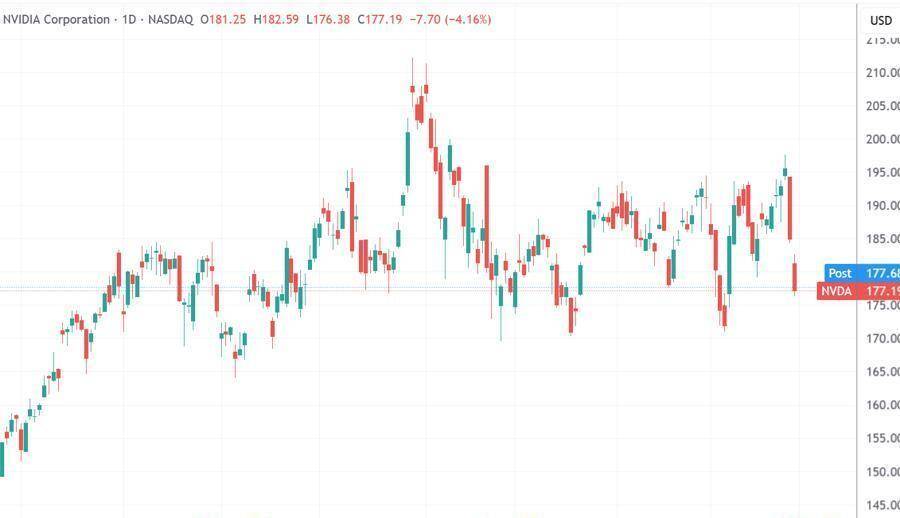
Market Overview - The U.S. stock market experienced significant declines, with the Dow Jones dropping 521 points (1.05%) to close at 48,977.92 points, and the Nasdaq falling 0.92% to 22,668.21 points, marking the largest monthly declines since March 2025 [1] - February saw the Nasdaq index plummet 3.38% and the S&P 500 decrease by 0.87%, both recording their largest single-month declines in a year [1] Nvidia's Market Impact - Nvidia's stock fell 4.16% to $177.19, resulting in a market cap loss of $187.1 billion in one day, and a staggering $446.4 billion over two trading days, equivalent to the total market cap of a major bank [3] - Despite Nvidia reporting a record Q4 revenue of $68.1 billion (up 73% YoY) and a net profit of $43 billion (up 94% YoY), the stock price plummeted, indicating a disconnect between strong earnings and market performance [3] Investor Sentiment and Concerns - Analysts noted that the sell-off reflects profit-taking after positive earnings, alongside skepticism about the sustainability of massive capital expenditures by cloud service providers in the AI sector [4] - Concerns arose regarding whether the substantial investments in AI by tech giants would yield returns, particularly as Nvidia's growth may face limits if customer demand slows [4] CoreWeave's Financial Struggles - CoreWeave, a cloud AI computing rental giant, saw its stock drop over 22% after reporting a Q4 net loss that expanded from $51 million to $452 million YoY, alongside a capital expenditure plan of $30-35 billion for 2026, significantly higher than the previous year's $10.3 billion [4] OpenAI's Funding and Market Reaction - OpenAI announced a new funding round of $110 billion, raising its pre-money valuation to $730 billion, with major investments from Amazon, Nvidia, and SoftBank [5] - Despite this funding, market sentiment remained negative, highlighting the harsh reality of the "burning cash" competition among AI giants [5] Financial Sector Impact - The KBW Bank Index fell 4.85%, marking its largest single-day drop since April of the previous year, with major banks like Goldman Sachs and Morgan Stanley experiencing significant declines [5] - The financial sector's downturn was exacerbated by fears stemming from the collapse of a UK mortgage company, raising concerns about systemic risks in the private credit market [7] Broader Market Trends - The market displayed a stark divide, with tech giants generally declining while some AI-related stocks surged, such as Dell Technologies, which rose 21.93% due to expected doubling of AI server revenue [8] - The overall sentiment shifted towards safe-haven assets like gold and silver, with gold prices nearing $5,280 per ounce and silver rising 6.15% [10] Employment Concerns in AI - The announcement of significant layoffs by Block, a fintech company, due to AI-driven productivity improvements raised alarms about AI's potential impact on employment across sectors, including finance [7] Conclusion - The market turmoil initiated by Nvidia's stock decline reflects a broader reassessment of the AI investment landscape, with implications for both technology and financial sectors as investors grapple with the sustainability of growth in a rapidly changing environment [12]