全周期服务生态

Search documents
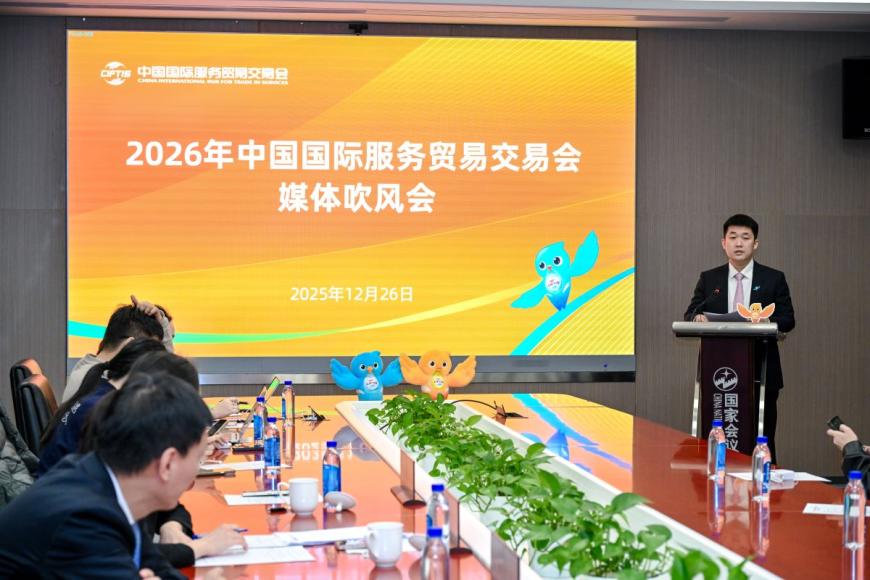
2026年服贸会定档9月9日:以“新意”释放活力 用“温度”连接世界
Xin Hua Wang· 2025-12-29 03:01
Core Insights - The 2026 China International Service Trade Fair (CIFT) will be held from September 9 to 13 in Beijing, focusing on upgrading the exhibition from display to a full-cycle service ecosystem, enhancing its role as a national open platform for expanding openness, deepening cooperation, and leading innovation [1][3] Group 1: Event Features - The CIFT will introduce a "Going Global Zone" and a small and medium-sized enterprise exhibition area for the first time, showcasing outstanding cases and innovative achievements in service and technology exports [3] - The fair will continue to deepen the "one enterprise, one policy" customized service model, providing differentiated and precise exhibition plans based on the industry, development stage, and cooperation intentions of participating enterprises [3][4] Group 2: Venue and Activities - The Shougang Park, as the permanent venue for the CIFT, is undergoing upgrades to create a unique "exhibition town" that integrates exhibition, conference, negotiation, and cultural functions by September 2026 [3] - The CIFT will organize various cultural and business activities, promoting an open and inclusive negotiation atmosphere, and will continue to offer business investigation routes [4] Group 3: Global Engagement - The CIFT will maintain a high standard by hosting a global service trade summit, inviting foreign dignitaries, international organization leaders, and representatives from multinational companies [4] - The fair aims to transition from commodity trading to service trade, enhancing internationalization, professionalism, and marketization, thereby injecting new momentum into the development of global service trade [4]

中国智慧养老行业研究报告
3 6 Ke· 2025-11-26 00:57
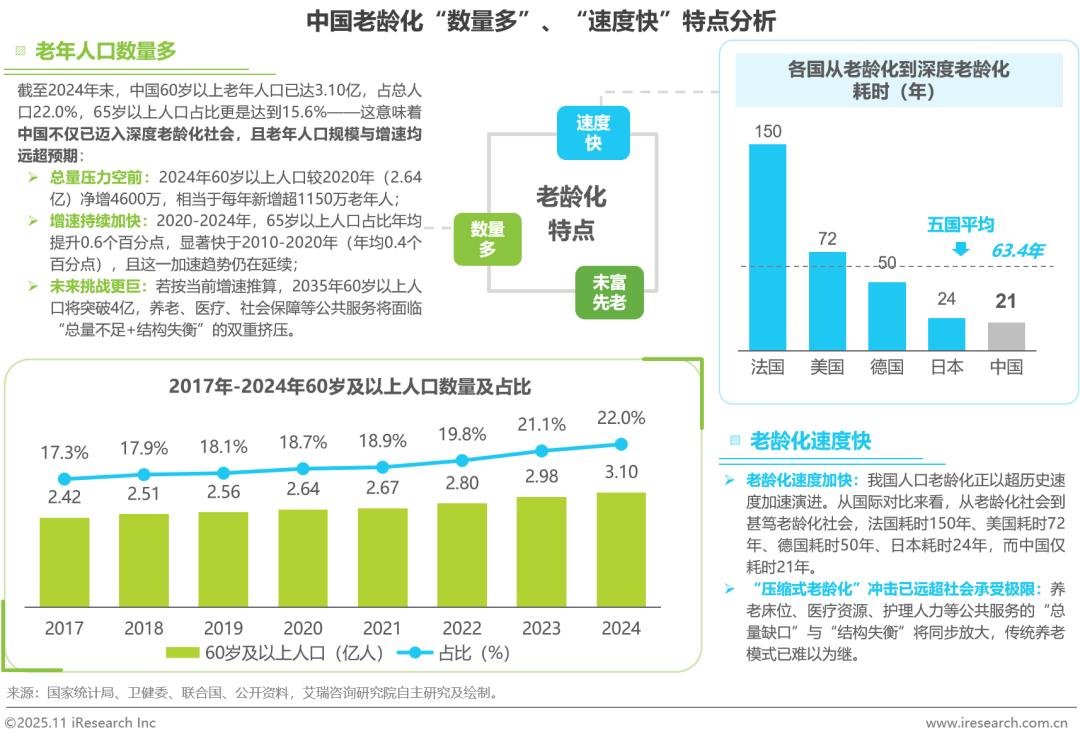
Core Insights - The Chinese smart elderly care industry is transitioning from "pilot projects" to "full-scale penetration" and from "technology stacking" to "ecosystem integration" due to the intersection of population aging and digital transformation [1][3][24] - By the end of 2024, the population aged 60 and above in China is expected to exceed 310 million, accounting for 22% of the total population, highlighting the urgent need for smart elderly care solutions [1][3][19] Industry Background - Continuous policy support is enhancing the strategic position of smart elderly care, driven by changes in family structure, consumption upgrades among the elderly, and increased digital acceptance [4][17] - The industry is evolving towards precision, personalization, and efficiency, with technological innovations reshaping the elderly care service ecosystem [4][21] Current Industry Status - Smart elderly care has developed comprehensive solutions covering home, community, and institutional settings, with three main types of players: comprehensive solution providers, vertical technology companies, and traditional elderly care enterprises [4][30] - Challenges such as data silos, insufficient technology adaptation for the elderly, and immature business models remain significant barriers to industry development [4][30][37] Research Outlook - Demand for smart elderly care is progressing from survival assurance to value realization, indicating a shift towards quality-oriented services [5][40] - The supply side is expected to evolve through technological, resource, and scenario advancements, leading to large-scale development of smart elderly care services [5][43] Technological Empowerment - The integration of AI, IoT, big data, and cloud computing is driving the transformation of elderly care services from passive care to proactive prevention, enhancing the quality of life for the elderly while reducing social care costs [21][43] Market Dynamics - The smart elderly care market is characterized by a shift from fragmented services to a comprehensive ecosystem, with a focus on both technological innovation and humanistic care [2][24][47] - The industry is witnessing a trend towards ecological collaboration, where the core ecosystem involves government support, enterprise delivery, and feedback from families and the elderly [47][49] Regional Development - The smart elderly care industry shows a pattern of stronger development in eastern regions compared to western areas, with each region leveraging its unique resources to shape its development path [33][37] Challenges and Opportunities - Despite the growth potential, the industry faces challenges such as data isolation, technological adaptation issues, and a lack of mature business models, which need to be addressed for sustainable development [37][38]