
全球供应链变革

Search documents
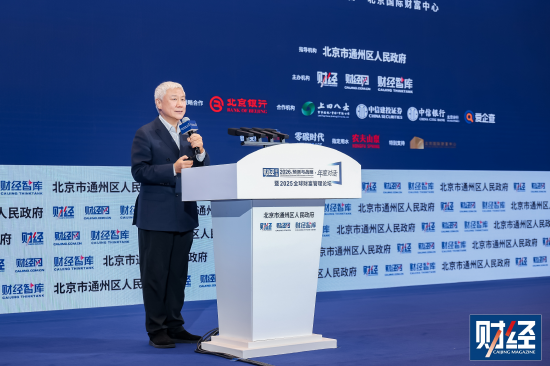
张燕生:新科技革命和产业变革是未来需要把握的核心机遇
Xin Lang Cai Jing· 2025-12-18 06:23
Core Insights - The 2026 Financial Annual Conference will be held in Beijing from December 18-20, 2025, focusing on global wealth management and strategic predictions for the future [3][6]. Group 1: Global Supply Chain and Geopolitical Risks - Zhang Yansheng, a researcher at the Chinese Academy of Macroeconomic Research, highlighted that China has become the most influential country in global trade, surpassing the US and Germany, due to the IT revolution over the past 40 years [3][6]. - He warned of the risk of "decoupling" due to geopolitical tensions, emphasizing the need for a strategy of "linking without decoupling, cooperation without confrontation" [3][6]. - Zhang proposed a new globalization model based on market, enterprise, civil society, and artificial intelligence, advocating for the facilitation of visas and flights to promote frequent exchanges among people [3][6]. Group 2: Economic Outlook and Domestic Demand - Looking ahead to the next five years, Zhang cited predictions from international authoritative institutions indicating that global economy, trade, and direct investment will remain in a contraction phase, with heightened uncertainty risks [3][6]. - In this context, the strategic direction of China's 14th Five-Year Plan is crucial, with the central economic work conference prioritizing "domestic demand" as a key task [3][6]. Group 3: Technological Revolution and Opportunities - Zhang emphasized that the new technological revolution and industrial transformation represent core opportunities for the future, comparing it to the IT revolution of the 1990s that benefited China significantly [4][7]. - He pointed out that technologies like artificial intelligence, cloud computing, and big data are essential for enhancing labor productivity and total factor productivity, which can replace traditional business models and create new growth points [4][7]. - In the face of external economic pressures, Zhang stressed that China must boost domestic demand and rely on technological innovation to cultivate new momentum for stable development [4][7].

联邦快递(FDX.US)CEO:全球供应链冲击将产生持久影响
智通财经网· 2025-11-20 06:48
Core Insights - The CEO of FedEx, Raj Subramaniam, indicated that global trade and supply chain changes driven by technology and geopolitical risks may persist long-term [1] - A new balance in supply chain dynamics is forming, characterized by increased regional features, and the transformation of the industrial economy will take longer to complete [1] - The impact of former President Trump's tariff policies and the end of exemptions for low-value goods has disrupted the global parcel delivery industry, potentially constraining industry growth in the coming year [1] Company-Specific Insights - FedEx warned in September that it expects to lose $1 billion this year due to trade fluctuations, primarily from reduced cargo volume from China to the U.S., which has been heavily impacted by the trade war [1] - The company has observed an increase in cargo flow from China to Europe, Latin America, and other regions in Asia, prompting adjustments in capacity allocation, including the redeployment of its cargo fleet [1] - FedEx is adjusting its capacity more rapidly than the pace of manufacturing migration, allowing it to capture signals and respond effectively [1] Industry Insights - Peter Voser, Chairman of ABB Group, emphasized that trade disruptions are not merely a result of election cycles but reflect fundamental market changes and a deeper understanding of potential costs [1] - Companies across various industries are increasingly aware that the losses from supply chain disruptions far exceed the costs of maintaining product inventories [1]
