全球气候正义

Search documents
这个国家正在学习如何有尊严地消失
3 6 Ke· 2025-10-27 03:18
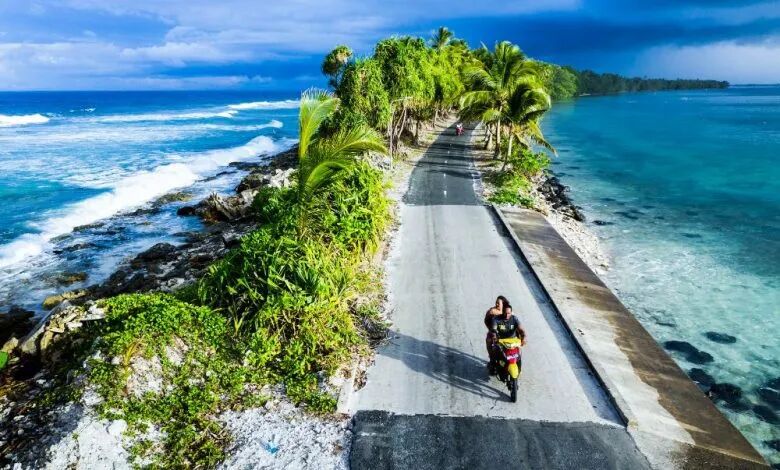
Core Points - Tuvalu is facing an existential crisis due to rising sea levels, with significant portions of its land expected to be permanently submerged by 2050 [4][5] - The introduction of a "climate visa" allows a limited number of Tuvaluans to migrate to Australia, highlighting the challenges of climate-induced migration [5][9] - The situation in Tuvalu reflects broader issues of climate justice, as the country contributes minimally to global carbon emissions yet bears the brunt of climate change impacts [9][10] Group 1: Geographic and Demographic Context - Tuvalu consists of nine coral atolls with a total land area of only 25.14 square kilometers and a population of approximately 12,000 [3] - The highest point in Tuvalu is less than 5 meters above sea level, making it extremely vulnerable to rising waters [4] Group 2: Climate Change Impact - Sea levels around Tuvalu have risen by 0.15 meters over the past 30 years, with projections indicating a potential rise of 61 centimeters by 2100 [4][6] - The local economy is heavily reliant on imports, with no industrial base, leading to food security concerns as climate impacts worsen [4][6] Group 3: Migration and Policy Responses - The "climate visa" allows 280 Tuvaluans per year to migrate to Australia, but this is insufficient for the entire population facing displacement [5][9] - The visa provides rights similar to Australian citizens, but the lottery system for selection raises concerns about fairness and accessibility [5][6] Group 4: Cultural Preservation Efforts - Tuvalu has initiated a "digital survival" plan to preserve its cultural heritage through 3D scanning and blockchain technology [6][9] - This approach aims to maintain cultural practices in a virtual space, raising questions about the authenticity and continuity of cultural identity [9][10] Group 5: Global Implications - The plight of Tuvalu serves as a warning for global climate challenges, with the potential for millions to become "climate refugees" in the future [6][10] - The situation underscores the need for a re-evaluation of international laws regarding climate-induced migration and the responsibilities of nations contributing to climate change [9][10]