海平面上升

Search documents
新研究:气候变化威胁近六成南极冰架稳定性
Xin Hua She· 2025-11-03 12:45
Core Viewpoint - A recent study published in the journal Nature indicates that nearly 60% of Antarctic ice shelves may become unstable by 2300 due to climate change, posing a significant threat to global sea levels and coastal ecosystems [1] Group 1: Research Findings - The study analyzed 64 Antarctic ice shelves using climate models, revealing that if greenhouse gas emissions remain high, approximately 41% of ice shelves could be unstable by 2150, increasing to 59% (38 ice shelves) by 2300 [1] - The potential complete melting of these 38 ice shelves could lead to a global sea level rise of 10 meters [1] - If global warming is limited to within 2 degrees Celsius, most ice shelves could remain stable, significantly reducing the risk of sea level rise [1] Group 2: Methodology and Perspective - The researchers took a comprehensive approach by considering both atmospheric and oceanic factors contributing to ice shelf mass loss, rather than focusing solely on atmospheric warming [1] - The study provides a critical point for ice shelf stability, indicating that actual collapses may occur earlier than the projected timelines [1]
“海洋与气候村”世界巡展走进上海
Zhong Guo Zi Ran Zi Yuan Bao· 2025-10-27 06:02
Core Viewpoint - The "Ocean and Climate Village" world tour exhibition aims to enhance public understanding of the ocean's critical role in regulating the Earth's climate system, aligning with the United Nations' goals for sustainable ocean development [3]. Group 1: Event Overview - The exhibition is held in Shanghai from October 10 to 19, co-hosted by UNESCO's Intergovernmental Oceanographic Commission and Prada Group [3]. - The event features various components, including a technology exhibition, photography exhibition, documentary screening, thematic discussions, and educational workshops [3]. - The exhibition is free to the public and has attracted over 12,000 visitors [3]. Group 2: Key Themes - The exhibition focuses on critical themes such as marine biodiversity, climate change, ocean acidification, sea level rise, and the impact of human activities on the ocean [3]. - It aims to achieve the seventh expected outcome of the UN's "Ocean Decade," which is to create an inspiring and attractive ocean [3]. Group 3: Expert Engagement - Experts from the Ocean Institute participated in discussions on "Ocean Literacy and Global Consensus," engaging with the public on topics related to ocean science, climate change, and public education [4].


这个国家正在学习如何有尊严地消失
3 6 Ke· 2025-10-27 03:18
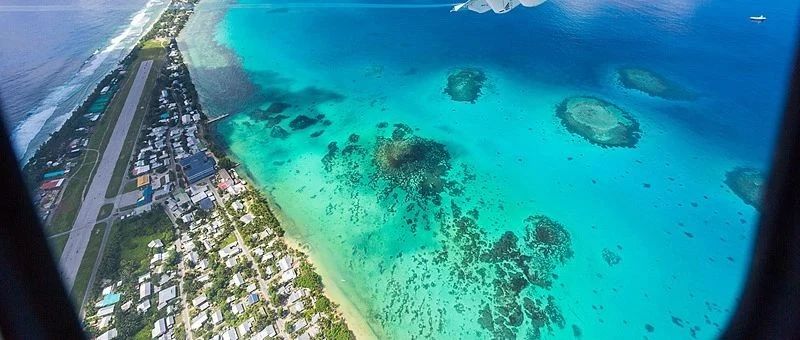
Core Points - Tuvalu is facing an existential crisis due to rising sea levels, with significant portions of its land expected to be permanently submerged by 2050 [4][5] - The introduction of a "climate visa" allows a limited number of Tuvaluans to migrate to Australia, highlighting the challenges of climate-induced migration [5][9] - The situation in Tuvalu reflects broader issues of climate justice, as the country contributes minimally to global carbon emissions yet bears the brunt of climate change impacts [9][10] Group 1: Geographic and Demographic Context - Tuvalu consists of nine coral atolls with a total land area of only 25.14 square kilometers and a population of approximately 12,000 [3] - The highest point in Tuvalu is less than 5 meters above sea level, making it extremely vulnerable to rising waters [4] Group 2: Climate Change Impact - Sea levels around Tuvalu have risen by 0.15 meters over the past 30 years, with projections indicating a potential rise of 61 centimeters by 2100 [4][6] - The local economy is heavily reliant on imports, with no industrial base, leading to food security concerns as climate impacts worsen [4][6] Group 3: Migration and Policy Responses - The "climate visa" allows 280 Tuvaluans per year to migrate to Australia, but this is insufficient for the entire population facing displacement [5][9] - The visa provides rights similar to Australian citizens, but the lottery system for selection raises concerns about fairness and accessibility [5][6] Group 4: Cultural Preservation Efforts - Tuvalu has initiated a "digital survival" plan to preserve its cultural heritage through 3D scanning and blockchain technology [6][9] - This approach aims to maintain cultural practices in a virtual space, raising questions about the authenticity and continuity of cultural identity [9][10] Group 5: Global Implications - The plight of Tuvalu serves as a warning for global climate challenges, with the potential for millions to become "climate refugees" in the future [6][10] - The situation underscores the need for a re-evaluation of international laws regarding climate-induced migration and the responsibilities of nations contributing to climate change [9][10]
研究称复活节岛摩艾石像最早将于2080年遭海水侵袭
Zhong Guo Xin Wen Wang· 2025-08-15 08:59
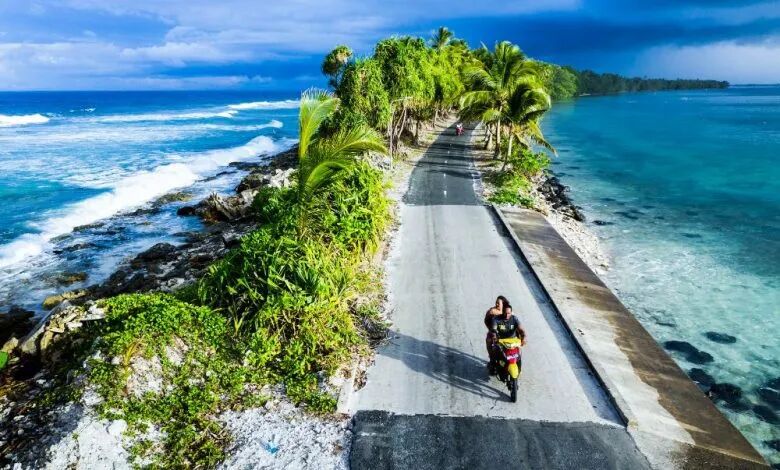
Core Viewpoint - The study published in Cultural Heritage Magazine indicates that rising sea levels may threaten the iconic Moai statues on Easter Island as early as 2080, along with approximately 50 other cultural sites on the island [1] Group 1: Impact of Rising Sea Levels - The research highlights that waves could reach the island's largest ceremonial platform, which houses 15 significant Moai statues, potentially impacting the tourism economy that relies on these sites [1] - The main author of the study emphasizes that rising sea levels are a real and imminent threat, not a distant concern [1] Group 2: Methodology and Broader Implications - Researchers utilized computer simulations to assess the impact of future sea level rise on wave effects and overlaid these results with maps of cultural sites to identify areas at risk of flooding in the coming decades [1] - While the focus is on Easter Island, the findings reflect a broader reality that cultural heritage sites worldwide are increasingly threatened by rising sea levels, as noted in a recent UNESCO report identifying around 50 World Heritage sites at high risk from coastal flooding [1]
共筑气候安全 携手应对风浪(环球热点)
Ren Min Ri Bao Hai Wai Ban· 2025-08-12 23:17
Core Viewpoint - The rising sea levels due to climate change are posing significant threats to coastal communities and ecosystems, necessitating urgent international cooperation and resource allocation to mitigate impacts and adapt to changes [2][9]. Group 1: Climate Change and Sea Level Rise - The World Meteorological Organization reports unprecedented sea level rise, with global sea levels increasing approximately 100 millimeters from 1993 to 2024 [3]. - China's coastal sea level is projected to be 96 millimeters higher than the historical average in 2024 due to climate change [3]. - A study indicates that even if global temperatures stabilize, nearly 40% of glacier mass is already lost, potentially leading to an additional 113 millimeters of sea level rise [3]. Group 2: Impact on Vulnerable Regions - Tuvalu, with an average elevation of only 2 meters, faces existential threats from rising sea levels, with most land and infrastructure expected to be below high tide by 2050 [6]. - Coastal cities like Alexandria in Egypt and Atafona in Brazil are experiencing severe erosion and flooding, with significant infrastructure at risk [6]. - The World Bank predicts that by 2050, there could be 216 million climate migrants globally, with cities like Dhaka and Bogotá expected to absorb millions of these migrants [7]. Group 3: Economic and Social Consequences - Rising sea levels are exacerbating coastal storm surges, damaging ecosystems, and threatening agriculture, fisheries, and tourism [8]. - The competition for climate aid is intensifying among major powers, impacting the effectiveness of multilateral climate mechanisms and increasing costs for clean technologies [8]. Group 4: International Response and Cooperation - The United Nations has emphasized the urgent need for global action against climate change, framing it as a survival threat [9]. - Multilateral mechanisms are crucial for addressing sea level rise, with various international organizations working to build consensus on climate action [9]. - Countries like the Netherlands are showcasing innovative water management strategies that could serve as models for other nations facing similar challenges [10].
外媒:多个太平洋岛国加快举国迁移步伐
Xin Lang Cai Jing· 2025-07-31 23:48
Core Insights - A significant earthquake of magnitude 8.7 occurred off the eastern coast of the Kamchatka Peninsula, raising concerns among Pacific island nations [1] - Tuvalu's sea level has risen by 15 centimeters compared to the average of the past 30 years, with projections indicating that much of the country will be below high tide levels by 2050 [1] - Tuvalu, with an average elevation of 2 meters, is highly vulnerable to rising sea levels, flooding, and storm surges [1] Migration Initiatives - Tuvalu is collaborating with Australia to launch an unprecedented "climate visa" program, allowing 280 Tuvaluans to settle in Australia as permanent residents each year [1] - The signing of the "Farapili Alliance Treaty" in November 2023 is expected to facilitate the migration of 40% of Tuvalu's population within the next decade [1] - Other Pacific nations, such as Fiji and Vanuatu, are also experiencing similar crises and have begun to implement planned migration policies [1]

外媒:多个太平洋岛国加快“举国迁移”步伐
Huan Qiu Shi Bao· 2025-07-31 22:49
Group 1 - A significant earthquake of magnitude 8.7 occurred off the eastern coast of the Kamchatka Peninsula, raising concerns among Pacific island nations [1] - Tuvalu's sea level has risen by 15 centimeters compared to the average of the past 30 years, with projections indicating that much of the country will be below high tide levels by 2050 [1] - Tuvalu, with an average elevation of 2 meters, is highly vulnerable to rising sea levels, flooding, and storm surges [1] Group 2 - In November 2023, Tuvalu and Australia signed the "Fala Pilili Alliance Treaty," allowing 280 Tuvaluans to settle in Australia as permanent residents each year, with an expectation that 40% of the population will migrate within 10 years [3] - The first phase of applications for the migration program received 8,750 submissions, representing about 80% of Tuvalu's total population [3] - Other Pacific nations, such as Fiji and Vanuatu, are also developing planned migration policies in response to climate crises [3]
太平洋岛国图瓦卢计划举国迁移
Bei Jing Shang Bao· 2025-07-29 16:18
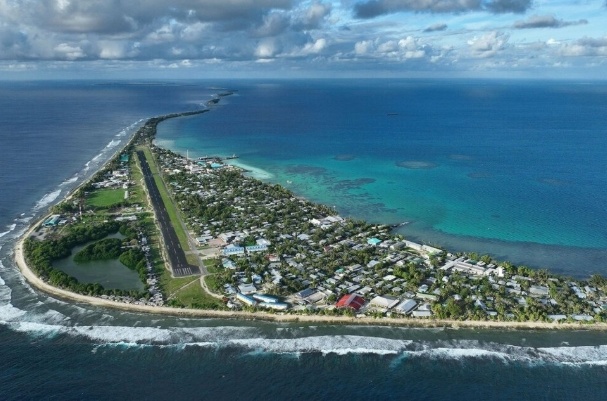
Group 1 - Tuvalu is planning a "national migration" in response to climate change, making it the first country to plan a complete relocation due to rising sea levels [1] - Over 80% of Tuvalu's residents have applied for climate visas to Australia, seeking refuge as the country faces the threat of being submerged within 25 years [1][2] - Tuvalu consists of 9 low-lying atolls with a total land area of only 26 square kilometers and a population of approximately 11,200, making it highly vulnerable to natural disasters [2] Group 2 - The average elevation of Tuvalu is only 2 meters above sea level, and NASA data indicates that sea levels around the country have risen by 15 centimeters over the past 30 years [2] - The "Fala Pilili Alliance Treaty" signed in November 2023 allows 280 Tuvaluans to settle in Australia as permanent residents each year, with rights similar to Australian citizens [2] - The first phase of visa applications opened from June 16 to July 18, 2023, with 8,750 individuals submitting applications for the lottery system [2] Group 3 - Approximately 4% of Tuvalu's population can migrate annually, which could lead to 40% of the population leaving within the next decade [3] - In addition to migration agreements, Tuvalu has initiated a strategy to become the world's first digital nation, involving 3D scanning and digital reconstruction of its islands [3] - Global sea level rise has exceeded expectations, affecting 1 billion people worldwide, with densely populated cities facing increased flood risks by 2050 [3]
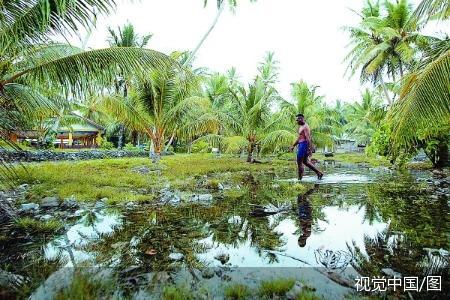
冲上热搜!全球首个国家“举国申请海外签证”
财联社· 2025-07-28 12:49
Core Viewpoint - The unconventional measure of Tuvalu applying for migration visas highlights the vulnerability of humanity in the face of climate change, as evidenced by the lottery system determining the fate of its citizens [1]. Group 1: Migration and Climate Change - A total of 2,474 family groups, comprising 8,750 Tuvaluan citizens, applied for the "climate migration" lottery, with only 280 individuals set to receive permanent residency in Australia [1][2]. - Tuvalu's population is estimated to be between 9,500 and 11,000, making the participation in the lottery a significant national event [2]. Group 2: Environmental Challenges - Tuvalu, consisting of nine circular coral islands, has a total land area of only 26 square kilometers, with the highest point being 4.6 meters above sea level and an average elevation of just 2 meters [5]. - NASA's report indicates that the sea level around Tuvalu has risen by 0.15 meters over the past 30 years, with projections suggesting an additional rise of 20 centimeters or more by 2050, and potentially 0.5 to 1 meter by the end of the century [5]. Group 3: International Agreements - In response to the rising sea levels, Tuvalu and Australia signed the "Fale Apili Alliance Treaty" at the end of 2023, which provides annual permanent residency for 280 Tuvaluans along with various benefits such as education subsidies and health insurance [6]. Group 4: Digital Initiatives - Tuvalu announced a plan to migrate its national identity into the metaverse, aiming to create a digital twin of the nation to preserve its history, geography, and culture [9]. - The government seeks to establish blockchain-based digital passports to maintain governance and record vital events, despite internal controversies and uncertainties regarding international recognition [10].