全球资产定价

Search documents
传票风暴下的美联储:独立性遭遇百年最大考验 全球资产定价之锚动摇
Xin Hua Cai Jing· 2026-01-16 06:03
Core Viewpoint - The investigation surrounding the Federal Reserve's building renovation has escalated into a significant challenge to the independence of the central bank, raising concerns about the stability of global asset pricing as monetary policy becomes intertwined with political demands [1][15]. Group 1: Investigation Details - A criminal investigation has been initiated against Federal Reserve Chairman Jerome Powell by the U.S. Attorney's Office for the District of Columbia, marking a historic move as it enters the criminal justice process [2]. - The investigation focuses on a $2.5 billion renovation project for the Federal Reserve's headquarters, which has exceeded its budget by approximately $700 million due to rising costs and unforeseen issues [2]. - The core of the controversy lies in inconsistencies in the project's description, with Powell denying the existence of luxury features during congressional testimony, which contradicts earlier disclosures [2][4]. Group 2: Political Implications - The investigation is viewed as an escalation of long-standing tensions between the Trump administration and the Federal Reserve regarding monetary policy, particularly Trump's dissatisfaction with the Fed's reluctance to implement aggressive rate cuts [4][3]. - Powell has characterized the investigation as an unprecedented attempt to undermine the Fed's independence, emphasizing that the central bank's decisions are based on public interest rather than presidential preferences [3][4]. Group 3: Broader Reactions - The investigation has sparked widespread concern about the potential erosion of central bank independence, with international central bank leaders expressing support for Powell and emphasizing the importance of monetary policy autonomy [7][8]. - Former Federal Reserve Chairs, including Alan Greenspan and Ben Bernanke, have condemned the investigation as a dangerous precedent that threatens the independence of central banks [8]. Group 4: Market Reactions and Future Outlook - The market is reacting to the uncertainty surrounding Powell's position, with predictions of his potential departure as chairman decreasing following his recent statements [6][9]. - The upcoming Supreme Court hearing regarding the Trump administration's attempt to remove Fed Governor Lisa Cook is seen as a critical moment that could define the limits of presidential power over independent regulatory bodies [10][13]. - Analysts warn that if the court rules against Cook, it could significantly increase the likelihood of Powell's removal and lead to a fundamental shift in monetary policy logic, potentially resulting in uncontrolled inflation and asset repricing crises [10][12].
睿远基金总经理饶刚:中国企业出海将是长期值得挖掘的投资机遇
Zhong Zheng Wang· 2026-01-05 14:48
Core Viewpoint - The global liquidity easing trend remains the primary driver of asset pricing, despite the differentiated monetary policies in Europe, the U.S., and Japan [1] Group 1: Global Economic Outlook - By 2026, the influence on global asset pricing is expected to shift from being solely driven by monetary policy to a combination of monetary and fiscal policies [1] Group 2: Investment Opportunities - The rapid development of AI in recent years presents significant macro-level volatility, representing both risks and opportunities that cannot be overlooked [1] - China's manufacturing sector is advancing, with both risks and opportunities in overseas investments; currently, China's overseas investment returns are lower than those of some developed countries, but Chinese manufacturing firms possess significant cost-performance advantages, making overseas expansion a long-term investment opportunity worth exploring [1] - Many leading consumer companies in China now offer dividend yields exceeding 4% and have stable demand, which may indicate potential future increases in domestic demand, presenting left-side allocation value [1]
易起唠嗑-美联储降息对港股的影响有哪些?
Sou Hu Cai Jing· 2025-12-12 07:35
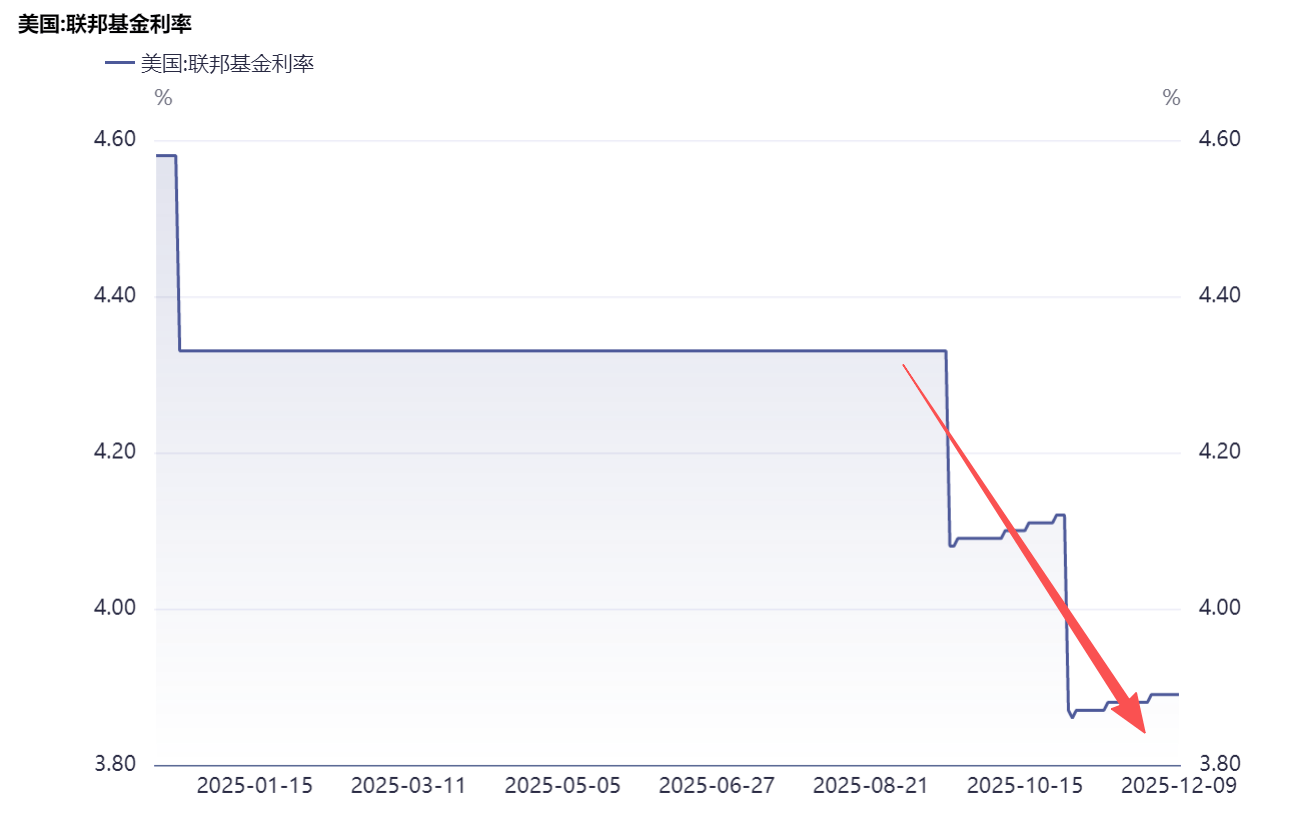
Core Viewpoint - The Federal Reserve has announced a 25 basis point interest rate cut, bringing the target range for the federal funds rate down to 3.50%-3.75%, marking the third rate cut of the year and a total reduction of 75 basis points in 2025 [1] Group 1: Impact on Global Markets - The Fed's rate cut is reshaping global asset pricing, leading to a rally in U.S. stocks, with the S&P 500 achieving a seven-month winning streak [4] - Precious metals, including gold, have seen significant price increases following the rate cuts [5] Group 2: Effects on Hong Kong Stock Market - Liquidity is improving as the Hong Kong Interbank Offered Rate (HIBOR) has dropped from 5.5% to below 4%, reducing marginal funding costs by 150 basis points, which may enhance market risk appetite and increase trading volume [8] - The weakening of the U.S. dollar is expected to attract foreign capital back to Hong Kong, alleviating currency conversion losses for Chinese companies and reducing capital outflow pressures [8] - The decline in the dollar is likely to boost the offshore RMB, easing the debt repayment pressures for mainland property firms and improving foreign sentiment towards RMB assets, potentially increasing daily trading volumes in the Hong Kong market [8] Group 3: Capital Flows and Investment Trends - The Fed's rate cut is anticipated to accelerate capital inflows into emerging markets, with an average inflow of 1.2%-1.8% of GDP expected within six months post-rate cut [9] - As the largest emerging market economy, China is likely to attract more international capital, with Hong Kong serving as a key channel for foreign investment in Chinese assets [9] - The unique positioning of the Hong Kong market as an offshore market linked to Chinese assets may provide it with higher elasticity compared to A-shares and most emerging markets, benefiting from favorable conditions in interest rates, exchange rates, credit, and risk premiums [9]

解码全球最大对冲基金今年最关心变量:顶级智囊洞察地缘政治里的机会
华尔街见闻· 2025-07-28 05:43
Core Viewpoint - The article emphasizes that the current geopolitical changes are among the most disruptive since the establishment of Bridgewater, highlighting the importance of understanding geopolitical and macroeconomic paradigms for investment strategies [1][15]. Group 1: Market Performance and Geopolitical Events - In the first half of 2025, macro hedge funds like Bridgewater's Pure Alpha achieved a 17% return, while EDL Capital's global opportunity strategy fund reached a 26% return [1]. - Significant geopolitical events have caused dramatic fluctuations in global capital markets, including the U.S. imposing tariffs leading to volatile stock market movements [2][12]. - The Nasdaq index experienced an 11.5% drop followed by a 12% rebound due to tariff announcements and subsequent delays [2]. Group 2: Geopolitical Tensions - Recent months have seen a series of major geopolitical events, including air conflicts between India and Pakistan, Israeli airstrikes on Iranian facilities, and U.S. military actions in the region [4][5][6]. - The conflict between Iran and Israel saw a rapid escalation and subsequent ceasefire, leading to significant fluctuations in oil prices [7][9]. Group 3: Investment Implications - The article discusses how geopolitical events have influenced asset prices, with gold being a standout performer, increasing over 30% in 2025, and the U.S. dollar index dropping to a three-year low [12][15]. - The shift in global economic and political order is prompting top investment institutions to focus more on geopolitical factors as key determinants of asset pricing [15]. - The upcoming closed-door session led by strategist Wang Kaiwen aims to equip participants with frameworks to analyze geopolitical impacts on investment strategies [20][24]. Group 4: Educational Initiative - The closed-door course on August 17, 2025, will cover five key lessons in geopolitical investment analysis and provide insights into future trends and asset allocation strategies [20][26]. - Participants will learn to construct a geopolitical analysis framework and review real-world cases to understand the impact of geopolitical changes on investment decisions [27][28].