全球铝产业格局重构

Search documents
铝企频频海外扩产:供需新格局下的全球化布局
Shang Hai Zheng Quan Bao· 2026-01-22 18:37
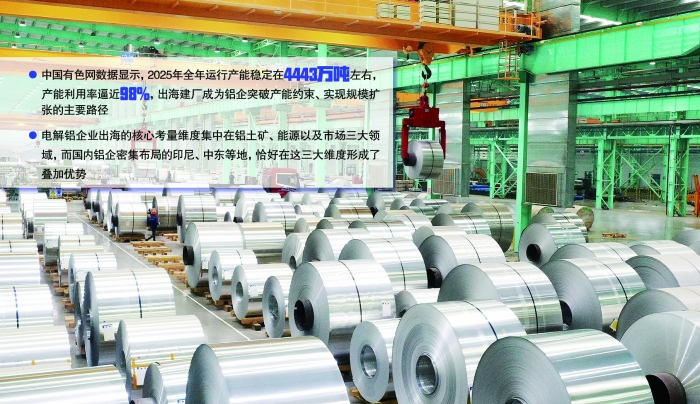
Core Insights - Chinese aluminum companies are accelerating overseas expansion in 2026, reshaping the global aluminum industry landscape through significant investments in production capacity and supporting facilities [2][3] - The global supply-demand gap for electrolytic aluminum is expected to widen, with favorable fiscal and monetary policies potentially driving aluminum prices to new highs [2][5] Group 1: Company Actions - Nanshan Aluminum announced plans to invest approximately $437 million (about 3.056 billion RMB) in a 250,000-ton electrolytic aluminum project in Indonesia, marking a key step in its long-term overseas development strategy [3][4] - Innovation Group signed an agreement with Saudi Arabia's Public Investment Fund to establish a 500,000-ton electrolytic aluminum capacity and supporting facilities in Riyadh, aiming to create one of the largest aluminum production bases in the Middle East [4] - Huadong Cable's first phase of its electrolytic aluminum project in Angola has officially commenced production, becoming the first electrolytic aluminum project in the country [4] Group 2: Market Dynamics - The expansion of Chinese aluminum companies overseas is driven by an increasing global supply-demand gap for electrolytic aluminum, alongside cost advantages and resource endowments [5][6] - The domestic electrolytic aluminum industry is nearing a production capacity ceiling of 45 million tons, with utilization rates approaching 98%, prompting companies to seek overseas production as a means to overcome capacity constraints [5][6] - The focus of overseas expansion is on securing bauxite resources, energy, and market access, with regions like Indonesia and the Middle East offering significant advantages in these areas [6] Group 3: Strategic Implications - The overseas expansion of Chinese aluminum companies signifies a strategic shift from "domestic capacity dominance" to "global resource integration," aligning with changes in global supply-demand dynamics [6] - This strategic move not only addresses domestic industry bottlenecks but also enhances the global competitiveness of Chinese aluminum firms, contributing to the stability and development of the global aluminum industry [6]