公司治理问题

Search documents
603922,二股东提议罢免董事长一系列职务,超5400万股投出反对票!最新披露子公司还被“暗箱操作”借贷上亿元
Mei Ri Jing Ji Xin Wen· 2026-01-05 05:53
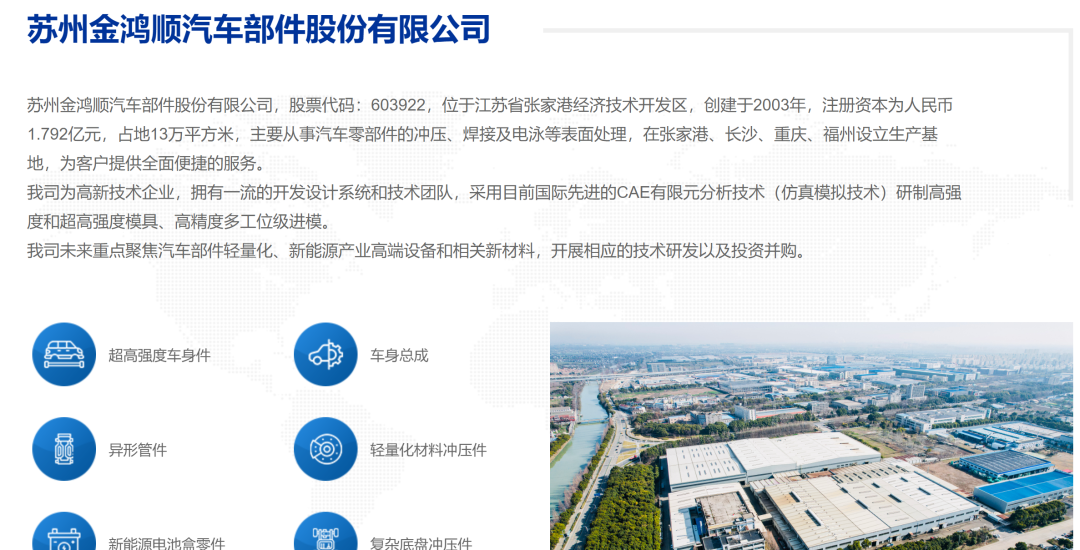
Core Viewpoint - The board of Jin Hong Shun is experiencing turmoil, with the second-largest shareholder, Gao De Investment, proposing the removal of Chairman Liu Xu due to his absence from board meetings and lack of on-site presence since late September 2025. However, the proposal was ultimately rejected by shareholders, with over 54 million shares voting against it [1][6]. Group 1: Board Turmoil - Gao De Investment proposed to remove Liu Xu from his non-independent director position and other roles due to his absence from two board meetings and lack of engagement in company operations since late September 2025 [1][5]. - Liu Xu's close associate, Wang Haibao, was removed from his position as Vice Chairman on December 10, 2025, prior to the proposal against Liu Xu [1][4]. - The proposal to remove Liu Xu was met with significant opposition, resulting in over 54 million shares voting against it, which is approximately equal to the shares held by Liu Xu's company, Hainan Zhongde Technology [1][6]. Group 2: Financial Issues - Hainan Zhongde, associated with Liu Xu, utilized Jin Hong Shun's wholly-owned subsidiary to borrow 125 million yuan, with 75 million yuan still outstanding [1][7]. - The loan agreement was signed without proper authorization, leading Jin Hong Shun to claim that the contract does not represent its true intentions [1][8]. - Jin Hong Shun has previously faced issues with non-operating fund occupation by related parties, with a reported 464 million yuan in non-operating fund occupation during 2024 [1][10]. Group 3: Shareholder and Financial Pressure - Hainan Zhongde has frequently pledged its shares in Jin Hong Shun for financing, with the pledge ratio increasing to 97.2069% by mid-2025 [1][11]. - As of October 2025, Hainan Zhongde's shares were under judicial freeze due to contractual disputes, with a total of 101.48% of its shares subject to various legal restrictions [1][11].


A股异动丨华软科技跌停,公司及相关人员收到北京证监局警示函
Ge Long Hui A P P· 2025-12-01 06:15
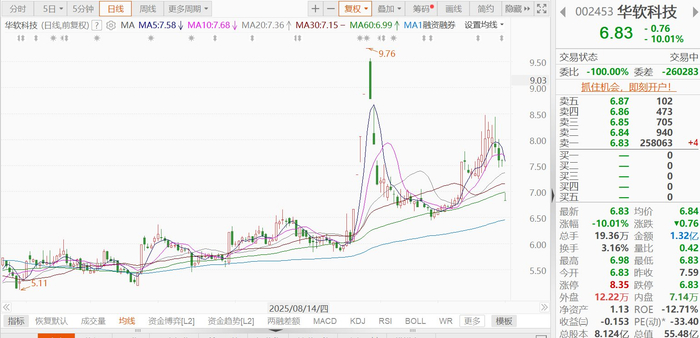
Core Viewpoint - Huasoft Technology (002453.SZ) experienced a limit-down trading session, closing at 6.83 yuan, with a total market value of 5.548 billion yuan due to regulatory issues related to financial disclosures and corporate governance [1] Group 1: Regulatory Issues - The company and its chairman, Zhai Hui, along with CFO Zhang Lin, received a warning letter from the Beijing Securities Regulatory Bureau [1] - The company has been found to have inaccuracies in asset impairment accounting and deficiencies in the records of its "three meetings," leading to inaccurate financial information disclosures in its annual reports [1] - Zhai Hui and Zhang Lin are primarily responsible for the violations and are required to enhance financial accounting and improve the quality of information disclosure [1] Group 2: Remedial Actions - The company is mandated to submit a written rectification report within 10 working days [1] - The company has stated that it will comply with the required rectifications and that the regulatory measures will not affect its normal operations [1]

华软科技:公司及相关人员收到北京证监局警示函
Xin Lang Cai Jing· 2025-11-28 10:37
Core Viewpoint - The company and its chairman, Zhai Hui, along with the financial director, Zhang Lin, received a warning letter from the Beijing Securities Regulatory Bureau due to financial accounting issues, including inaccurate asset impairment calculations and governance problems related to the records of the "three meetings" [1] Financial Issues - The company has been found to have inaccuracies in financial information disclosure in its annual reports due to the aforementioned financial accounting problems [1] - Zhai Hui and Zhang Lin are held primarily responsible for the violations [1] Governance Issues - There are governance issues identified, particularly related to the records of the "three meetings" which have been deemed flawed [1] Regulatory Response - The company is required to strengthen its financial accounting practices and improve the quality of information disclosure [1] - A written rectification report must be submitted within 10 working days [1] - The company has stated that it will comply with the requirements for rectification and that the regulatory measures will not affect its normal operations [1]
上市公司董事,实名举报董事长和董秘,声称“冒着人身安全风险”
Shen Zhen Shang Bao· 2025-11-23 12:44
Core Viewpoint - The article highlights serious allegations of governance issues and financial misconduct at Dream洁股份, as detailed in a whistleblower report by board member Chen Jie, targeting key executives for fraud and mismanagement [1][3][6]. Group 1: Allegations of Misconduct - Chen Jie accuses Chairman Jiang Tianwu and Secretary Li Jun of contract fraud involving a 3.85 billion yuan equity transfer payment to Jin Sen New Energy, which was allegedly misappropriated [1][3]. - The report claims that 50 million yuan of due diligence funds were misused by executives to pay personal loans, indicating a severe breach of fiduciary duty [3][4]. - Chen Jie asserts that the executives engaged in misleading information disclosure, which harmed the interests of minority shareholders and violated capital market regulations [6]. Group 2: Financial Concerns - Dream洁股份 reported a net profit of 26.52 million yuan for the first three quarters of 2025, a 28.69% increase year-on-year, despite a 7.97% decline in revenue to 1.099 billion yuan, raising questions about the authenticity of financial data [2][8]. - The company has faced scrutiny from regulatory bodies for financial irregularities, including improper revenue recognition and failure to recover loans amounting to 63.38 million yuan from a related party [7][9]. - The financial performance has been under pressure, with revenues dropping from 2.463 billion yuan in 2021 to 1.715 billion yuan in 2024, and consecutive losses in 2021 and 2022 [8]. Group 3: Governance and Regulatory Actions - Chen Jie has consistently opposed company resolutions, voting against or abstaining from 14 proposals, particularly highlighting concerns over financial data integrity [2][6]. - Recent regulatory actions include a warning issued to the company and its executives regarding financial mismanagement and governance failures, indicating a lack of internal controls [9].



100万撬走338亿,百亿融资喂肥美国油田,5万散户血本无归
Sou Hu Cai Jing· 2025-07-10 04:40
Core Viewpoint - ST New潮 is a striking example in China's A-share market, with its assets primarily located in the U.S., raising questions about its governance and financial practices [3][6]. Group 1: Company Overview - ST New潮 is registered in Yantai, Shandong, but operates its board in Beijing, with 99.91% of its assets located in Texas oil fields, USA [3]. - The company has not distributed dividends to domestic shareholders for 15 consecutive years, while its U.S. subsidiary employees enjoy high salaries, averaging 1.75 million RMB annually [4][11]. Group 2: Financial Background - From 2015 to 2017, ST New潮 raised 12.5 billion RMB through three rounds of financing, investing the entire amount in U.S. oil and gas assets, which now produce over 60,000 barrels daily and are valued at 33.8 billion RMB [6][9]. - The domestic parent company is burdened with 2.4 billion RMB in debt and has frozen accounts, while the U.S. subsidiary reported a net profit of 7.376 billion RMB from 2022 to Q3 2024 [8][9]. Group 3: Governance and Control - Although ST New潮 has no official controlling shareholder, it is effectively controlled by a pair of brothers from Hunan, who have manipulated board positions to maintain control over the U.S. subsidiary [10]. - The company has faced significant challenges in auditing its financials, with previous auditors unable to verify the authenticity of its U.S. assets, leading to a "ST" designation [13]. Group 4: Market Activity and Future Prospects - Despite the looming risk of delisting, major energy companies are still interested in acquiring stakes in ST New潮, driven by the value of its U.S. oil fields [14]. - The company’s assets are located in a region with significant shale oil reserves, but the uncertainty surrounding control raises concerns about the viability of any potential acquisitions [14].