六价硫氟交换反应(SuFEx)

Search documents
“满足好奇心是我此生最大的乐趣”(走近科学大咖③)
Ren Min Ri Bao Hai Wai Ban· 2025-12-15 01:12
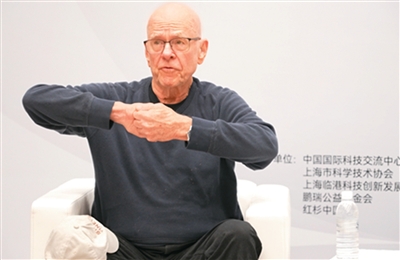
Core Idea - The article highlights the innovative contributions of Barry Sharpless, a two-time Nobel Prize-winning chemist, particularly focusing on his philosophy of simplicity in chemistry, exemplified by his development of click chemistry, which has transformed the field by emphasizing functional molecular synthesis over complex structures [5][6]. Group 1: Background and Personal Journey - Barry Sharpless's early experiences as a child fishing in New Jersey shaped his curiosity and passion for discovering new biological entities, which he likens to his pursuit of interesting chemical reactions [2]. - Despite losing vision in one eye due to a laboratory accident at age 29, Sharpless continues to explore the field of chemistry with resilience, believing in the potential of serendipitous discoveries [2][4]. Group 2: Click Chemistry - Click chemistry, introduced by Sharpless in 1998, aims to simplify chemical synthesis by focusing on functional outcomes rather than complex structures, challenging the prevailing academic belief that complexity equates to advancement [5][6]. - Sharpless faced initial rejection from top journals for his click chemistry papers, but the concept eventually gained recognition, leading to his second Nobel Prize in Chemistry in 2022, validating its impact on the field [5][6]. Group 3: Academic Philosophy and Approach - Sharpless emphasizes a practical and straightforward approach to research, often discarding ideas that do not yield results quickly, which he believes fosters innovation [4][5]. - He expresses disdain for the competitive nature of academic publishing, preferring to focus on the completion of research rather than the politics of authorship [3][4]. Group 4: International Collaboration and Influence - Over the past decade, Sharpless has established strong academic ties with China, frequently visiting Shanghai to collaborate on research and promote international scientific cooperation [8][9]. - He has been instrumental in mentoring Chinese students and researchers, contributing to the development of a new generation of chemists in China, who are now shaping the future of the field [9].