关税对抗

Search documents
德国经济信心逆势回升,关税阴影下欧洲复苏拐点临近
Sou Hu Cai Jing· 2026-01-20 20:46
Group 1 - The latest changes in Germany's economic outlook are breaking previous pessimistic expectations surrounding external risks, with market sentiment showing significant improvement at the beginning of the year [2] - In January, Germany's economic confidence saw a substantial increase, with the economic climate index rising sharply, reaching its highest point since summer 2021, significantly exceeding cautious market expectations [2] - The overall sentiment in the Eurozone is also recovering, with economic climate indicators reaching a six-month high, indicating a clear improvement in the assessment of the current economic situation [2] Group 2 - Export-related sectors are the main drivers of the sentiment rebound, with significant increases in the economic indices for traditional industries such as machinery manufacturing, steel, and metal processing [3] - The automotive industry, while still at a relatively low level, has established a trend of improvement, alongside stronger expectations in the chemical, pharmaceutical, and electrical engineering sectors [3] - The recent confidence recovery is closely linked to better-than-expected industrial output and new order data from late last year, as well as the advancement of the EU's free trade agreement with the Southern Common Market, which opens new growth opportunities for German exporters [3] Group 3 - Political statements at the European level are crucial, with the European Commission President emphasizing that current geopolitical tensions present both challenges and opportunities for Europe's strategic transformation [4] - The EU will firmly support Denmark and Greenland, enhancing stability in the Arctic region through investment, infrastructure development, and defense cooperation [4] - Warnings have been issued that tariff escalations against allies do not align with long-term interests and could exacerbate divisions, providing opportunities for external adversaries [4]


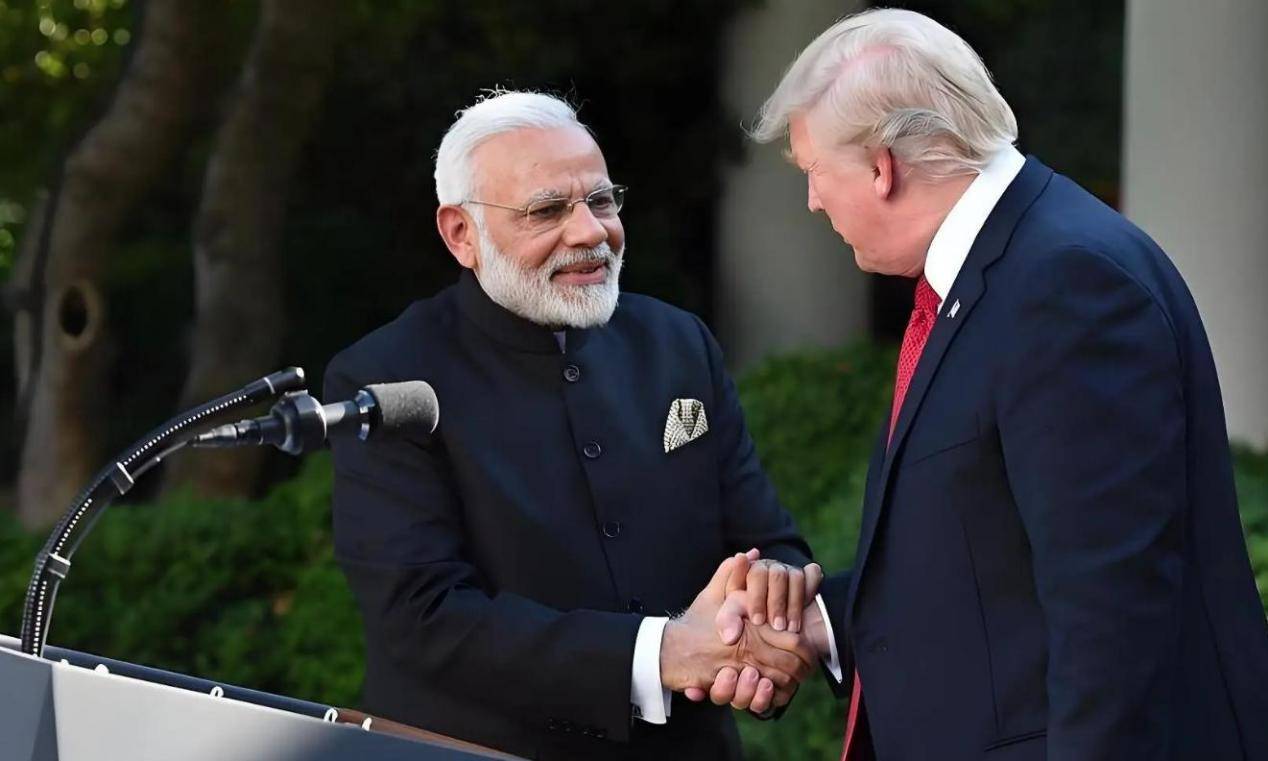
特朗普连打4个电话,印度无人接听?这次莫迪从中国学到了不少
Sou Hu Cai Jing· 2025-08-28 11:48
Core Viewpoint - The United States has officially imposed tariffs of up to 50% on Indian goods, marking a significant escalation in trade tensions, particularly as it follows failed attempts by President Trump to communicate with Indian Prime Minister Modi [1][3]. Group 1: U.S.-India Trade Relations - The Modi government has historically responded to U.S. tariff pressures with compromise, often sending high-level delegations to negotiate [3]. - This time, Modi's refusal to take Trump's calls and the cancellation of a planned trade delegation to the U.S. indicate a strong dissatisfaction with the U.S. tariff increases [3][5]. - The U.S. has previously imposed a 25% tariff on Indian goods, citing excessive oil purchases from Russia, leading to a cumulative 50% tariff pressure on India [3][5]. Group 2: India's Economic Dependencies - India relies heavily on energy imports, with over 80% dependence, and Russia is its third-largest oil supplier, accounting for 18% of its total oil imports in 2024 [5]. - The long-term agreements between India and Russia, including payments in local currencies, help stabilize India's energy prices and foreign exchange pressures [5]. - A shift away from Russian oil could lead to significant inflation and social instability in India, making it a risky move for the Modi government [5]. Group 3: Strategic Responses and International Dynamics - India's recent assertiveness can be traced back to lessons learned from China's response to U.S. tariffs, where China effectively countered U.S. pressure [6][7]. - Modi's government aims to break the cycle of perceived weakness in negotiations with the U.S., seeking to establish India as an independent power in a multipolar world [7][9]. - The ongoing friction between the U.S. and India reflects broader geopolitical power struggles, with India unwilling to be seen as a subordinate to U.S. hegemony [9].