关税手段

Search documents
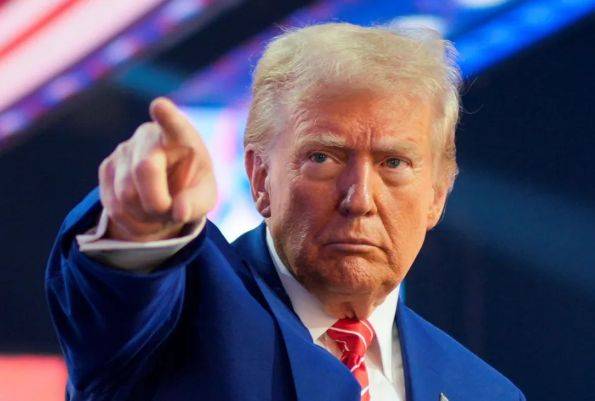
特朗普失算了,他猛然发现:美国最大的王牌,对中国已不起作用
Sou Hu Cai Jing· 2026-01-28 04:47
Core Viewpoint - The article discusses the escalating tensions between the U.S. and Canada regarding trade agreements with China, highlighting the ineffectiveness of U.S. tariff threats and the resilience of Canada and China in the face of such pressures [1][3][5]. Group 1: U.S. Trade Policy and Reactions - Trump criticized the China-Canada trade agreement as the worst ever, threatening to impose 100% tariffs on all Canadian goods if they continue cooperation with China [1]. - U.S. Treasury Secretary Mnuchin suggested that China would face additional tariffs if they violated the agreement framework, indicating a continuation of extreme pressure tactics [1]. - The U.S. response included attempts to sow discord within Canada, such as encouraging Alberta to hold an independence referendum, reflecting a strategy of division [5]. Group 2: Canada and China's Stance - Canada, under Prime Minister Carney, signed a trade agreement with China that significantly reduced tariffs on electric vehicles from 100% to 6.1% and established an import quota of 49,000 vehicles annually [3]. - Canada responded to U.S. threats with a call for citizens to support local products, demonstrating a unified domestic front against U.S. pressure [5]. - China maintained a calm and composed response, indicating a strategic understanding of the global landscape and reinforcing its trade relationships with other nations [7]. Group 3: Implications for U.S. Global Standing - The article notes that the U.S. is becoming increasingly isolated on the international stage, with European countries considering selling off $3.6 trillion in U.S. debt, which constitutes 40% of foreign-held U.S. debt [7]. - The U.S. reliance on tariffs as a tool for negotiation is portrayed as ineffective, with data showing a continuous decline in manufacturing jobs despite tariff implementation [5]. - The article suggests that the U.S. attempts to exert pressure through tariffs are failing, as other countries pursue independent trade relationships, reflecting a shift towards a multipolar world [7].

欧美股市多数下跌,芯片股深夜爆发,美光科技市值突破4000亿美元,中概股普跌,白银跳水
21世纪经济报道· 2026-01-16 22:58
Market Overview - US stock indices collectively declined, with the Dow Jones down 0.29%, S&P 500 down 0.38%, and Nasdaq down 0.66% [1] - Major technology stocks mostly fell, with the US Tech Giants Index down 0.3%, Apple dropping over 1%, and Google nearly 1% [2] - Chinese concept stocks experienced a significant drop, with the Nasdaq Golden Dragon China Index down 1.15% [3] Semiconductor Sector - Semiconductor stocks surged, with Micron Technology rising 7.8%, marking its market cap surpassing $400 billion and a year-to-date increase of over 27% [2][3] - Other semiconductor companies like SanDisk and Seagate reached historical highs, while Broadcom, Applied Materials, and ASML closed up over 2% [2] Precious Metals and Commodities - Precious metals saw a sharp decline, with silver prices dropping 2.7% and briefly falling below $87 per ounce [6] - Basic metals like lithium carbonate fell nearly 9%, while LME tin dropped over 4% [6] - International oil prices increased, with WTI crude up 0.24% and ICE Brent crude rising over 0.6% [6] Cryptocurrency Market - Major cryptocurrencies showed mixed performance, with Bitcoin and Ethereum down about 0.1%, while SOL increased over 2% [6] - The trading volume in the cryptocurrency market continued to decline, with over 90,000 liquidations occurring in the past 24 hours, primarily affecting long positions [6] Economic Commentary - Former Federal Reserve official Patrick Harker stated that it is not appropriate for the US to pursue significant interest rate cuts at this stage, warning against external pressures on the Fed [6]