
关键矿产供应链重构

Search documents
92%靠进口硬脱钩!美国砸重金拉盟友建厂,设备成本直接翻一倍
Sou Hu Cai Jing· 2026-01-17 08:29
Core Viewpoint - The article discusses the escalating competition between the U.S. and China in the rare earth sector, highlighting the U.S. strategy of spending significantly to reduce dependence on Chinese mineral supplies, even at a higher cost [1]. Group 1: Supply Chain Reconstruction - The U.S. prioritizes forming alliances with allies to create a specialized supply chain, using market and technology incentives [2]. - South Korea's zinc industry is investing $7.4 billion to build a critical mineral smelting plant in Tennessee, with an annual capacity of 540,000 tons [2]. - The project has received backing from the U.S. Department of Defense and the Department of Commerce, and it avoids using Chinese suppliers, resulting in equipment costs being over twice that of conventional options [4]. Group 2: International Collaborations - Japan and Australia are collaborating to develop seabed rare earth resources, aiming to reduce reliance on China by 50% by 2030 [4]. - The U.S. has established a tungsten mining partnership with Kazakhstan, targeting a rare earth deposit of 20 million tons [4]. - India is included in the U.S. strategy to invest in mining projects for lithium and cobalt, positioning it as a supplementary supply node [4]. Group 3: Domestic Efforts - The U.S. recognizes its mining shortcomings, with 92% of rare earths imported and a near absence in heavy rare earth refining [5]. - The U.S. Congress is reviewing the H.R.4090 bill to establish a national policy to become a leading producer of hard rock minerals [5]. - The Department of Defense is investing $750 million to promote domestic rare earth magnet production, setting a price floor of $110 per kilogram, significantly above the current market price of around $60 [7]. Group 4: Trade Barriers and Policies - The "Washington Critical Minerals Cooperation Framework" aims to exclude China, focusing on setting minimum prices for critical raw materials to counter China's low-cost competition [9]. - The G7 has formed a critical minerals working group to coordinate policies regarding mineral trade with China [9]. - The U.S. plans to impose "carbon tariffs" as a green barrier to weaken the competitiveness of Chinese mineral exports [9]. Group 5: Conclusion - The article concludes that the U.S.'s exclusionary tactics may increase costs, while China continues to advance with its complete industrial chain, suggesting that cooperation and mutual benefit are the correct paths in the global mineral sector [10].

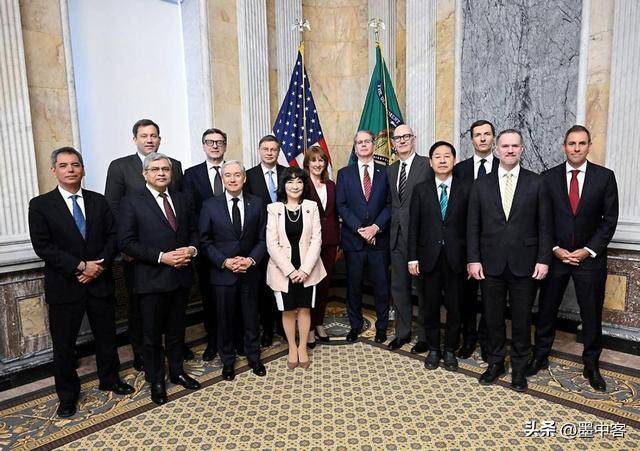
74亿美元,美韩合作标杆项目生变
Xin Lang Cai Jing· 2025-12-24 06:29
Core Viewpoint - The restructuring plan for the critical mineral supply chain led by the U.S. is facing uncertainty due to legal disputes and management disagreements involving the South Korean zinc smelting leader, Korea Zinc [1] Group 1: Project Overview - The Tennessee smelting plant project, a flagship of the U.S.-South Korea mineral strategy, is experiencing severe delays due to internal disputes over equity and management at Korea Zinc [1] - The U.S. Department of Defense has confirmed a partnership with Korea Zinc to invest $7.4 billion in the construction of the smelting plant, aimed at addressing supply chain risks for various industries [1] - The project was expected to be a significant achievement, marking the first large-scale zinc smelting plant built in the U.S. since the 1970s [1] Group 2: Legal and Financial Issues - The focus of the legal dispute is on a third-party directed capital increase plan scheduled for December 26, where the current chairman of Korea Zinc intends to issue new shares to Crucible JV, acquiring 10% of Korea Zinc [2] - This financing plan has faced strong opposition from the largest shareholder alliance, who have filed for an injunction, claiming it is an "abnormal operation" to dilute competitors' shares and consolidate management rights [2] - Ongoing investigations by the Korean Fair Trade Commission and prosecutors into the legality of the financing chain may lead to further delays in the project's investment progress [2]
韩媒:价值74亿美元的美韩合作标杆项目生变
Huan Qiu Shi Bao· 2025-12-23 23:06
Core Viewpoint - The restructuring plan for the critical mineral supply chain led by the U.S. is facing uncertainty due to legal disputes and management disagreements involving the Korean zinc smelting leader, Korea Zinc, and its Tennessee smelting project [1][2]. Group 1: Project Overview - The Tennessee smelting project, a flagship collaboration between Korea Zinc and the U.S. Department of Defense, is set to cost $7.4 billion and aims to address supply chain risks for key materials across various industries, including automotive and military [1]. - The project was recently confirmed by the U.S. Department of Defense, marking a significant development as it is the first large-scale zinc smelting plant to be built in the U.S. since the 1970s [1]. Group 2: Legal and Management Issues - The project is currently stalled due to internal disputes over equity and management rights, with a third-party capital increase plan scheduled for December 26 facing strong opposition from major shareholders [2]. - The current chairman of Korea Zinc, Choi Yoon-bum, plans to issue new shares to the joint venture, Crucible JV, to acquire a 10% stake in Korea Zinc, which has been challenged in court by the largest shareholder alliance [2]. - Ongoing legal disputes are expected to prolong, with investigations by the Korean Fair Trade Commission and prosecutors into the legality of the financing chain [2].