内在动力

Search documents
心理学有个词叫:捕鼠效应(杜绝孩子手机上瘾,记住这三个方法就好了)
Jing Ji Guan Cha Bao· 2026-01-14 01:44
Core Idea - The article discusses the "Mouse-Catching Effect" in psychology, illustrating how external rewards can lead to unintended consequences, particularly in the context of children becoming addicted to smartphones. Group 1: Understanding the Mouse-Catching Effect - The origin of the "Mouse-Catching Effect" is a historical anecdote from 18th century Prussia, where a reward system for catching mice led to an increase in the mouse population due to people exploiting the system [1][2]. - This effect highlights that when individuals rely solely on external rewards, they may lose sight of the original goal and instead focus on manipulating the system for personal gain [2]. Group 2: The Problem with Current Reward Systems - Children often view learning not as a goal but as a means to gain smartphone time, leading to a misalignment of their motivations [4]. - The immediate gratification from smartphones captures children's attention, making it difficult for them to resist high-stimulation content like short videos and games [4]. Group 3: Solutions to Help Children Overcome Smartphone Addiction - The article suggests three methods to help children break free from smartphone dependency by fostering intrinsic motivation rather than relying on external rewards: 1. Eliminate the "reward mechanism" and return responsibility to the child, encouraging them to manage their own learning and consequences [5]. 2. Replace "virtual gratification" with "real-world achievement" by helping children find value and recognition in their everyday lives [6]. 3. Use parental presence and understanding to build emotional connections, reducing the need for children to seek emotional fulfillment through smartphones [7]. Group 4: Conclusion - The core issue of children's smartphone addiction is not the devices themselves but the unmet needs in their real lives. Addressing these needs through intrinsic motivation and strong parent-child connections is essential for reducing dependency on smartphones [8].
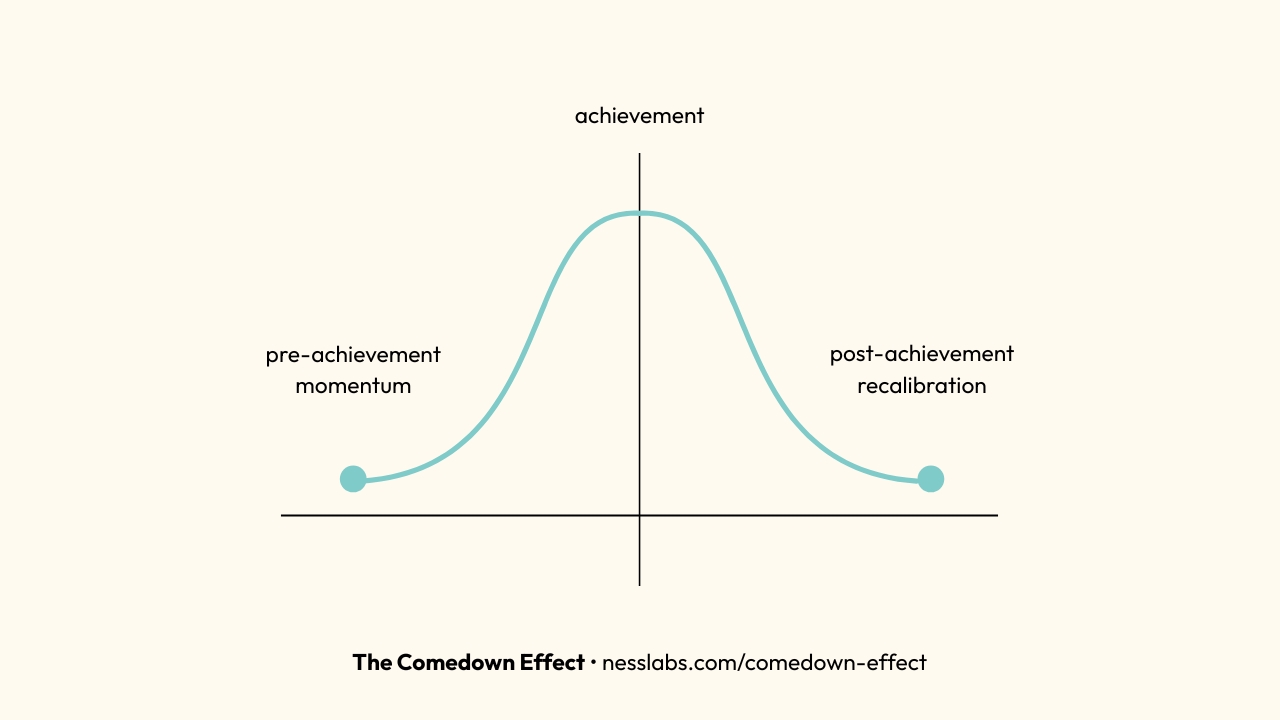
落差效应:成就带来的情绪后果
3 6 Ke· 2025-05-17 00:04
Core Insights - The article discusses the phenomenon known as the "post-achievement gap," which refers to the emotional void experienced after reaching a significant milestone or completing a challenging task [1][2][3] Group 1: Emotional Consequences of Achievement - The "post-achievement gap" is largely driven by the brain's dopamine system, which regulates motivation and reward processing. Contrary to popular belief, dopamine's primary role is not pleasure but anticipation [4] - Many individuals experience a sense of "emptiness" after completing a significant task, as the work that once occupied their thoughts and lives suddenly comes to an end [5] - Public achievements add another layer to the "post-achievement gap," as individuals may seek external validation to measure their work's value, leading to a temporary high followed by a low [6] Group 2: Strategies for Managing the Post-Achievement Gap - The article outlines five strategies to manage the natural emotional adjustment following significant achievements: 1. Create a critical ritual to mark the project's end, such as a special dinner or gathering with friends and colleagues [7] 2. Integrate experiences by dedicating time to reflect on events and feelings shortly after project completion, which aids in memory consolidation [8] 3. Start a low-risk, unrelated small experiment to satisfy the brain's craving for novelty and progress [9] 4. Seek internal validation by focusing on personal growth and learning rather than external success metrics [9] 5. Explore future goals without making immediate commitments, allowing for a healthy continuity in the brain's reward system [9]