军事冒险主义

Search documents
社评:日本已成国际社会麻烦制造者
Xin Lang Cai Jing· 2025-12-25 16:20
Core Viewpoint - The Japanese government is signaling a shift towards militarization and potential nuclear capabilities, which poses a challenge to the post-World War II international order [1][2][4] Group 1: Military Policy Changes - Prime Minister Fumio Kishida has indicated that Japan does not rule out the introduction of nuclear submarines and is accelerating the revision of security documents to prepare for potential long-term military conflicts [1] - Defense spending has been raised to over 2% of GDP, and there are plans to relax weapon export restrictions, indicating a shift towards a more aggressive military posture [2] - The ruling Liberal Democratic Party is reportedly in agreement to amend the "Three Principles on Transfer of Defense Equipment," aiming to fully open up the export of lethal weapons [2] Group 2: Diplomatic Maneuvers - The Japanese government is employing a dual diplomatic strategy, claiming openness to dialogue with China while simultaneously provoking tensions over Taiwan [3] - A significant number of Japanese lawmakers are expected to visit Taiwan, and former military officials are taking advisory roles in Taiwan's government, which breaches official diplomatic boundaries [3] Group 3: Regional Tensions - Japan's actions are seen as attempts to disrupt regional unity and serve as a pawn for external intervention, particularly in disputes over territories like the Dokdo and the Southern Kuril Islands [4] - The aggressive stance of the Kishida administration is accelerating regional crises and could lead to Japan's isolation [4] - Historical lessons indicate that the resurgence of militarism could bring severe consequences for both the region and the world [4]
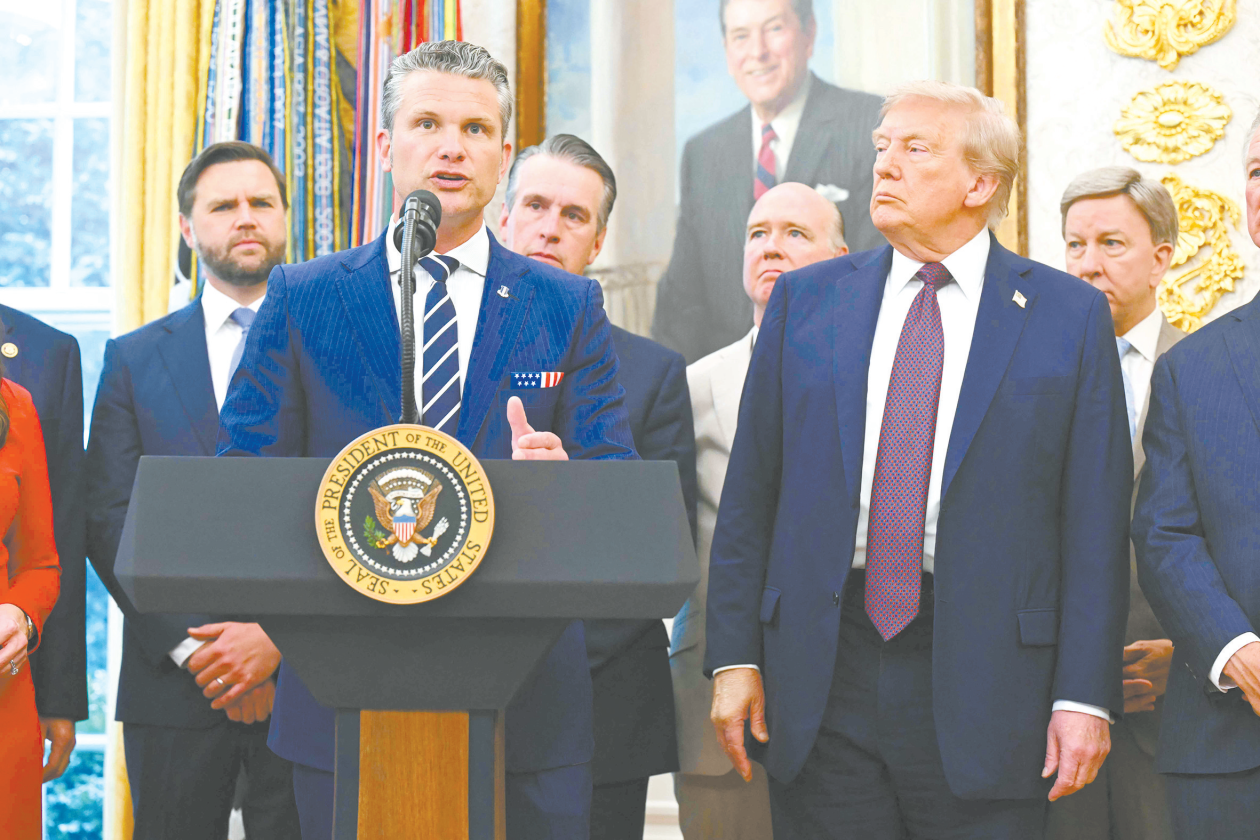
特朗普恢复美“国防部”旧称“战争部”计划,在美引发质疑
Huan Qiu Shi Bao· 2025-09-05 22:36
Core Viewpoint - The Trump administration plans to sign an executive order to change the name of the Department of Defense to the "Department of War," which aims to project a stronger military image, despite concerns over the implications and costs associated with this change [1][3][6]. Group 1: Name Change Details - The executive order will allow the use of "Department of War" in official communications, although formal name change requires Congressional approval [1][3]. - The Department of Defense, established in 1947, was previously known as the Department of War for over 150 years [4][5]. - The name change is part of a broader effort by the Trump administration to reshape U.S. military and foreign policy, emphasizing a more aggressive stance [6][8]. Group 2: Financial Implications - Changing the name and associated branding could cost billions of dollars, which may conflict with the administration's efforts to cut defense spending [6][7]. - Critics argue that the funds could be better spent on supporting military families or diplomatic efforts to prevent conflicts [7][8]. Group 3: Political and Historical Context - The name change reflects a shift in U.S. military policy, moving from a defensive posture to a more aggressive, war-centric approach [8]. - Historical context suggests that the original name change to the Department of Defense was intended to signal a focus on preventing war, contrasting with the current administration's actions [7][8].