
农机农艺融合

Search documents
让农机为丰收护航
Xin Lang Cai Jing· 2026-01-18 18:28
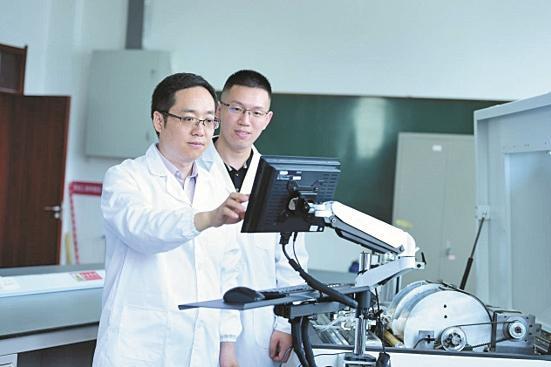
Core Viewpoint - The article highlights the significant advancements in cotton quality improvement and efficiency in Xinjiang, driven by innovative technologies developed by a research team led by Zhang Ruoyu at Shihezi University, contributing to national agricultural productivity and food security [2][5]. Group 1: Technological Innovations - The team has developed a high-efficiency residual film separation technology for cotton, utilizing high-pressure electrostatic and airflow methods, achieving international leading standards in equipment [3]. - Innovations include a mechanical separation method combining positive air pressure with a secondary netted roller, effectively removing residual film from cotton during processing [3]. - The team has also created a cotton quality online monitoring system, enhancing the digitalization of cotton processing and ensuring real-time data collection on energy consumption, quality, and yield [4]. Group 2: Impact on Cotton Industry - The technological advancements have led to a significant reduction in residual film content in machine-harvested cotton by 60% to 70%, alleviating burdens in subsequent processing stages [3]. - The rapid detection technology developed by the team has reduced the time for testing cotton quality indicators from 20-30 minutes to under 5 minutes, ensuring fair and transparent transactions [4]. - The research outcomes have been widely adopted in domestic cotton processing enterprises, achieving over 75% market share and facilitating exports to countries like Uzbekistan [5]. Group 3: Contribution to Food Security - The research team has proposed a comprehensive mechanized planting technology for cotton and wheat, which could increase wheat production capacity by over 35 million mu annually, significantly contributing to national food security [5]. - The integration of agricultural machinery and practices aims to enhance overall agricultural efficiency, ensuring a stable supply of cotton while supporting grain production [5].

发力“地、种、技、人”提升粮食产能
Jing Ji Ri Bao· 2025-08-13 22:10
Core Viewpoint - The article highlights the steady improvement in grain yield per unit area in China, with a focus on the integration of technology, infrastructure, and agricultural practices to enhance productivity and ensure food security [1][2]. Group 1: Grain Yield Data - In 2025, summer grain production is projected to reach 299.48 billion jin, with a yield of 375.6 kg per mu, remaining stable compared to the previous year [1]. - From 2020 to 2024, the average yield per mu for major grains such as corn, rice, and wheat increased from 421 kg, 470 kg, and 383 kg to 439 kg, 477 kg, and 396 kg respectively [2]. Group 2: Technological and Infrastructure Development - The article emphasizes the importance of high-standard farmland construction and the integration of various agricultural elements such as water, soil, and technology to enhance grain production capacity [3]. - It discusses the need for a breeding innovation system that focuses on advanced biotechnological research and the development of high-yield, quality, and resilient crop varieties [3]. Group 3: Agricultural Practices and Management - The integration of agricultural machinery and practices throughout the entire production cycle is crucial for optimizing yield, with a focus on precision sowing, dynamic water and fertilizer management, and effective pest control [4]. - The article stresses the importance of fostering new agricultural management entities such as family farms and cooperatives to enhance the organization and support for small farmers, thereby improving overall productivity [4].