决策订阅

Search documents
企业软件底层逻辑脱胎换骨:从席位订阅到决策订阅,下一个万亿公司属于这类玩家
量子位· 2026-03-27 07:00
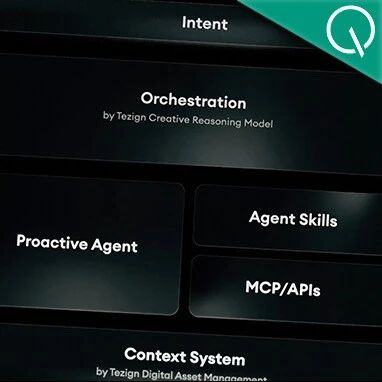
Core Viewpoint - The article discusses the transformative shift in enterprise software driven by the emergence of Generative Enterprise Agents (GEA), which fundamentally changes how businesses form judgments and make decisions [2][43]. Group 1: Historical Context and Paradigm Shift - The development of ERP, CRM, and BI systems has historically focused on managing resources, customers, and data [2]. - The introduction of GEA architecture by 特赞 aims to address a deeper question: how enterprises can form judgments, indicating a paradigm shift in software architecture [2][43]. Group 2: Competitive Landscape - As foundational models become as ubiquitous as electricity, competitive differentiation among enterprises will no longer rely on model parameters but rather on cognitive structures [4][5]. - The competition in enterprise AI is shifting from model capability to cognitive structure [5]. Group 3: Changes in Software Structure - The focus of the technology stack is moving from interfaces to agents, with AI fundamentally altering the form of software [7]. - The control structure in enterprise software is evolving; previously, human interfaces triggered business logic, but with the advent of reasoning capabilities, control is shifting upwards [8][9]. Group 4: Value Structure Transformation - In the SaaS era, enterprises purchased seats; in the Agent era, they will purchase outcome capabilities, indicating a change in value structure [10][11]. - The emphasis is shifting from data as the center to context as the new gravitational structure for enterprises [12][16]. Group 5: GEA Architecture - The GEA architecture consists of four layers: Intent Layer, Execution Layer, and Context System, which enable agents to reason around business goals and execute tasks continuously [18][30]. - The Intent Layer focuses on understanding business objectives rather than specific instructions, allowing for more effective reasoning and execution [20][21][25]. Group 6: Decision-Making Systems - The transition from data operation systems to decision operation systems reflects a significant structural change in enterprise software, with GEA being a crucial infrastructure for this new phase [31][35]. - The revenue structure is evolving from seat subscriptions to decision subscriptions, emphasizing the depth of business participation rather than mere tool provision [36][38]. Group 7: Future Outlook - The next decade will see enterprises deploying intelligent systems capable of participating in operational judgments, marking a new chapter in enterprise intelligence [46][47].