冷链物流数字化

Search documents
行进的海岸线 | 全球“鲜”达中国餐桌 探秘长三角“超级大冰箱”
Yang Guang Wang· 2025-11-22 05:21
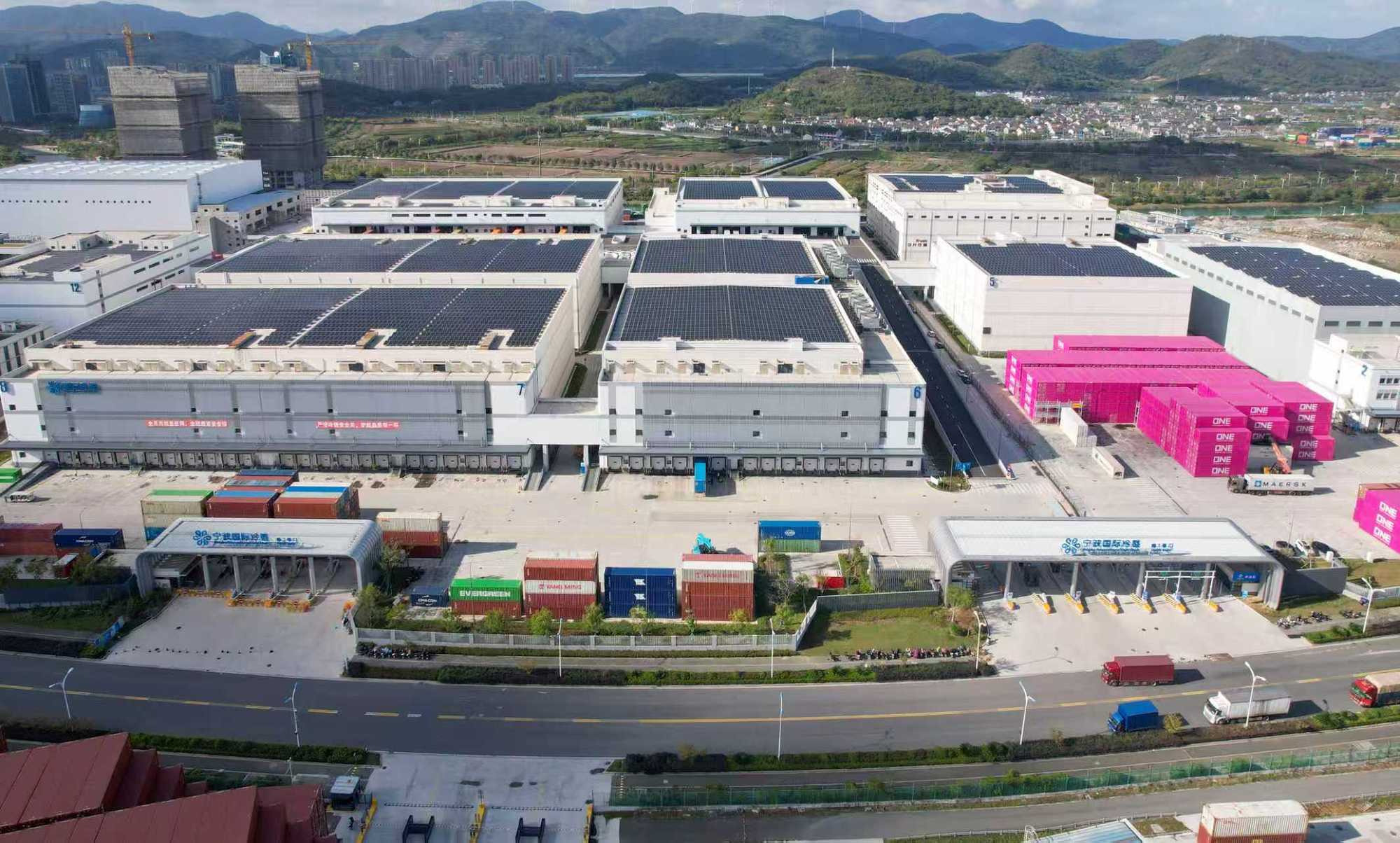
Core Insights - The China (Meishan) International Cold Chain Supply Chain Project is set to officially operate in September 2024 and is currently the largest single cold chain logistics project in East China, with a throughput of over 100,000 tons of quality meat, seafood, and fruits in its first year [1][9] Group 1: Project Overview - The project spans 387 acres and features multiple large cold storage facilities operating at temperatures ranging from -60°C to -20°C [1] - It is equipped with an integrated management information platform that enhances efficiency, reducing the time for customs declaration from 20 minutes to just 2 minutes [3] Group 2: Operational Efficiency - The cold chain hub has 58 fully enclosed temperature-controlled inspection lanes, capable of handling a maximum of 200 containers per day [5] - A rapid inspection channel has been established for perishable goods, allowing for immediate checks and releases upon arrival [5] Group 3: Technological Integration - The project utilizes a "digital twin + smart inspection" model for real-time monitoring of goods from port to storage, ensuring a seamless cold chain process [7][9] - The logistics platform operates autonomously, managing transportation processes without manual intervention [9] Group 4: Industry Impact - The project has attracted 83 companies across the cold chain industry, including major domestic food enterprises, indicating a significant impact on the local economy [9] - The company aims to evolve from a simple storage facility to a core supply chain entity, focusing on value-added services such as processing and supply chain digitization [9]

2799.4亿元,增长3.84%!冷链配送需求旺盛 新能源冷藏车成冷链运输“主力军”
Yang Shi Wang· 2025-08-19 02:50
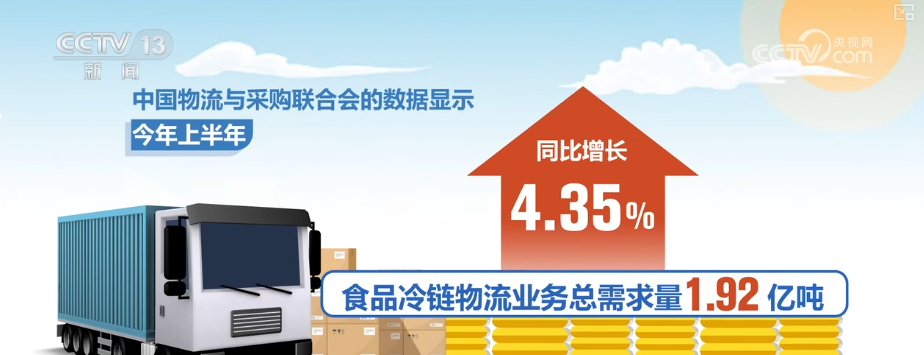
Core Insights - The cold chain logistics industry in China is experiencing steady growth, with a total demand for food cold chain logistics projected to reach 192 million tons in the first half of 2025, representing a year-on-year increase of 4.35% [1] - The total revenue of food cold chain logistics service companies reached 279.94 billion yuan in the first half of the year, marking a year-on-year growth of 3.84% [4] - Investment in cold storage projects amounted to 22.306 billion yuan in the first half of 2025, reflecting a year-on-year increase of 7.67% [4] - The total capacity of cold storage facilities reached 26 million cubic meters by the end of June, showing a year-on-year growth of 6.12% [4] Industry Trends - The demand for cold chain delivery is robust, driven by the rapid development of fresh e-commerce and chain restaurants, leading to a significant increase in the sales of light refrigerated vehicles [4] - Sales of refrigerated vehicles reached 29,474 units in the first half of 2025, with a year-on-year increase of 18.19%. Among these, sales of new energy refrigerated vehicles surged to 10,548 units, up 119.61% year-on-year, achieving a penetration rate of 35.8%, an increase of 16.5 percentage points [7] Technological and Regulatory Developments - The high penetration rate of new energy refrigerated vehicles is supported by government subsidies and relaxed road access regulations, with average costs being 5% to 10% lower than traditional fuel vehicles [7] - Cold chain logistics is critical for maintaining the quality of perishable goods, as demonstrated by laboratory tests showing a significant difference in bacterial growth between refrigerated and non-refrigerated conditions [10][12] - Currently, China's food cold chain circulation rate stands at 55%, compared to 95% in developed countries, indicating a need for improvements in temperature control during transportation to ensure food safety [15] Challenges and Recommendations - Cold chain logistics has irreversible characteristics; any disruption in the cold chain can lead to exponential growth of bacteria and microorganisms, emphasizing the need for full-chain traceability and digital upgrades [16] - Experts recommend enhancing the cold chain's temperature control capabilities to ensure food safety from production to consumption [15]