准公共服务

Search documents
“电鸡”充电:电费1.15元 服务费却高达8元!
Nan Fang Du Shi Bao· 2026-02-10 12:17
Core Viewpoint - The charging fees for electric bicycles in Shenzhen have become a significant issue, with complaints about high service fees overshadowing the actual electricity costs, leading to public outcry and regulatory scrutiny [1][2][20]. Group 1: Charging Fee Issues - Many residents express frustration over service fees that are disproportionately high compared to electricity costs, with some reports indicating service fees can be seven to ten times higher than the actual electricity charge [4][10][21]. - A survey of various charging brands revealed a consistent pattern of negative user feedback regarding high service fees, with complaints about the lack of transparency in pricing and billing practices [4][11][14]. Group 2: Regulatory and Market Dynamics - The current regulatory framework lacks clarity, with existing rules failing to adequately address the pricing and service quality issues in the electric bicycle charging market [14][18][25]. - Despite the government's push for market competition, many neighborhoods are served by only one charging brand, limiting consumer choice and leading to a quasi-monopolistic environment [13][23][24]. Group 3: Public Service Characteristics - The electric bicycle charging service is increasingly viewed as a public good, essential for daily life in a city with over 6 million electric bicycles, yet it is not formally recognized as such within the regulatory framework [21][22][26]. - The misalignment between the public service nature of charging and the profit-driven pricing strategies of operators has led to significant public dissatisfaction and calls for reform [22][26]. Group 4: Recommendations and Future Directions - There is a need for clearer regulations that define pricing standards and ensure transparency in service fees, as well as mechanisms to foster competition among charging service providers [18][20][25]. - The government is urged to develop a more comprehensive regulatory framework that addresses the unique challenges of the electric bicycle charging market, ensuring that it aligns with public service expectations [20][26].

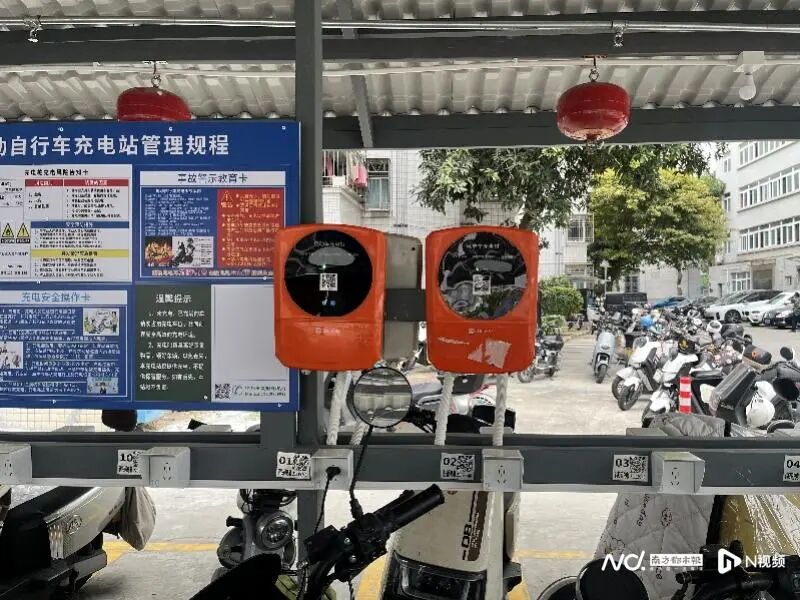
充电1.4度收费9.15元,服务费占8元,网友质疑遭遇“充电刺客”
Nan Fang Du Shi Bao· 2026-02-10 00:10
Core Viewpoint - The charging fees for electric bicycles in Shenzhen have raised significant public concern due to high service charges that far exceed the actual electricity costs, leading to complaints and calls for regulatory reform [7][8][11]. Charging Fee Issues - Many charging stations impose a minimum charge duration, with some charging for 30 minutes even if usage is less than that [5][9]. - A specific case highlighted a user being charged 9.15 yuan for 1.4 kWh of electricity, where the service fee alone was 8 yuan, leading to the term "charging assassin" being used by users to describe the situation [7][8]. - Users have reported that the cost per kWh can reach 5 to 8 yuan, significantly higher than the residential rate of approximately 0.7 yuan [8]. Regulatory and Market Dynamics - The current regulatory framework allows operators to set their own service fees, leading to a lack of transparency and competition in the market [10][11]. - The Shenzhen government has acknowledged the need for better regulation and has proposed measures to clarify the nature of charging services and establish a pricing negotiation mechanism [22]. Public Sentiment and Demand for Change - Public sentiment is increasingly critical of the high service fees, with many users sharing their experiences and "avoidance tips" online [9][10]. - There is a growing call from local representatives for the charging service to be recognized as a public service, which would necessitate a shift in how pricing is regulated and managed [21][22]. Expert Opinions - Experts argue that the charging service for electric bicycles should be treated as a public good due to its essential role in daily commuting for millions of residents [19][20]. - Recommendations include establishing a new pricing mechanism that incorporates government guidance and transparency in cost structures to ensure fair pricing for consumers [22].