
减排降碳

Search documents
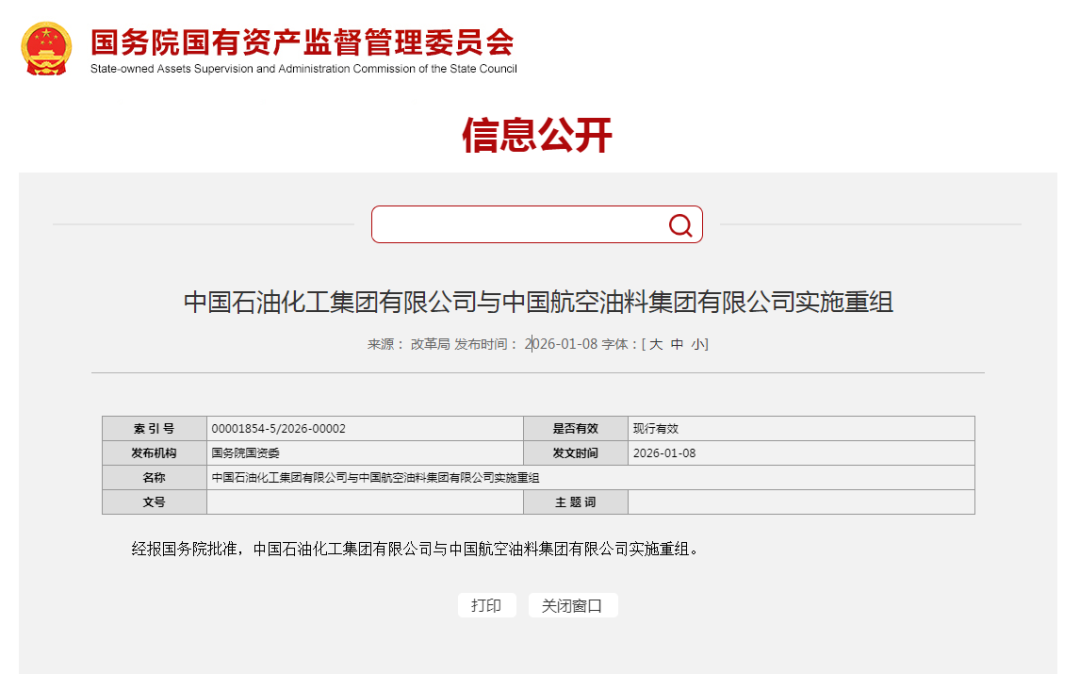
强强联手!中国石化和中国航油实施重组
Ren Min Ri Bao· 2026-01-09 00:49
Core Viewpoint - The collaboration between Sinopec and China National Aviation Fuel (CNAF) is expected to enhance the resilience of the aviation fuel industry chain and ensure energy security for the aviation sector in China [1][2][3]. Group 1: Industry Resilience and Energy Security - The partnership is anticipated to leverage integrated refining and aviation fuel supply systems, reducing intermediaries and lowering supply costs, thereby providing strong support for energy security in the aviation industry [1]. - According to S&P's forecast, China's aviation fuel consumption is projected to grow from 39.28 million tons in 2024 to 75 million tons by 2040, highlighting the increasing demand for aviation fuel [1]. Group 2: International Competitiveness - The merger is expected to enhance the international competitiveness of China's aviation fuel industry, which currently faces challenges compared to major integrated oil and petrochemical companies like Shell, BP, ExxonMobil, and Total [2]. - The restructuring will allow for complementary advantages, helping to strengthen and expand the aviation fuel industry in China [2]. Group 3: Sustainable Aviation Fuel Development - The collaboration is also seen as beneficial for the high-quality development of sustainable aviation fuel (SAF), which is recognized as a key route for reducing carbon emissions in the aviation sector [3]. - Sinopec is noted as one of the earliest companies in China to have SAF production capabilities, while CNAF plays a significant role in the promotion and ecological construction of SAF [3]. - The merger will facilitate deeper integration in areas such as technological research and development, industrialization, storage, transportation, and international trade related to SAF, promoting its research, usage, and continuous iteration [3].


资环电池首单海外业务落地
Zhong Guo Hua Gong Bao· 2025-11-05 02:27
Core Viewpoint - China Zihuan's subsidiary, Zihuan Battery, successfully imported 47 tons of recycled black powder raw materials from overseas, marking its first overseas business transaction since establishment [1] Group 1: Import and Environmental Impact - The recycled black powder raw material is derived from lithium-ion battery waste and contains high levels of valuable metals such as lithium, nickel, and cobalt, exceeding the content found in raw minerals [1] - Importing 10,000 tons of recycled black powder can reduce the need for approximately 30,000 tons of raw mineral extraction and lower carbon emissions by 25,000 tons [1] Group 2: Future Collaborations and Industry Cycle - Zihuan Battery has established cooperation intentions for the import and supply of recycled black powder with multiple overseas suppliers and domestic demand parties [1] - The recycled black powder will be further processed by Zihuan Battery and its partners to produce recycled lithium battery materials, reintegrating them into the battery manufacturing process, thus creating a "resource-product-recycled resource" industrial closed loop [1]