减重药市场

Search documents
12家跨国医疗巨头掌门人齐聚中国,将在这些领域继续投资
第一财经· 2026-03-21 16:19
Core Viewpoint - The article highlights the significant advancements in China's healthcare sector, which have created vast opportunities for multinational pharmaceutical companies to expand their investments and business operations in the country [4]. Group 1: Investment and Expansion - Twelve multinational healthcare executives, including leaders from Roche, Pfizer, and AstraZeneca, are participating in the China Development Forum 2026, indicating strong interest in the Chinese market [3]. - AstraZeneca announced major investments in Shanghai and Guangzhou to enhance local production capabilities for cell therapies and radiolabeled drugs, which will support its global supply network [5]. - Eli Lilly plans to invest $3 billion in China over the next decade to expand its supply chain capacity and establish a local production system for oral solid formulations [5]. Group 2: Market Opportunities - The demand for weight loss drugs in China is rapidly increasing, with Eli Lilly reporting an annual economic burden of 1 trillion RMB due to overweight and obesity [5]. - Pfizer has received approval for a GLP-1 receptor agonist, indicating its entry into the Chinese weight loss drug market [5]. - The article notes that multinational pharmaceutical companies are looking to acquire innovative drugs from China to enhance their research and development pipelines as several key drugs are approaching patent expiration [6]. Group 3: Competitive Landscape - China has captured approximately 30% of the global drug development market over the past decade, showcasing its rapid research and development capabilities [6]. - The speed at which Chinese biopharmaceutical companies recruit clinical trial participants is reported to be 2 to 5 times faster than that of U.S. companies, altering the global competitive landscape [6].



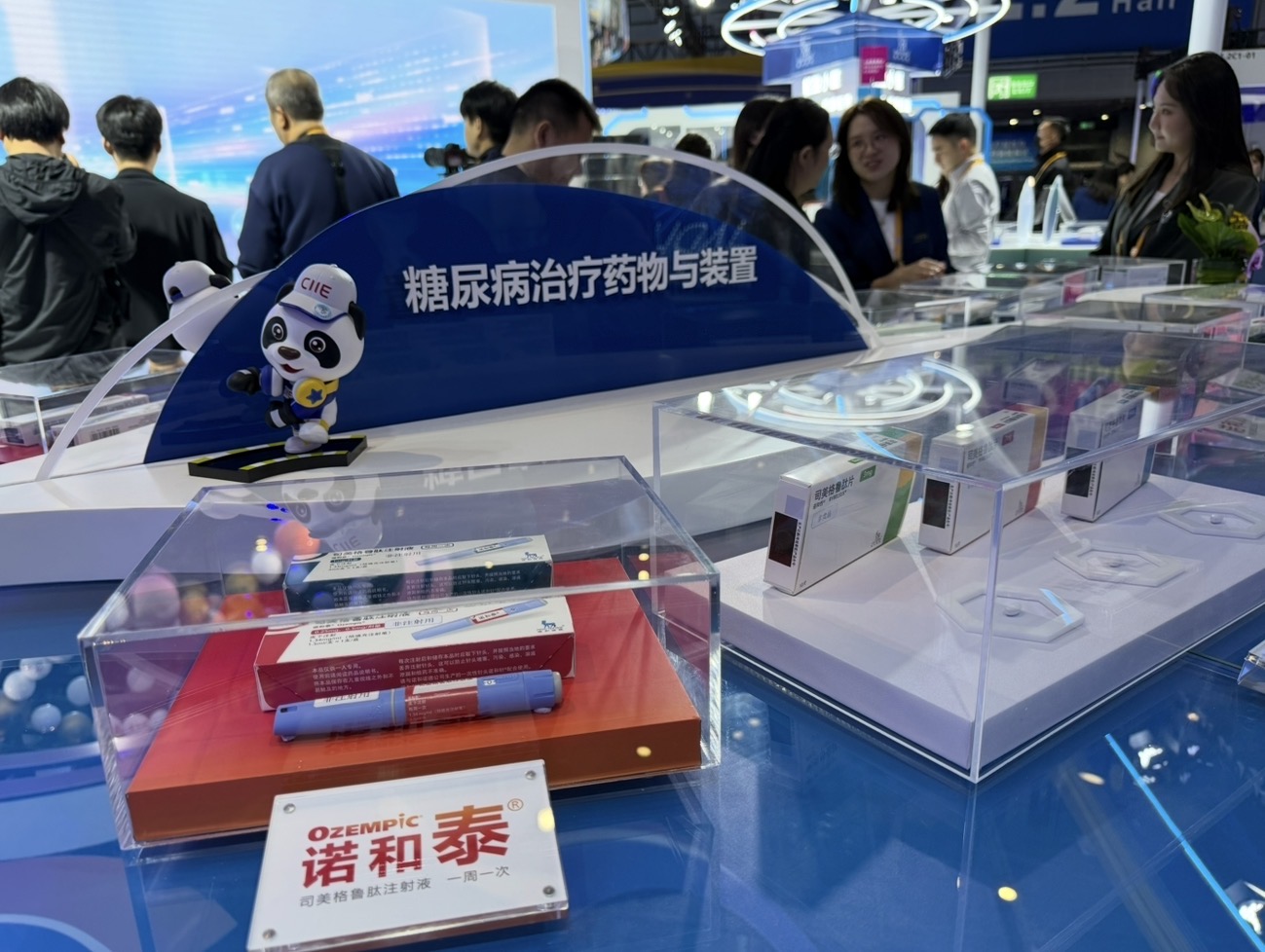
聚焦进博会|诺和诺德口服减重药显示心血管益处,看好中国慢病市场潜力
Di Yi Cai Jing· 2025-11-06 14:21
Core Insights - Novo Nordisk's weight loss drug semaglutide is the only GLP-1 class medication with clear cardiovascular benefits, which will significantly impact the treatment of obesity-related comorbidities [1][3] - The company is facing challenges such as slowing sales growth and layoffs, leading to a third downward revision of its annual profit and sales forecasts [3] Group 1: Strategic Developments - Novo Nordisk signed a strategic cooperation agreement with the Shanghai Clinical Innovation and Translation Research Institute to enhance clinical research and innovation in China [1] - The oral version of semaglutide is expected to receive FDA approval by the end of this year, potentially becoming the first approved oral GLP-1 weight management drug [3] Group 2: Market Position and Competition - The company is engaged in a bidding war with Pfizer for Metsera, a developer of weight loss therapies, with a latest bid of $10 billion [3] - Analyst Michael Leuchten from Jefferies noted that semaglutide-related products account for approximately 60% of Novo Nordisk's revenue, raising concerns about the company's growth prospects amid slowing market growth [3] Group 3: Market Access and Patient Reach - CEO Mike Doustdar emphasized that market access and patient accessibility are more critical than market share in addressing obesity, as many competitors target a smaller patient base [4] - The obesity rate among Chinese adults has reached 50.7%, with over 30% suffering from fatty liver disease, highlighting the significant market potential for Novo Nordisk's weight loss therapies in China [4]