切片传播

Search documents
无限切片之下,不只Tim,无人能幸免
36氪· 2025-11-17 13:07
Core Viewpoint - The article discusses the impact of fragmented information and the phenomenon of "deconstructionism" in the context of a recent controversy involving a Bilibili content creator, Tim, highlighting how the original context of content can be lost in the process of slicing and sharing [4][5][23]. Group 1: Incident Overview - Tim faced backlash after a video where he humorously presented himself at a matchmaking corner, emphasizing his perceived weaknesses while omitting significant personal achievements [7][9]. - The incident sparked a wave of criticism, with some viewing it as a humorous misstep, while others accused Tim of being disingenuous and exploiting the situation for entertainment [14][15]. Group 2: Fragmentation of Information - The article emphasizes how the original 17-minute Q&A video was reduced to a 50-second clip, stripping away essential context and leading to misinterpretations of Tim's intentions [24][31]. - The process of content slicing often results in multiple iterations, where the essence of the original message is altered, leading to extreme and divergent interpretations among audiences [26][27]. Group 3: Community and Platform Dynamics - The article notes that Tim's self-deprecating humor, which may resonate within his fan community, can be misinterpreted when taken out of context in broader public discourse [32][34]. - The response from Tim's fanbase indicates a level of understanding and rational discussion, contrasting with the more emotional reactions from the general public [36][37].

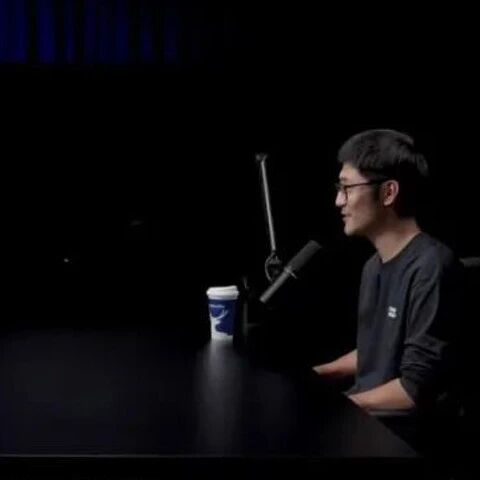
无限切片之下,不只Tim,无人能幸免
创业邦· 2025-11-17 10:10
Core Viewpoint - The article discusses the impact of fragmented information and the phenomenon of "deconstructionism" in the context of a recent controversy involving a Bilibili content creator, Tim, highlighting how the original context of content can be lost when it is sliced and shared in a fragmented manner [5][11][24]. Group 1: Incident Overview - Tim participated in a Q&A video where he humorously presented himself at a matchmaking corner, leading to a backlash due to the disparity between his self-description and his actual background [7][8]. - The backlash included criticism of Tim's perceived humility, with some accusing him of intentionally downplaying his advantages for entertainment purposes [11][12]. - The incident sparked discussions on social class and the consumption of weaker individuals, reflecting deeper societal issues [12]. Group 2: Fragmentation of Information - The article emphasizes that the original 17-minute Q&A video was reduced to a 50-second clip, which stripped away essential context, leading to misinterpretations [17][24]. - The process of content slicing often results in multiple iterations, where the essence of the original message is altered, leading to extreme interpretations [19][20]. - The fragmentation creates a disconnect between different audience perceptions, where some see arrogance while others view it as a traditional interaction [17][20]. Group 3: Community and Context - The article notes that the original context of Tim's self-deprecating humor was well understood within his fan community but lost when taken out of that context [25]. - The difference in audience engagement between long-form and short-form content is highlighted, with short videos lacking the depth needed for nuanced understanding [25][26]. - The response from Tim's fanbase to the controversy was more rational and reflective, suggesting a desire to address the issues of content fragmentation and its implications [26][28].

无限切片之下,不只 Tim,无人能幸免
3 6 Ke· 2025-11-17 03:34
Core Viewpoint - The incident involving Tim from Bilibili highlights the significant impact of fragmented information and the distortion of original context in the age of short video content [1][2][13]. Group 1: Incident Overview - Tim participated in a Q&A video on Bilibili, where he humorously presented himself at a matchmaking corner, leading to a public backlash due to the contrast between his self-description and his actual background [3][4]. - The backlash stemmed from the perception that Tim was downplaying his achievements, which included a successful business and an elite educational background, while presenting himself as a less qualified individual [4][6]. Group 2: Public Reaction and Criticism - The public response was mixed, with some finding humor in the situation while others criticized Tim for being disingenuous and for potentially exploiting the scenario for entertainment [6][7]. - The criticism evolved into discussions about social class and the consumption of weaker individuals, reflecting deeper societal issues [7]. Group 3: Fragmentation of Information - The incident illustrates how content can be easily sliced and reinterpreted, leading to a disconnect between the original narrative and the public's perception [12][14]. - The original Q&A video was 17 minutes long, with the matchmaking segment only being 50 seconds, which was the focus of the subsequent short video clips that circulated widely [14][17]. Group 4: Contextual Misunderstanding - The slicing of the video removed essential contexts, such as the interactive nature of the Q&A format and the community's understanding of Tim's self-deprecating humor [17][18]. - The difference in audience engagement between long-form and short-form content creates challenges in maintaining the original message and intent of the creator [18][19]. Group 5: Community Response - Despite the controversy, Tim's fanbase displayed a rational discussion in response to the incident, suggesting a deeper understanding of the implications of short video content and its effects on creators [20]. - The community's reaction indicates a potential shift towards analyzing and deconstructing the phenomenon of content fragmentation as a form of self-defense against malicious interpretations [20].