解构主义

Search documents
解锁2026私域增长密码,梦饷科技举办女装类目商家大会
Sou Hu Wang· 2025-12-16 02:18
Core Insights - The conference held by DreamX Technology focused on the women's apparel category, highlighting the company's achievements and strategic planning for 2026, emphasizing industry trends and private domain growth paths [1][3] Industry Trends - The women's apparel market is characterized by a clear structural trend, with dresses, down jackets, and casual pants being the top three categories, while pants, suits, and jeans have emerged as market dark horses [3] - Consumer preferences are shifting towards styles like "denim," "patchwork," and "new Chinese style," reflecting the demand for commuting and vacation scenarios [3] - The new Chinese style women's apparel market is projected to exceed 250 billion yuan by the end of 2025, indicating significant growth potential [3] Company Strategy - DreamX Technology's 2026 strategy includes a dual approach of "node marketing + scenario operation," focusing on key shopping periods and seasonal changes to enhance user experience and emotional connection [4] - The company introduced an "all-goods operation" strategy, creating a product matrix that includes bestsellers, new arrivals, and exclusive items to meet diverse merchant needs and consumer preferences [4] Performance Highlights - The brand "Qiu Shui Yi Ren" reported a 116% year-on-year increase in GMV and a 145% increase in content shares since 2025, showcasing effective brand trust-building strategies [5] - DreamX Technology's senior vice president outlined the company's commitment to core strategies of "quality goods, content upgrade, AI empowerment, and sustainable growth" to foster an ecosystem of mutual benefit with merchants [5][7] Future Outlook - The company aims to enhance supply chain capabilities and create differentiated products while upgrading private domain live streaming tools to improve operational efficiency [7] - DreamX Technology plans to leverage its core advantages in private domain e-commerce to drive high-quality and sustainable growth in the women's apparel industry [7]


无限切片之下,不只Tim,无人能幸免
3 6 Ke· 2025-11-17 13:32
Core Viewpoint - The incident involving Tim from Bilibili highlights the impact of fragmented information and the distortion of original context in the age of short video content, leading to a significant public backlash despite a supportive fanbase [3][13][18] Group 1: Incident Overview - Tim, a popular Bilibili content creator, faced public criticism after a Q&A video where he humorously presented himself at a matchmaking event, emphasizing his perceived weaknesses while omitting key aspects of his successful background [5][8] - The backlash stemmed from the stark contrast between Tim's self-deprecating portrayal and his actual accomplishments, which include a high-level education abroad and a successful business [5][8] - The incident quickly escalated on social media, with various interpretations and criticisms emerging, including accusations of elitism and insensitivity towards less privileged individuals [8][14] Group 2: Fragmentation of Information - The rapid dissemination of short video clips from the original 17-minute Q&A led to a loss of context, with the most shared segment being a mere 50 seconds that stripped away the broader narrative [13][16] - The phenomenon of "cutting" content into bite-sized pieces often results in extreme interpretations, as subsequent edits and re-creations further distort the original message [13][14] - This fragmentation creates a disconnect between the audience's understanding and the creator's intent, as different viewers rely on varying versions of the same event, leading to conflicting perceptions [14][16] Group 3: Community Response - Despite the public uproar, Tim's fanbase displayed a more nuanced understanding of the situation, engaging in rational discussions and suggesting that he address the phenomenon of short video fragmentation in future content [18] - The incident serves as a case study in communication and media studies, illustrating the challenges creators face in adapting to the evolving landscape of content consumption across different platforms [18]
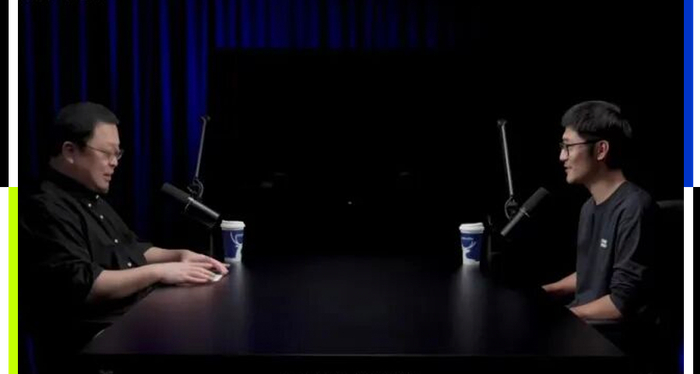
无限切片之下,不只Tim,无人能幸免
36氪· 2025-11-17 13:07
Core Viewpoint - The article discusses the impact of fragmented information and the phenomenon of "deconstructionism" in the context of a recent controversy involving a Bilibili content creator, Tim, highlighting how the original context of content can be lost in the process of slicing and sharing [4][5][23]. Group 1: Incident Overview - Tim faced backlash after a video where he humorously presented himself at a matchmaking corner, emphasizing his perceived weaknesses while omitting significant personal achievements [7][9]. - The incident sparked a wave of criticism, with some viewing it as a humorous misstep, while others accused Tim of being disingenuous and exploiting the situation for entertainment [14][15]. Group 2: Fragmentation of Information - The article emphasizes how the original 17-minute Q&A video was reduced to a 50-second clip, stripping away essential context and leading to misinterpretations of Tim's intentions [24][31]. - The process of content slicing often results in multiple iterations, where the essence of the original message is altered, leading to extreme and divergent interpretations among audiences [26][27]. Group 3: Community and Platform Dynamics - The article notes that Tim's self-deprecating humor, which may resonate within his fan community, can be misinterpreted when taken out of context in broader public discourse [32][34]. - The response from Tim's fanbase indicates a level of understanding and rational discussion, contrasting with the more emotional reactions from the general public [36][37].

无限切片之下,不只Tim,无人能幸免
创业邦· 2025-11-17 10:10
Core Viewpoint - The article discusses the impact of fragmented information and the phenomenon of "deconstructionism" in the context of a recent controversy involving a Bilibili content creator, Tim, highlighting how the original context of content can be lost when it is sliced and shared in a fragmented manner [5][11][24]. Group 1: Incident Overview - Tim participated in a Q&A video where he humorously presented himself at a matchmaking corner, leading to a backlash due to the disparity between his self-description and his actual background [7][8]. - The backlash included criticism of Tim's perceived humility, with some accusing him of intentionally downplaying his advantages for entertainment purposes [11][12]. - The incident sparked discussions on social class and the consumption of weaker individuals, reflecting deeper societal issues [12]. Group 2: Fragmentation of Information - The article emphasizes that the original 17-minute Q&A video was reduced to a 50-second clip, which stripped away essential context, leading to misinterpretations [17][24]. - The process of content slicing often results in multiple iterations, where the essence of the original message is altered, leading to extreme interpretations [19][20]. - The fragmentation creates a disconnect between different audience perceptions, where some see arrogance while others view it as a traditional interaction [17][20]. Group 3: Community and Context - The article notes that the original context of Tim's self-deprecating humor was well understood within his fan community but lost when taken out of that context [25]. - The difference in audience engagement between long-form and short-form content is highlighted, with short videos lacking the depth needed for nuanced understanding [25][26]. - The response from Tim's fanbase to the controversy was more rational and reflective, suggesting a desire to address the issues of content fragmentation and its implications [26][28].

无限切片之下,不只 Tim,无人能幸免
3 6 Ke· 2025-11-17 03:34
Core Viewpoint - The incident involving Tim from Bilibili highlights the significant impact of fragmented information and the distortion of original context in the age of short video content [1][2][13]. Group 1: Incident Overview - Tim participated in a Q&A video on Bilibili, where he humorously presented himself at a matchmaking corner, leading to a public backlash due to the contrast between his self-description and his actual background [3][4]. - The backlash stemmed from the perception that Tim was downplaying his achievements, which included a successful business and an elite educational background, while presenting himself as a less qualified individual [4][6]. Group 2: Public Reaction and Criticism - The public response was mixed, with some finding humor in the situation while others criticized Tim for being disingenuous and for potentially exploiting the scenario for entertainment [6][7]. - The criticism evolved into discussions about social class and the consumption of weaker individuals, reflecting deeper societal issues [7]. Group 3: Fragmentation of Information - The incident illustrates how content can be easily sliced and reinterpreted, leading to a disconnect between the original narrative and the public's perception [12][14]. - The original Q&A video was 17 minutes long, with the matchmaking segment only being 50 seconds, which was the focus of the subsequent short video clips that circulated widely [14][17]. Group 4: Contextual Misunderstanding - The slicing of the video removed essential contexts, such as the interactive nature of the Q&A format and the community's understanding of Tim's self-deprecating humor [17][18]. - The difference in audience engagement between long-form and short-form content creates challenges in maintaining the original message and intent of the creator [18][19]. Group 5: Community Response - Despite the controversy, Tim's fanbase displayed a rational discussion in response to the incident, suggesting a deeper understanding of the implications of short video content and its effects on creators [20]. - The community's reaction indicates a potential shift towards analyzing and deconstructing the phenomenon of content fragmentation as a form of self-defense against malicious interpretations [20].