切香肠式投稿

Search documents
一人作弊,全组“连坐”拒稿, ICML最狠新规,华人大佬挂帅严查
3 6 Ke· 2026-01-09 07:49
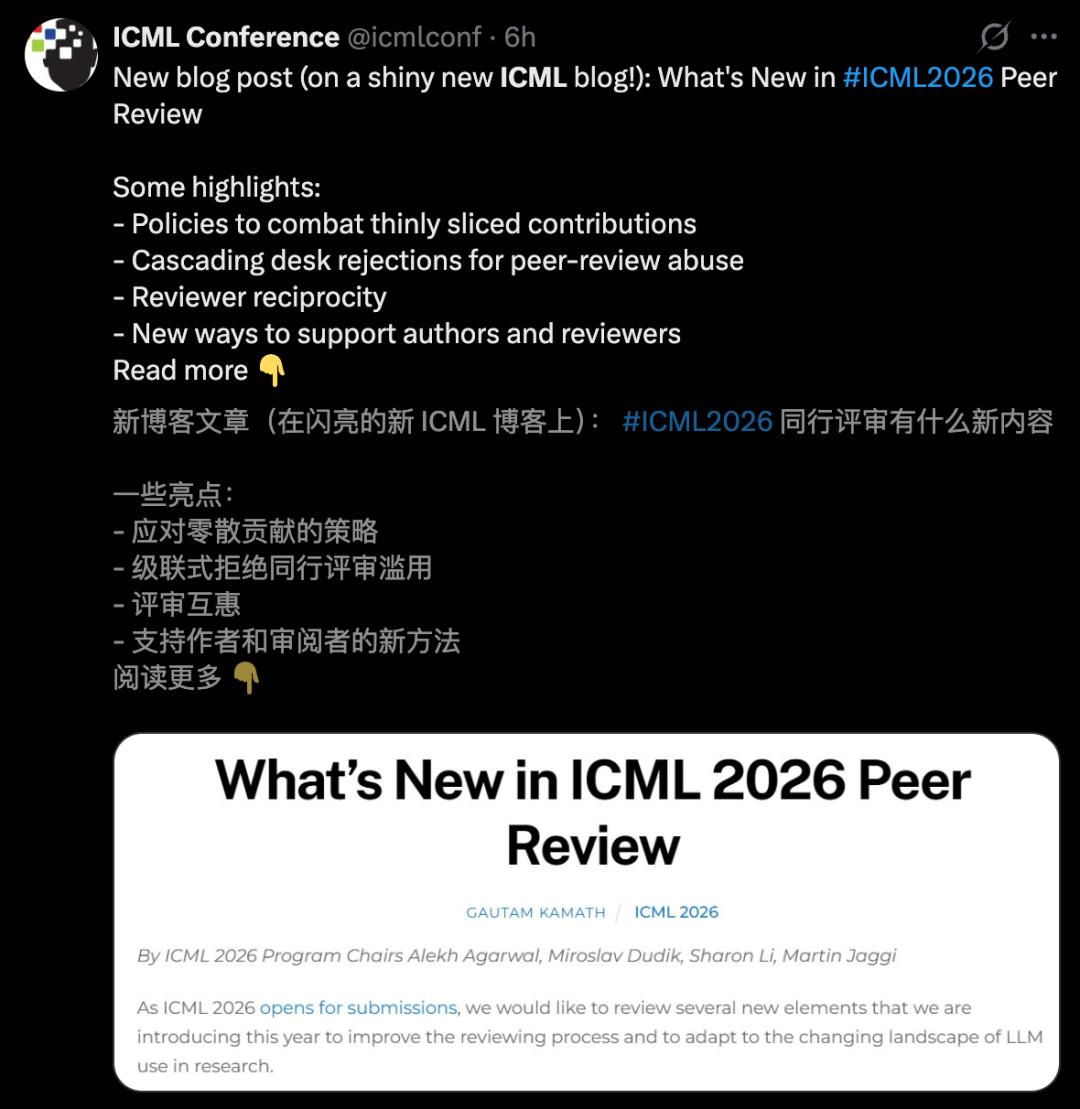
Core Viewpoint - ICML has introduced stringent new peer review regulations aimed at combating academic misconduct and AI cheating, emphasizing accountability among authors and their collaborators [1][3][12]. Group 1: New Regulations Overview - The consequences for academic misconduct are severe; if any author engages in unethical behavior, all submissions by that author and their collaborators may be rejected [3][12]. - A new policy targets "thinly sliced contributions," requiring authors to reference and discuss related submissions in their papers, with violations leading to direct desk rejection [11][12]. - The ICML 2026 conference will implement a "reciprocal review" system, mandating authors to nominate a qualified reviewer for their submissions [13]. Group 2: AI and Review Process - AI can be utilized in the review process, but only with the author's consent, reflecting a balanced approach to integrating technology while maintaining ethical standards [15]. - Authors submitting multiple papers can highlight those needing special attention, aiding in the review process [15]. - The conference will provide advanced AI tools to assist authors in drafting their papers, enhancing the quality of submissions [15]. Group 3: Leadership and Integrity - The conference will be chaired by prominent scholars, including Zhang Tong and Su Weijie, who will oversee the integrity of the review process [16][18]. - The new regulations are part of a broader effort to address longstanding issues in the academic community, such as inflated publication numbers and declining review quality [20].