
利润率修复

Search documents
九兴控股(01836):2025年点评:业绩低于预期,期待后续利润率修复
Changjiang Securities· 2026-03-29 11:44
Investment Rating - The report maintains a "Buy" rating for the company [6]. Core Insights - The company achieved a revenue of $1.57 billion in 2025, a year-on-year increase of 1.6%, but the net profit attributable to shareholders was $140 million, a decrease of 19.3%, indicating that revenue performance was below expectations [4]. - The company plans to expand production in Indonesia and Bangladesh, expecting robust growth from both existing and new customers over the next three years. Profit margins are anticipated to improve as new factories ramp up efficiency, with long-term net profit margin enhancement expected through product mix improvement and cost optimization [2][4]. - The forecast for net profit attributable to shareholders is $150 million, $160 million, and $170 million for 2026, 2027, and 2028 respectively, corresponding to P/E ratios of 10, 10, and 9 times. A 70% dividend payout ratio combined with a $60 million special dividend or buyback is projected to yield a 10.8% return for shareholders in 2026, highlighting a low valuation alongside high shareholder returns [2][4]. Revenue Analysis - The company experienced a volume increase of 3.8% but a decline in average selling price (ASP) by 2.5% in 2025. The growth in volume is attributed to increased orders from sports customers, while the decline in ASP is due to a higher proportion of lower-priced sports products [6]. - Revenue by category in 2025 showed sports, luxury, leisure, and fashion segments growing by 10%, declining by 6%, increasing by 1%, and declining by 10% respectively. The sports segment's growth is driven by higher demand from existing customers and new customer acquisition, while the luxury and fashion segments faced declines due to reduced demand in the U.S. and some delayed shipments [6]. Profitability Analysis - The company's gross margin decreased by 3 percentage points to 21.8% in 2025, primarily due to low sales volume during the ramp-up of new factories. The net profit margin fell by 2.3 percentage points to 8.8% due to increased sales and research expenses, although management expenses were optimized [6]. - The report indicates that the sales expense ratio, management expense ratio, and research expense ratio changed by +0.1 percentage points, -0.7 percentage points, and +0.3 percentage points respectively, reflecting the impact of new product production and the establishment of a new R&D center [6].
中信证券:中东局势从短期激烈冲突转向持续的小规模混乱,涨价为矛,增加低估值敞口,高估值板块情绪降温
Xin Lang Cai Jing· 2026-03-08 09:34
Group 1 - The core viewpoint is that the market sentiment for high valuation sectors may continue to cool, while the relative advantage of low valuation factors will gradually manifest [1][3][4] - The ongoing situation in the Middle East is shifting from short-term intense conflict to sustained small-scale chaos, which may impact global energy prices and economic concerns [2][15] - The policy design aimed at enhancing corporate quality and efficiency is expected to be the main theme for the next five years, reflecting a shift from traditional production scale expansion to improving profitability [9][22] Group 2 - The emotional sentiment in high valuation sectors has shown signs of decline, with significant fluctuations in investor sentiment indices observed during the spring market [3][16] - There is a potential shift in market styles between large and small caps, as well as between high and low valuation stocks, which may be accelerated by the Middle East conflict [4][17] - The revaluation space for Chinese resources and traditional manufacturing industries remains substantial, especially if return on equity (ROE) returns to reasonable levels [6][19] Group 3 - The current market configuration suggests a focus on sectors with competitive advantages and high barriers to overseas capacity reset, such as chemicals, non-ferrous metals, and renewable energy [11][22] - The report emphasizes the importance of profit margin recovery in various industries, as many sectors are still below historical profit margin levels [8][21] - The recommendation includes increasing exposure to low valuation factors, particularly in industries like insurance and brokerage, which are currently rare [11][22]

石头科技20260302
2026-03-03 02:52
Summary of the Conference Call for Stone Technology Company Overview - **Company**: Stone Technology - **Industry**: Robotic Vacuum Cleaners Key Points and Arguments Sales and Growth - **Export Ratio**: Approximately 75% of sales are from exports, with significant growth expected from overseas markets, particularly in Europe and the US, projected to maintain over 30% growth [2][3] - **Domestic Sales Impact**: Domestic sales may experience a slowdown due to national subsidies, but the impact is expected to be limited. The industry is projected to be flat or slightly declining in 2026, with overall growth still reliant on overseas markets [2][3] Profitability Projections - **2025 Losses**: Anticipated losses of approximately 150 million yuan in domestic sales, with washing machines losing nearly 500 million yuan and floor washers losing close to 100 million yuan. Overall profit could exceed 2 billion yuan when accounting for these losses [2][5] - **2026 Profit Forecast**: If growth reaches 20% and domestic losses continue to decrease, profits could reach 2.3 to 2.4 billion yuan, indicating a high degree of certainty in achieving these figures [2][5] Market Valuation - **Current Market Cap**: The company's market capitalization is below 36 billion yuan, corresponding to a valuation of about 15 times earnings, which is considered low historically [2][5] - **Earnings and Valuation Match**: With expected profits of 2.3 to 2.4 billion yuan in 2026, the valuation aligns well with performance expectations, suggesting that market sentiment regarding profitability and competitive disruptions is low [2][5] Industry Growth Potential - **Global Penetration Rate**: The current global penetration rate for robotic vacuums is around 15%, with potential to rise to 20% or higher, indicating continued growth potential in the industry [2][6] - **Compound Growth Rate**: The industry is expected to have a compound growth potential of over 20%, especially with the introduction of new product categories [2][6] Competitive Landscape - **Market Position**: Stone Technology holds a leading position in the global robotic vacuum market with a market share of approximately 21% to 22%, significantly ahead of competitors like Ecovacs and Roborock [4][7] - **Consumer Recognition**: The company maintains the highest user ratings on major platforms like Amazon, reflecting strong brand recognition and consumer trust [4][7] - **Stabilization of Competition**: The competitive intensity has decreased since 2026, with major players recognizing the unsustainability of excessive competition, leading to a stabilization of domestic prices [6][7] Future Outlook - **Profit Recovery**: The net profit margin is expected to recover to between 10% and 12%, indicating clear potential for margin improvement [6] - **Investment Value**: Given the current low market expectations and the potential for significant profit recovery and growth, the company presents a compelling investment opportunity [7] Additional Important Insights - **Domestic vs. International Sales**: While domestic sales may not contribute significantly to growth, they are expected to stabilize and improve profitability over time [4][6] - **Product Adjustments**: The washing machine segment is undergoing adjustments, with expectations of reduced losses in 2026 [6][7] This summary encapsulates the key insights from the conference call, highlighting the company's growth prospects, profitability forecasts, market position, and competitive dynamics within the robotic vacuum industry.

21专访丨摩根大通刘鸣镝:“反内卷”有望催生上行行情 流动性追随可持续业绩
2 1 Shi Ji Jing Ji Bao Dao· 2026-02-10 00:11
Core Viewpoint - The A-share market is at a critical turning point entering 2026, transitioning from a valuation recovery phase to a profit-driven new cycle supported by policy efforts, improved corporate earnings expectations, and increased household savings entering the market [1] Market Outlook - If the "anti-involution" initiative achieves substantial results, the A-share market may experience an upward trend in 2026, fundamentally changing investor confidence [1] - The core driver for this potential growth is the continuous improvement in corporate profitability, which will support sustainable asset returns and valuations [1] Sector Focus - Key sectors of interest include real estate, materials, and information technology (IT) [2] - A stronger stabilization signal in the real estate sector, particularly with further policy easing in first-tier cities, could surprise the market positively [2][5] - The materials sector is closely tied to global macroeconomic conditions, with a focus on precious metals outside the dollar and important metals related to new energy [2][5] - The IT sector is viewed with caution in the short term due to high current valuations and elevated expectations for Q4 2025, suggesting a need for a correction before new investment opportunities arise [2][6] Foreign Capital Flow - The return of foreign capital is expected to be a gradual and structurally differentiated process, with passive funds actively positioning in the Chinese market [2][11] - Active funds, particularly those excluding the U.S., have shown significant low allocation to Chinese stocks, but this is beginning to narrow as they gain a better understanding of similar companies in China [2][11] Profitability and Investment Strategy - The forecast for the CSI 300 index in 2026 is set at 5200 points, driven by an expected 15% year-on-year profit growth, with real estate, IT, and materials sectors anticipated to show the most significant growth [5] - The real estate sector's potential for upward movement is supported by a decrease in the ratio of residential value to GDP, currently at 1.8 to 1.9 times, below historical averages [5] - The food and beverage sector is highlighted for its potential due to a growing demand for healthy food, with the industry currently undervalued compared to historical standards [10] Long-term Opportunities - The "anti-involution" theme is expected to create long-term opportunities, particularly in the battery, storage, and photovoltaic sectors, as companies focus on core business quality and stable pricing [8][9] - The profitability of the Chinese market is currently the lowest in the Asia-Pacific region, but historical comparisons suggest that improvements in profit margins could lead to substantial investment returns over time [9]


中信证券:脱虚向实,重视涨价线索的扩散
Xin Lang Cai Jing· 2026-02-01 07:11
Group 1 - The current wave of ETF redemptions is coming to an end, providing a recovery window for large-cap stocks [2][10] - The shift in investment style is occurring on a macro level, transitioning from small-cap to large-cap and from thematic to quality stocks [3][11] - The nomination of Waller as the next Federal Reserve Chair reflects a policy intention towards "real economy" in the U.S., which could significantly impact global risk assets [3][11] Group 2 - Price increases are expected to be a theme throughout the first quarter, driven by various sectors including upstream resources, midstream manufacturing, and downstream real estate [4][13] - The underlying commonality in cyclical sectors is the significant potential for profit margin recovery, as China's policy shifts from expansion to quality improvement [6][12] - The investment strategy should focus on industries where China has competitive advantages and is undergoing a reassessment of global pricing power, particularly in chemicals, non-ferrous metals, and new energy [7][14] Group 3 - The recovery in consumer and real estate sectors is anticipated to occur in the spring, aligning with the broader market recovery [8][15] - Current market capitalization of real estate companies is only 1.0% of the total A-share market, indicating a potential for recovery in this sector [8][15] - Recommendations for the consumer sector include focusing on duty-free, aviation, hotels, and tea beverage industries, while for the real estate sector, attention should be on quality developers and building materials [8][16]
2025年车市陷入“量增利薄” 行业利润率有待修复
Zheng Quan Ri Bao· 2026-01-27 16:40
Core Insights - The automotive industry in China is expected to see revenue growth in 2025, but costs are rising faster, leading to only a slight increase in profits and a decline in profit margins [1][2] - Despite record production and sales figures, the industry's profitability remains low, with a profit margin of 4.1% in 2025, which is below the average for industrial enterprises [2][3] Group 1: Industry Performance - In 2025, the automotive production and sales reached 34.53 million and 34.40 million units respectively, marking year-on-year increases of 10.4% and 9.4% [2] - The revenue for the automotive industry was 11.18 trillion yuan, with costs at 9.85 trillion yuan, resulting in a profit of 461 billion yuan, which is a mere 0.6% increase year-on-year [2] - The profit margin for the automotive industry decreased from 4.3% in 2024 to 4.1% in 2025, indicating a persistent struggle for profitability despite growth in scale [2][3] Group 2: Challenges to Profitability - The automotive industry faces a "volume increase but thin profits" scenario due to intensified competition and fluctuating costs, which continue to erode profitability [3] - The pressure from rising unit costs, driven by high commodity prices and raw material fluctuations, has led to a decrease in both unit revenue and unit costs, but without an expansion in gross profit margins [3] - The National Bureau of Statistics reported that the profit margin for large-scale industrial enterprises was 5.31%, highlighting the automotive sector's struggle to recover profitability despite high production and sales [3] Group 3: Regulatory Environment - Regulatory bodies are intensifying efforts to curb "disorderly price wars" in the automotive sector, aiming to maintain a fair market environment [4] - Measures are being discussed to regulate pricing behaviors between manufacturers and dealers, which has garnered significant attention within the industry [4] - Experts suggest that restoring profit margins requires mechanisms to prevent practices like below-cost dumping and excessive pressure on supply chains, as these could negatively impact research and development investments and product quality [4]
未知机构:再发国盛食饮安井势强餐供修复再次强调把握板块布局机会安-20260120
未知机构· 2026-01-20 02:10
Company and Industry Summary Industry: Food and Beverage Sector Key Points - **Company Focus**: The analysis centers on Anjijia, a leading player in the food and beverage sector, particularly in the frozen food market [1][2]. - **Sales Performance**: Anjijia has received positive sales feedback recently, indicating a potential strengthening of its leading market position. The company has also reduced promotional efforts on some products, suggesting a strategic shift to stabilize pricing amidst competitive pressures [1][2]. - **Product Innovation**: The company is shifting its strategy towards product innovation, with a focus on new product launches. In 2025, Anjijia plans to drive growth through new products, including the recent acquisition of the "Anzhai" brand to enter the halal market [1][2]. - **Channel Upgrades**: Anjijia is prioritizing channel upgrades, particularly in large B2B customizations, with a focus on supermarkets and new retail channels in 2025 [1][2]. - **Profit Margin Improvement**: The expected scale effects from customized products are anticipated to enhance gross margins. The company is also expected to see improvements in net profit margins as high-margin consumer products gain traction and as sales through supermarkets and new retail channels increase [3][4]. - **Seasonal Demand Recovery**: The current season is characterized by a recovery in demand for frozen food, with a gradual easing of price competition. The company is positioned to benefit from this seasonal uptick, with expectations for revenue growth driven by low base effects and improved performance in specific product categories [4]. - **Investment Opportunities**: Analysts suggest focusing on Anjijia due to its stable seasonal sales and potential for profit margin recovery. Other companies to watch include Babi, which is successfully expanding its new store formats, and Lihigh, which is benefiting from channel advantages and favorable policies [4]. Risks - **Consumer Spending**: There are risks associated with the recovery of consumer spending not meeting expectations, which could impact sales [5]. - **Increased Competition**: The food and beverage industry is facing heightened competition, which may affect pricing and market share [5]. - **Product and Channel Development**: There are concerns that the promotion of new products and the expansion of distribution channels may not proceed as planned, potentially hindering growth [5].

国泰海通|宏观:同比转负,有待需求提振——10月工业企业利润数据点评
国泰海通证券研究· 2025-11-27 14:14
Core Insights - In October, the profits of industrial enterprises above designated size turned negative year-on-year, primarily due to the divergence in volume and price, uneven transmission of upstream price increases, and rising financial costs leading to a contraction in profit margins [1] - The industry is experiencing increased differentiation, with most sectors seeing a decline in profit growth; upstream industries performed slightly better than midstream and downstream, while only the beverage and tea sector benefited from a low base effect, resulting in marginal profit improvement [1] - Passive inventory replenishment highlights weak demand; future policy support and demand recovery are needed to stimulate inventory replenishment, alongside deepening anti-involution which may aid in improving PPI and restoring profit margins, although profit recovery may be gradual [1] - Caution is advised regarding demand falling short of expectations and issues related to cost transmission [1] Industry Analysis - The overall profit growth rate has declined across most industries, indicating a challenging environment for industrial enterprises [1] - Upstream industries are showing slightly better performance compared to midstream and downstream sectors, suggesting a potential shift in focus for investors [1] - The beverage and tea industry stands out as a rare exception, benefiting from a low profit margin base, which has allowed for some recovery in profits [1]

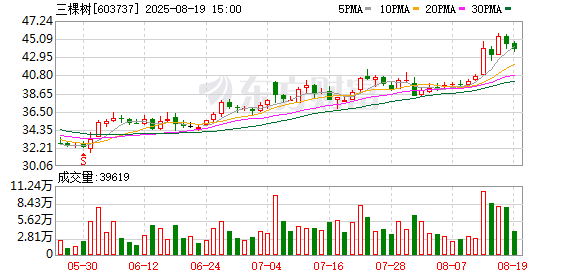
天风证券给予三棵树买入评级,上半年业绩同比高增,利润率进入修复通道
Mei Ri Jing Ji Xin Wen· 2025-08-19 09:37
Group 1 - The core viewpoint of the report is that Tianfeng Securities has given a "buy" rating to Sankeshu (603737.SH) based on its strong performance in the home decoration paint sector and effective strategic transformation [2] - The report highlights that both sales volume and price of home decoration paint have increased, indicating a positive market trend [2] - Profit margins have significantly improved, and cash flow has turned positive, which are critical factors for the company's financial health [2] Group 2 - The report mentions potential risks, including the possibility that the company's channel expansion may not meet expectations [2] - There is a concern regarding the significant increase in raw material prices, which could impact profitability [2] - The report also notes the risk of a downturn in the real estate market exceeding expectations, along with intensified market competition [2]


华利集团(300979):老客户波动+新厂爬坡导致利润率承压,期待26年弹性
ZHESHANG SECURITIES· 2025-08-10 11:48
Investment Rating - The investment rating for the company is "Buy" [6] Core Views - The company's Q2 revenue met expectations, but profit margins faced further pressure due to fluctuations in old customer orders and the ramp-up of new factories [1] - New customer orders saw significant growth year-on-year, although some old customer orders declined due to external factors such as consumer demand in Europe and the US, and tariff uncertainties [2] - The company's gross margin fluctuated due to the efficiency ramp-up of new factories and adjustments in production capacity among older factories [3] - The company is maintaining an aggressive capacity expansion strategy, with new factories in Vietnam and Indonesia expected to enhance profitability in the coming years [4] - Profit forecasts have been adjusted downward for the current year due to uncertainties in trade environments, but a recovery in profit margins is anticipated in 2026 as new factory efficiencies improve [5] Summary by Sections Financial Performance - For H1 2025, the company achieved revenue of 12.66 billion yuan, a year-on-year increase of 10.4%, while net profit was 1.664 billion yuan, a decrease of 11.4% [1] - In Q2 2025, revenue was 7.31 billion yuan, up 9.0% year-on-year, with net profit at 902 million yuan, down 17.3% [1] Customer Dynamics - The company experienced a significant increase in new customer orders, primarily from brands like Adidas and New Balance, contributing to a 6.14% increase in sports shoe sales to 11.5 million pairs in H1 2025 [2] Production and Capacity - The net profit margin for H1 2025 was 13.1%, down 3.2 percentage points year-on-year, with Q1 and Q2 margins at 14.2% and 12.3%, respectively [3] - The company is actively expanding production capacity with new factories, which typically take 1.5 to 2 years to reach full efficiency [4] Profit Forecasts - Revenue projections for 2025-2027 are 26.66 billion yuan, 30.15 billion yuan, and 34.18 billion yuan, with expected year-on-year growth rates of 11%, 13%, and 13% respectively [5]