
前沿半导体

Search documents
上证50VS道琼斯:中美传统行业差距抹平,未来分野唯在科技
3 6 Ke· 2025-12-17 00:31
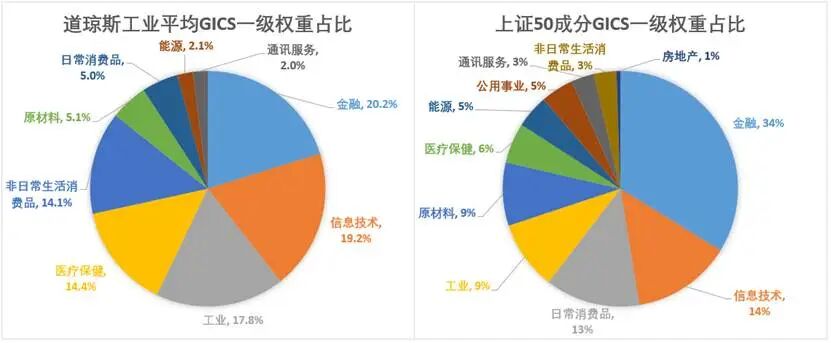
Group 1 - The article compares the valuation and fundamental changes between the Nasdaq and the Hong Kong stock market's Chinese internet companies over the past three years, highlighting the differences in pricing logic and relative performance of the Dow Jones Industrial Average and the Shanghai Stock Exchange 50 Index [1] - The Dow Jones Industrial Average consists of 30 stocks across 27 GICS sectors, with only three companies in the same sub-industry, while the Shanghai Stock Exchange 50 Index has 50 stocks across 26 GICS sectors, with nearly half not being the only representative in their respective industries [2] - The financial sector holds a higher weight in the Shanghai Stock Exchange 50 Index at 34%, compared to 20.2% in the Dow Jones Industrial Average, indicating a higher concentration in the former [2][5] Group 2 - The average PE valuation of the Dow Jones Industrial Average is approximately three times that of the Shanghai Stock Exchange 50 Index, indicating a less rational composition in the latter [5] - The total market capitalization of the Dow Jones increased from $2.9 trillion to $7.9 trillion, with a compound annual growth rate (CAGR) of 64.4%, while the Shanghai Stock Exchange 50 Index's CAGR was only 23.4% [8] - After excluding Nvidia and Cambrian, the market capitalization growth of the Shanghai Stock Exchange 50 Index outpaced that of the Dow Jones in traditional industries, with a CAGR of 20.5% compared to 15.1% for the Dow Jones [9][11] Group 3 - The valuation levels of the Shanghai Stock Exchange 50 Index and the Dow Jones Industrial Average are similar, with PE ratios of approximately 19.9x and 19.3x, respectively, indicating a convergence in valuation logic [11] - The historical percentile averages for the Dow Jones and the Shanghai Stock Exchange 50 Index are 31.4% and 37.8%, respectively, suggesting that both indices are below median levels [13] - The traditional industries represented by both indices show minimal differences in valuation levels, with the Shanghai Stock Exchange 50 Index slightly outperforming the Dow Jones in certain aspects [15] Group 4 - The revenue growth rates for both indices are similar, with the Dow Jones showing a quarterly revenue increase from $313 billion to $408 billion, while the Shanghai Stock Exchange 50 Index experienced a slight decline before rebounding to a 10.5% growth [16][18] - The profit margins between the two indices are comparable, with the Shanghai Stock Exchange 50 Index benefiting from resource concentration, leading to higher net profit margins than the Dow Jones [20][22] Group 5 - The cost structures of both indices are nearly identical, with the Shanghai Stock Exchange 50 Index's sales and management fee rate at approximately 10.5% and the Dow Jones at 10.3% [23] - The debt structure shows that the Dow Jones has a higher overall debt ratio of 68%, while the Shanghai Stock Exchange 50 Index maintains a more conservative debt ratio of 45% [27] - The competition level in the Shanghai Stock Exchange 50 Index is higher than in the Dow Jones, with a lower free cash flow to revenue ratio, indicating ongoing capital expenditures [31][33] Group 6 - The article concludes that there are no significant differences between the traditional industries of the Dow Jones and the Shanghai Stock Exchange 50 Index, with both showing similar market scales, valuation logic, and revenue growth rates [37] - The capital structure differences highlight that the Dow Jones firms are more leveraged and focused on shareholder returns, while the Shanghai Stock Exchange 50 Index firms are more conservative and maintain a higher safety margin [39]

成都未来产业基金首批子基金集中签约 千亿级未来产业基金集群迈向实体运作
Si Chuan Ri Bao· 2025-11-23 01:27
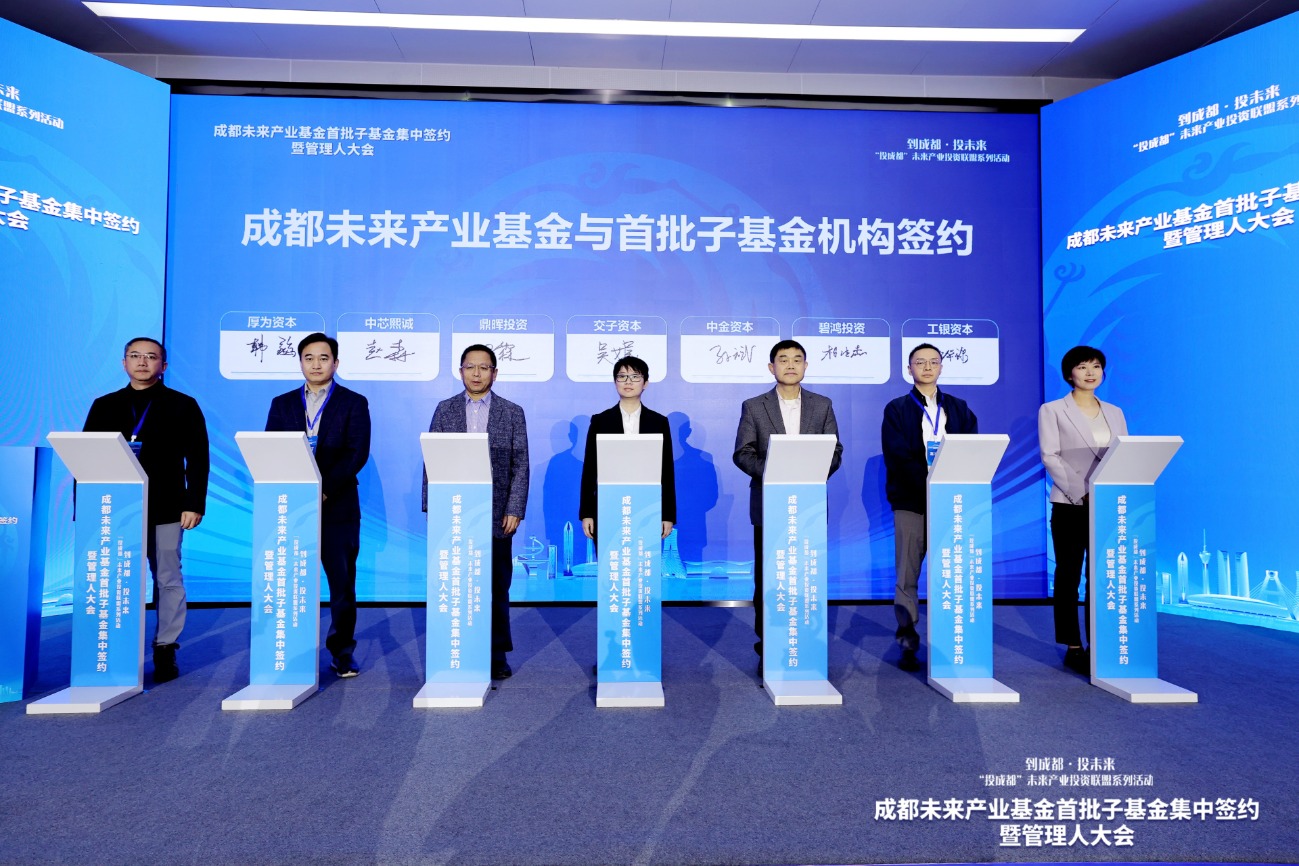
Core Viewpoint - The first batch of sub-funds, totaling approximately 6.5 billion yuan, aims to invest in Chengdu's "9+9+10" modern industrial system, focusing on key frontier technology areas such as artificial intelligence, quantum technology, advanced semiconductors, life health, and new energy [1][2] Group 1 - The first batch of sub-funds has been officially launched, marking the transition from policy planning to actual operation of Chengdu's trillion-yuan future industry fund cluster [1] - The sub-funds will adopt differentiated investment styles to support the development of nine characteristic advantage industrial clusters, nine strategic emerging industrial clusters, and ten future industrial fields in Chengdu [1] - A total investment of approximately 320 million yuan has been signed with four hard technology companies, covering sectors such as intelligent networking, advanced packaging, and medical technology [1] Group 2 - Chengdu's future industry fund strategy is being concretely implemented through the signing of the first batch of sub-funds and project agreements [2] - Jiaozi Capital will play a significant role in the operation of the future industry fund, having managed and participated in over 70 funds with a total scale exceeding 170 billion yuan [2]
首批65亿元!“子基金+项目”同步签约 成都千亿元未来产业基金集群开启实质性运营
Mei Ri Jing Ji Xin Wen· 2025-11-21 11:45
Core Insights - The event in Chengdu marked the signing of the first batch of sub-funds totaling approximately 6.5 billion yuan, indicating a significant step from policy planning to actual operation of the Chengdu Future Industry Fund cluster [1][3] - The "Jiaozi Capital" brand was officially launched, which is part of the Chengdu Jiaozi Financial Holding Group, managing over 70 funds with a total scale exceeding 170 billion yuan [1][5] Fund and Investment Details - The first batch of sub-funds includes partnerships with six major investment institutions, officially starting with a total scale of 6.5 billion yuan [3] - The funds will focus on differentiated investment strategies in sectors such as artificial intelligence, quantum technology, advanced semiconductors, life health, and new energy [3][5] - Jiaozi Capital plans to create a "3+1" fund matrix to enhance urban development strategies, focusing on financial capital operations, private equity direct investment, and government fund management [1][5] Strategic Goals and Collaborations - The Chengdu Future Industry Fund aims to support the city's modernization industrial system, which includes 9+9+10 sectors, and will operate under a competitive selection mechanism for sub-fund selection [3][6] - The establishment of the "Invest Chengdu" Future Industry Investment Alliance aims to connect various resources to accelerate the industrial chain and provide comprehensive services for future industry enterprises [6]
65亿首批子基金集中签约 成都千亿未来产业基金集群启航
Xin Hua Cai Jing· 2025-11-21 11:16
Core Insights - The Chengdu Future Industry Fund has successfully signed its first batch of sub-funds totaling approximately 6.5 billion yuan, marking a transition from policy planning to actual operations in the establishment of a trillion-yuan future industry fund cluster in Chengdu [1][2]. Group 1: Fund and Investment Details - The first batch of sub-funds will focus on key areas such as artificial intelligence, quantum technology, advanced semiconductors, life health, and new energy, aiming to drive breakthroughs in cutting-edge technologies [2]. - The Chengdu Future Industry Fund has partnered with six institutions, including Dinghui Investment and CICC Capital, to facilitate this investment [2]. - The fund has already signed agreements with four hard-tech companies, including Yongxin Medical and Zhongdian Jinxin, with an investment amount of approximately 320 million yuan, covering sectors like intelligent networking and advanced packaging [2]. Group 2: Strategic Framework and Future Plans - Chengdu is accelerating the construction of a modern industrial system characterized by a "9+9+10" framework and is promoting 16 key industrial chains [2]. - The "Jiaozi Capital" brand has been officially launched, with over 70 funds managed and a total scale exceeding 170 billion yuan, focusing on financial capital operations, private equity direct investment, and government fund management [3]. - The strategic layout includes three main funds: "Jiaozi Future," "Jiaozi Manyuan," and "Jiaozi AIC," along with a nurturing business fund "Jiaozi Mergers," forming a comprehensive fund matrix to support urban development strategies [3]. Group 3: Ecosystem Development - The event also launched a key industrial chain opportunity list covering integrated circuits, biomedicine, AI, humanoid robots, and intelligent connected vehicles, linking over 100 hard-tech companies [4]. - The "Invest Chengdu" Future Industry Investment Alliance was initiated to aggregate resources from government, research institutions, enterprises, and capital, facilitating collaboration across the industrial chain [4]. - Discussions during the event focused on investment logic in cell gene therapy and the "fund + park" ecological cultivation model, aiming to create a robust framework for future industry development [4].