前沿科技突破

Search documents
在结构性机遇中迎接新年新篇章
Sou Hu Cai Jing· 2025-12-29 07:02
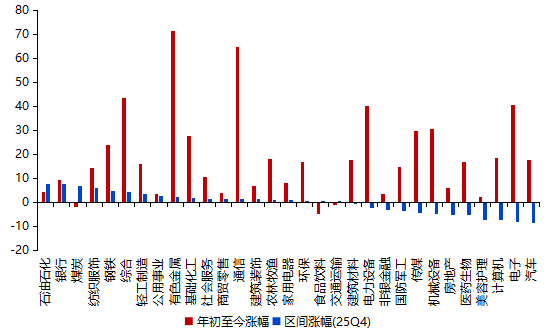
Core Insights - The capital market in 2025 experienced structural fluctuations, with non-ferrous metals, TMT, and power equipment being market highlights, while dividend sectors and real estate faced pressure. As 2026 approaches, structural opportunities are emerging supported by policy stabilization, corporate profit recovery, and liquidity influx [4] Group 1: Global Liquidity Improvement - The global macro environment in 2026 is expected to release positive signals, with the U.S. fiscal and monetary policies likely to trend towards easing. The "Great Beautiful Act" could lead to a long-term tax cut, potentially increasing the federal deficit by approximately $3.4 trillion over the next decade, and the debt ceiling may rise by $5 trillion (a 12% increase) [5] - A low-interest-rate environment is expected to ease global liquidity constraints, alleviating capital outflow pressures in emerging markets and creating a relatively stable external environment for A-shares [5] Group 2: Domestic Economic Recovery - Domestic policies are aligning with micro signals to create a warming effect. The Central Economic Work Conference at the end of 2025 and the 2026 Two Sessions will emphasize "seeking progress while maintaining stability and improving quality and efficiency" [6] - Industrial enterprises are currently at the bottom of the inventory cycle, with a narrowing decline in PPI indicating an approaching replenishment cycle. The cumulative year-on-year growth of net profit excluding non-recurring gains for all A-shares in Q3 2025 was 3.2%, and asset turnover rates are stabilizing [6] - The "anti-involution" policy is expected to drive price recovery, leading to a positive cycle in corporate profits. Institutional investors such as insurance funds and bank wealth management are anticipated to become significant sources of incremental funds in 2026, further solidifying market liquidity [6] Group 3: Key Investment Areas for 2026 - Focus on the AI supercycle, with continued prosperity in domestic and international computing power chains. Attention should be given to new technology iterations and inflation-related sectors, particularly the gaming industry and the gradual development of smart terminals and AI applications [7] - High-end manufacturing going overseas should be monitored, especially in sectors like energy storage-lithium batteries and AI-related high-demand segments. Sustainable growth potential exists in domestic and overseas markets for heavy trucks, passenger vehicles, and construction machinery [8] - Long-term attention should be given to the revaluation of strategic resources, including precious and industrial metals. Energy and lithium carbonate show signs of bottoming out, while the chemical sector's resource products and significantly rebounding blue-chip varieties are also worth investing in [8] - Continuous monitoring of breakthroughs in frontier technologies such as robotics, solid-state batteries, controlled nuclear fusion, aerospace, and quantum computing is recommended [9] - New consumption trends and innovative pharmaceuticals are areas of interest, with solid fundamentals in emotional, service, and technology consumption. The innovative drug sector remains a long-term trend, with improved cost-effectiveness following recent declines [9] Conclusion - The equity market outlook for 2026, while facing challenges, is supported by a "triple support" system of policy stabilization, profit recovery, and liquidity influx, which may solidify the foundation for structural market trends. Investors are encouraged to align with industry trends and core logic while capturing opportunities from a long-term perspective [10]


2026年权益市场展望:结构性机遇凸显,多主线值得关注
Zheng Quan Shi Bao Wang· 2025-12-26 04:42
Core Viewpoint - The market is increasingly focused on investment opportunities for 2026 as the A-share market approaches the end of 2025, with sectors like metals, TMT, and power equipment performing well, while dividend stocks and real estate are under pressure [1] Group 1: Global Economic Environment - The global macroeconomic landscape is expected to show positive changes in 2026, with the U.S. likely to adopt more accommodative fiscal and monetary policies, potentially increasing the federal deficit by approximately $3.4 trillion over the next decade [4] - The anticipated fiscal expansion in the U.S. may require a low-interest-rate environment, which could improve global liquidity and stabilize the external environment for the A-share market [4] Group 2: Domestic Economic Policies - The Central Economic Work Conference at the end of 2025 has set a policy direction of "seeking progress while maintaining stability," indicating a focus on quality and efficiency improvements [5] - Industrial enterprises are at the bottom of the inventory cycle, with a narrowing decline in PPI suggesting an approaching recovery phase for corporate profits, as evidenced by a 3.2% year-on-year growth in net profit for all A-shares in Q3 2025 [5] Group 3: Investment Opportunities for 2026 - The A-share market is expected to remain structurally driven, with five key areas for investors to focus on: 1. AI Super Cycle: Continued growth in domestic and international computing power chains, with a focus on new technology iterations and the gaming industry [9] 2. High-end Manufacturing Overseas: Attention on sectors like energy storage and lithium batteries, as well as heavy-duty vehicles and engineering machinery that offer growth potential [11] 3. Strategic Resource Revaluation: Long-term focus on precious and industrial metals, with particular attention to energy and lithium carbonate showing signs of stabilization [11] 4. Frontier Technology Breakthroughs: Ongoing interest in industries such as robotics, solid-state batteries, and quantum computing [11] 5. New Consumption and Innovative Pharmaceuticals: Focus on sectors with solid fundamentals in consumer and technology spending, as well as innovative medical devices [11] Group 4: Market Liquidity - The degree of asset allocation migration towards equity markets is still in its early stages, with significant room for growth as indicators remain at historical lows [10] - Institutional investors, including insurance funds and bank wealth management products, are expected to become important sources of marginal capital in 2026, further enhancing market liquidity [10]