加强合作条款

Search documents
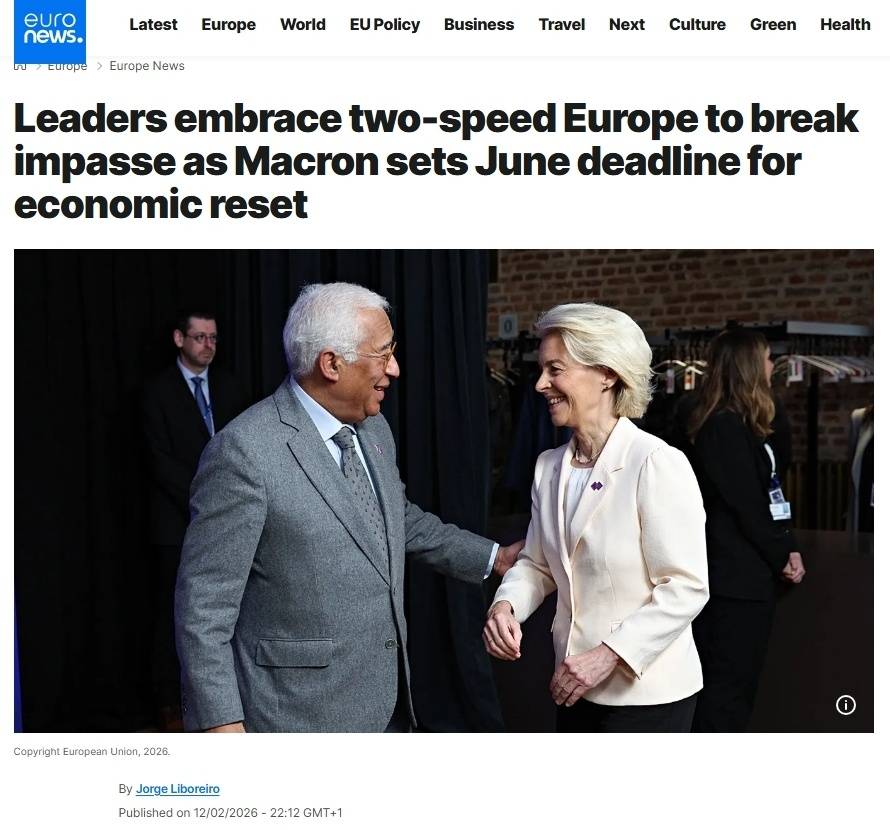
资讯很有料|欧洲多国拥抱“双速欧洲” 欧盟将分“快盟”和“慢盟”吗?
Sou Hu Cai Jing· 2026-02-13 18:22
Core Viewpoint - The concept of a "two-speed Europe" is gaining traction among European leaders as a means to enhance competitiveness and address political deadlock in economic reforms, raising concerns about potential division within the EU [1][8][12]. Group 1: Two-Speed Europe Concept - "Two-speed Europe" refers to the idea that if consensus cannot be reached among all EU members on economic agendas, smaller groups of countries can collaborate more swiftly [1][8]. - European leaders, including French President Macron, have set a deadline of June to finalize a comprehensive agenda for restarting the European economy, with plans to proceed under the "enhanced cooperation" clause if no progress is made [1][4]. - The "enhanced cooperation" clause allows at least nine member states to advance initiatives independently, as demonstrated by the EU's recent loan mechanism to Ukraine, which excluded certain countries [4][12]. Group 2: Political Shift and Urgency - The embrace of "two-speed Europe" signifies a political shift away from the EU's traditional consensus-driven approach, reflecting a growing urgency among leaders to act decisively in response to geopolitical challenges [5][8]. - Leaders from Germany, Denmark, and other nations acknowledge that the current geopolitical landscape necessitates a more competitive and independent Europe, marking a departure from previous discussions [5][7]. - The urgency is underscored by the perception that Europe's competitive edge is diminishing due to indecision and discord among member states [8][12]. Group 3: Internal Division Concerns - Despite the support for "two-speed Europe," there are ongoing concerns about internal divisions within the EU, as not all leaders are in agreement on this approach [12][13]. - The recent informal summit highlighted existing fractures, with some leaders excluded from discussions, indicating a selective approach to collaboration that could exacerbate divisions [12][13]. - The historical context of EU expansion has already created varying levels of economic and social development among member states, which may lead to further fragmentation if not addressed [13].