
双速欧洲

Search documents
欧洲要变天!德法意西组E6俱乐部,“双速欧洲”卷土重来?
Sou Hu Cai Jing· 2026-02-14 09:28
Group 1 - The core idea is the formation of the E6 group by Germany and France, along with Italy, Spain, Poland, and the Netherlands, to enhance Europe's competitiveness and defense capabilities amid increasing geopolitical tensions [1][16] - The "two-speed Europe" model allows certain EU member states to advance integration at a faster pace in specific areas, a concept that has been discussed since the 1980s and has gained renewed attention due to current geopolitical challenges [3][14] - The establishment of the Eurozone and the Schengen Area exemplifies the partial implementation of the "two-speed Europe" principle, highlighting the existing disparities among EU member states [4][8] Group 2 - Recent discussions between German Chancellor Friedrich Merz and Italian Prime Minister Giorgia Meloni emphasized the need for economic revival in Europe, proposing significant reductions in bureaucracy and faster decision-making processes [10][11] - The E6 initiative aims to strengthen defense cooperation and create a unified air defense and missile defense system, addressing the fragmentation in Europe's defense capabilities [11][13] - The German government has indicated that the "two-speed Europe" model should remain flexible and potentially open to other participants, reflecting a compromise reached in the 2017 revised Rome Declaration [16][14]

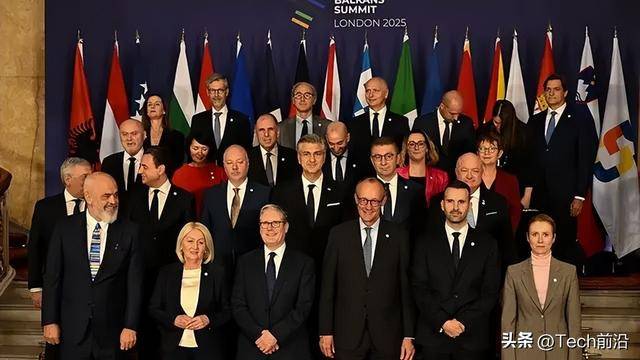
资讯很有料|欧洲多国拥抱“双速欧洲” 欧盟将分“快盟”和“慢盟”吗?
Sou Hu Cai Jing· 2026-02-13 18:22
Core Viewpoint - The concept of a "two-speed Europe" is gaining traction among European leaders as a means to enhance competitiveness and address political deadlock in economic reforms, raising concerns about potential division within the EU [1][8][12]. Group 1: Two-Speed Europe Concept - "Two-speed Europe" refers to the idea that if consensus cannot be reached among all EU members on economic agendas, smaller groups of countries can collaborate more swiftly [1][8]. - European leaders, including French President Macron, have set a deadline of June to finalize a comprehensive agenda for restarting the European economy, with plans to proceed under the "enhanced cooperation" clause if no progress is made [1][4]. - The "enhanced cooperation" clause allows at least nine member states to advance initiatives independently, as demonstrated by the EU's recent loan mechanism to Ukraine, which excluded certain countries [4][12]. Group 2: Political Shift and Urgency - The embrace of "two-speed Europe" signifies a political shift away from the EU's traditional consensus-driven approach, reflecting a growing urgency among leaders to act decisively in response to geopolitical challenges [5][8]. - Leaders from Germany, Denmark, and other nations acknowledge that the current geopolitical landscape necessitates a more competitive and independent Europe, marking a departure from previous discussions [5][7]. - The urgency is underscored by the perception that Europe's competitive edge is diminishing due to indecision and discord among member states [8][12]. Group 3: Internal Division Concerns - Despite the support for "two-speed Europe," there are ongoing concerns about internal divisions within the EU, as not all leaders are in agreement on this approach [12][13]. - The recent informal summit highlighted existing fractures, with some leaders excluded from discussions, indicating a selective approach to collaboration that could exacerbate divisions [12][13]. - The historical context of EU expansion has already created varying levels of economic and social development among member states, which may lead to further fragmentation if not addressed [13].
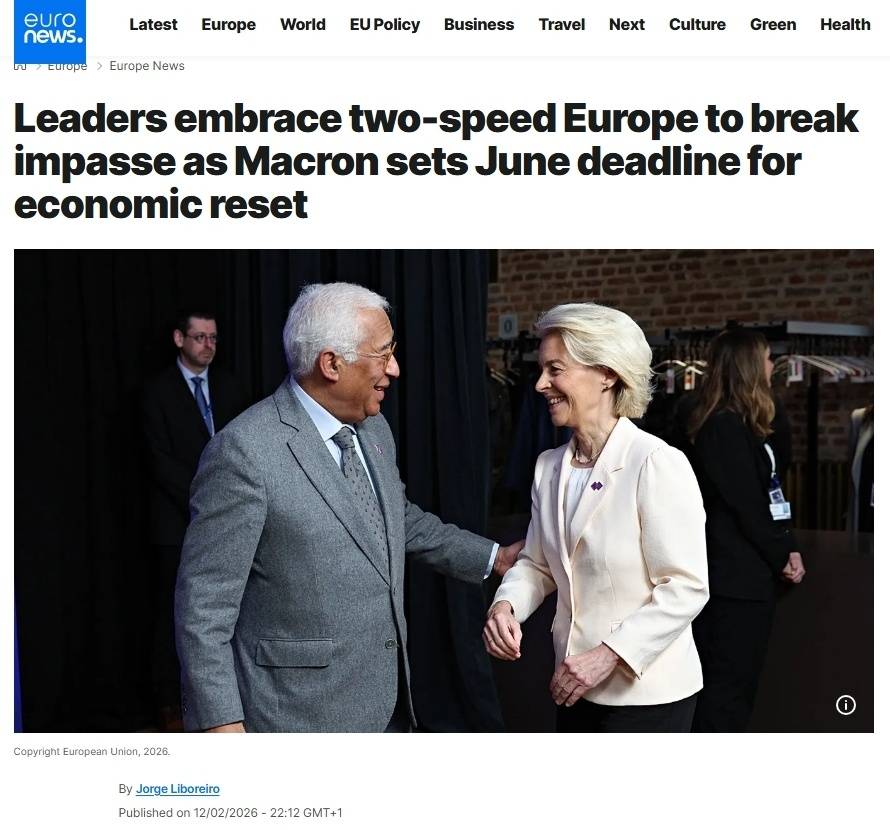
欧盟一夜变天!德法牵头六国另立山头,双速欧洲把东欧踢出群聊?
Sou Hu Cai Jing· 2026-02-13 04:34
Group 1 - The core viewpoint of the article highlights the increasing focus of European countries, particularly Germany and France, on enhancing Europe's competitiveness and defense capabilities amid deepening geopolitical tensions and the ongoing Ukraine war [1] - The "multi-speed Europe" model allows certain EU member states to advance integration at a faster pace in specific areas, a concept that has been discussed since the 1980s and has seen partial implementation, such as the establishment of the Eurozone [3][4] - The reintroduction of the "multi-speed Europe" concept by former German Chancellor Angela Merkel in 2017 reflects a pragmatic approach to the challenges facing the EU, acknowledging that not all countries can participate in the same integration process [5][6] Group 2 - Recent developments indicate that Germany and Italy are collaborating to transform the current crisis into an opportunity, emphasizing the need for a structured European agenda to address economic revival and defense cooperation [8][10] - Key proposals include significant reductions in bureaucracy, expedited approval processes, and enhanced domestic markets, with a focus on strengthening Europe's industrial policy in response to the US and China [10][11] - The initiative aims to bolster defense spending coordination and create a unified air defense and missile defense system, addressing the fragmentation in Europe's defense industry [10][12] Group 3 - The "multi-speed Europe" model is gaining support due to escalating geopolitical tensions, which may lead to a shift away from the unanimous decision-making process currently required among EU member states [13] - Critics warn that this model could threaten European cohesion by potentially sidelining countries outside the core group, but proponents argue for its flexibility and openness to other participants [13] - The formation of the E6 group, consisting of Germany, France, Italy, Spain, Poland, and the Netherlands, aims to enhance Europe's competitiveness and defense capabilities through the "multi-speed Europe" approach [13]
德法引进新模式打造“双速欧洲”,欲增强欧盟竞争力
Huan Qiu Shi Bao· 2026-01-28 23:02
Core Viewpoint - Germany and France are introducing a new model involving six major EU economies to enhance the competitiveness of the European Union [1] Group 1: Initiative Overview - The initiative is co-launched by German Vice Chancellor and Finance Minister Christian Lindner and French Finance Minister Bruno Le Maire [1] - The six major economies invited to join this initiative include Poland, Spain, Italy, and the Netherlands [1] - The new model is referred to as the "E6" model, aiming to create a "two-speed Europe" [1] Group 2: Concept of "Two-Speed Europe" - The concept of "two-speed Europe" focuses on differentiated integration within the EU, allowing some member states to integrate more quickly and deeply in specific areas while others follow at their own pace [1] - This approach aims to overcome the deadlock of unanimous decision-making and enhance the EU's operational capacity [1] Group 3: Upcoming Meeting and Objectives - The finance ministers of the six countries plan to hold their first video conference to clarify how to accelerate the implementation of various European measures [1] - The meeting will primarily discuss enhancing Europe's competitiveness and defense capabilities [1] Group 4: Key Proposals by Lindner - Lindner proposed a four-point plan for the "E6" model, which includes: - Advancing the Capital Markets Union [1] - Strengthening the international status of the euro as a safe-haven currency [1] - Better coordinating defense investments [1] - Ensuring the supply of raw materials and enhancing strategic cooperation with international partners [1]