动态保护

Search documents
建勇:让古建“活”在当下
Xin Lang Cai Jing· 2026-02-07 19:44
Core Viewpoint - The article highlights the dedication and expertise of Che Jianyong, a key figure in the preservation and restoration of ancient architecture in Beijing, particularly at the Temple of Heaven, emphasizing the importance of precise techniques and community involvement in cultural heritage protection [1][4]. Group 1: Background and Experience - Che Jianyong began his career in 1999 at the Temple of Heaven, initially lacking knowledge in ancient architecture but quickly developed a passion for it through hands-on experience and mentorship [2]. - His early exposure to ancient architectural restoration involved studying traditional techniques and participating in the preparation of repair cost estimates, which deepened his understanding of the field [2]. Group 2: Restoration Techniques - The restoration of the Circular Mound Altar's ground was Che's first project, marking the beginning of his focus on the protection of brick and tile damage [3]. - Che emphasizes that ancient building restoration should be data-driven rather than based on intuition, leading to the development of experimental models to optimize repair materials and techniques [3]. - He advocates for a "slow treatment" approach to restoration, ensuring that interventions do not compromise the historical authenticity of the structures [3]. Group 3: Cultural Heritage Supervision - In 2024, Che was appointed as a cultural heritage protection supervisor for the Beijing Central Axis, adding responsibilities to enhance public understanding and participation in heritage preservation [4]. - The increase in visitor numbers at the Temple of Heaven presents challenges in balancing visitor experience with the protection of ancient structures, prompting the development of a "dynamic protection" strategy [4]. - Che's team employs digital technologies like 3D scanning and VR to present historical information engagingly to the public [5]. Group 4: Community Engagement - Che promotes the idea that cultural heritage protection requires collective societal effort, encouraging community involvement in understanding and preserving ancient architecture [5]. - He aims to educate visitors about ancient building knowledge and encourages them to participate in volunteer activities to contribute to heritage protection [5].
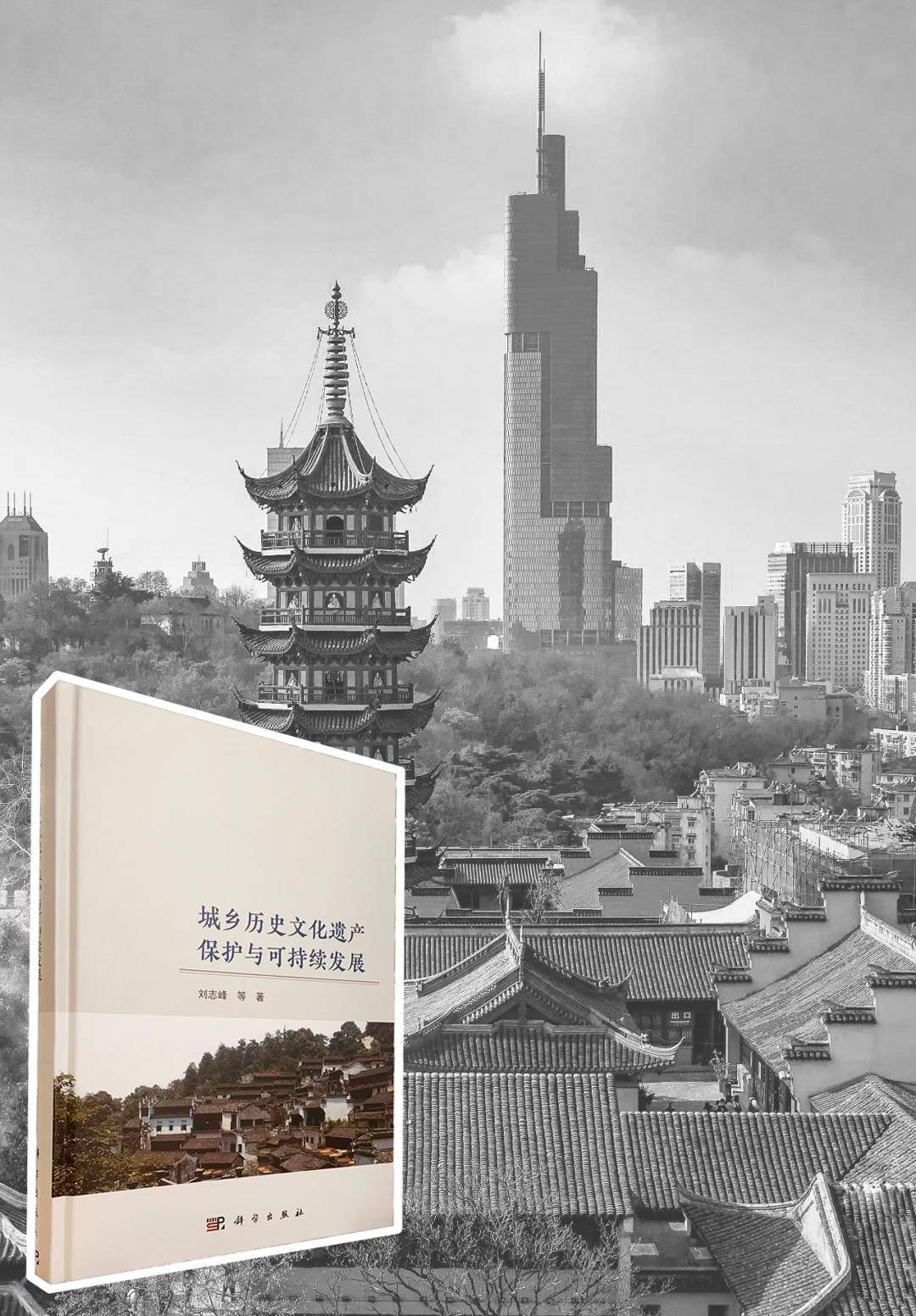
遗产保护与城市发展第三条道路: 用“活化”与“可持续”让文脉与发展共生共荣
Yang Zi Wan Bao Wang· 2025-12-12 01:21
Core Viewpoint - The protection and revitalization of urban and rural historical and cultural heritage is a contemporary responsibility that not only preserves cultural continuity but also stimulates urban and rural development and sustainable growth [1]. Group 1: Theoretical Framework and Policy Analysis - The book establishes a systematic framework for the protection of historical and cultural heritage, linking macro policies to micro practices, and emphasizes the strategic positioning of cultural heritage work in the new era [3]. - It constructs a "theory-generation-practice" logical system for heritage protection, integrating various heritage objects and practices into a unified scientific framework and action program [3]. - The theoretical construction aims to shift the current fragmented and specimen-like protection practices towards a proactive approach that leads urban and rural development [3]. Group 2: Multi-Scale and Dynamic Perspectives - The book adopts a dual perspective of "multi-scale" and "dynamic" analysis, exploring protection and renewal issues across different spatial scales, from historical cities to communities and industrial heritage [4]. - It introduces quantitative analysis tools to examine the interaction between urban development, public perception, and heritage protection, breaking the limitations of traditional static planning [4]. - This approach reveals the internal mechanisms of the contradictions between protection and development, providing a basis for constructing forward-looking and flexible protection strategies [4]. Group 3: Activation and Sustainable Development - The core focus of the book is on the "activation" and "sustainable development" of historical and cultural heritage, emphasizing the integration of heritage into modern life and its role as a cultural capital and development engine [5]. - It presents various strategies such as "cultural tourism integration," "industry linkage," and "community co-construction" to reshape heritage value and stimulate local endogenous power [5]. - The principles of "dynamic protection," "moderate development," and "living protection" are advocated, forming a toolbox that provides important references for the protection and activation of different types of heritage [5].