动态战略规划

Search documents
毕马威重磅发布《大变局:基建与交通运输行业新兴趋势》
Sou Hu Cai Jing· 2025-10-27 02:40
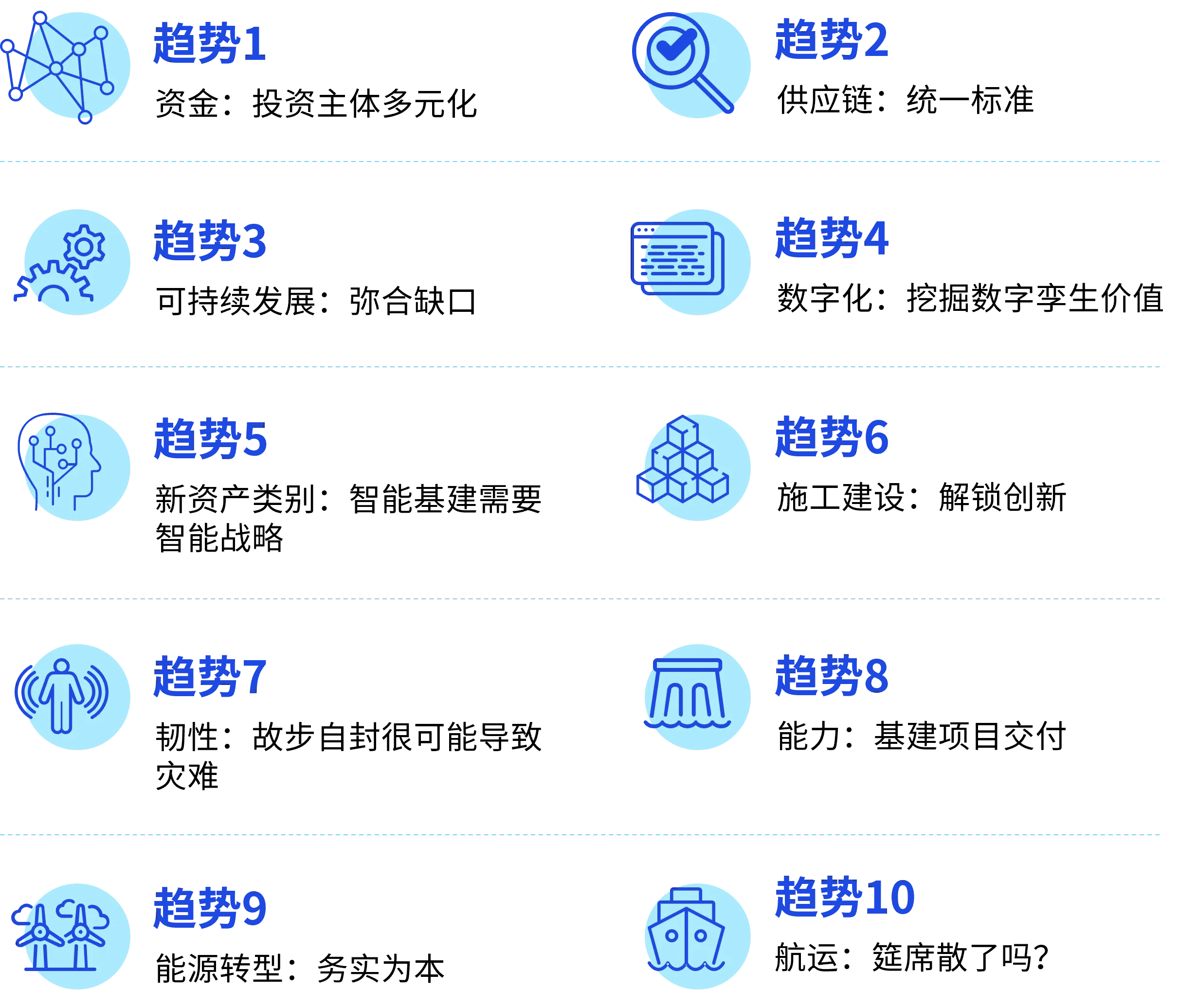
Core Insights - The report by KPMG titled "Transformations: Emerging Trends in Infrastructure and Transportation" analyzes significant changes facing the industry and provides forward-looking predictions for the next year [1] - The report is based on insights from ten senior leaders in the infrastructure sector, offering a deep understanding of the global shifts impacting the industry [1] Key Judgments - By 2025, rising public debt yields, withdrawal of bilateral investments, and a stronger dollar will intensify fiscal pressures, leading to fierce competition among countries for patient capital, making private investment and diversified investment entities crucial trends [6] - Governments will face increased funding costs due to rising public debt yields, while the retreat of bilateral investments and development aid will further weaken the fiscal capacity of emerging markets [7] - The demand for resilient infrastructure and modern services is expected to surge, with governments needing to meet public expectations to ensure social and economic stability [7] Predictions and Recommendations - Countries will compete for patient capital, with some emulating India's National Monetization Pipeline (NMP) to accelerate private investment in specific sectors [8] - Establishing clear asset listing channels with transparent regulatory frameworks will encourage innovation and reinvestment, providing reasonable returns for private investors [8] - Stakeholders must engage with citizens, national pension funds, and institutional investors to identify target assets and conduct due diligence [8] Key Developments in Supply Chain - By 2025, supply chains will face immense pressure due to trade wars and new tariff regulations, necessitating efficiency improvements and stricter evaluations of emissions [11] - The need for supply chain standardization will be recognized, although actual implementation will take time [10][12] - Companies will be compelled to enhance supply chain efficiency through collaboration with government and industry bodies [11] Sustainable Transformation - Governments and enterprises will begin to bridge the gap between actions and goals, ensuring daily operations align with long-term sustainability objectives [13][14] - Major regulations will drive sustainable transformations, with construction owners needing to understand material sources and carbon footprints [15] Digital Twin Technology - By 2025, digital twin technology will become a key tool for enhancing operational efficiency and decision-making due to decreasing costs and increasing demand for insights [16][17] - Companies that do not adopt digital twins will face scrutiny from stakeholders and competitive disadvantages [18] Dynamic Strategic Planning - Enterprises should transition from static annual plans to dynamic strategic planning methods, leveraging real-time data and advanced technologies to improve decision quality and efficiency [19][20] - This shift will enhance performance and profitability while providing significant benefits to all stakeholders [21] Construction Industry Pressures - Construction companies will face exponential growth pressures, particularly in energy and infrastructure sectors, but can leverage technology and AI to improve efficiency and profit margins [22][23] - Companies are advised to invest in technology, enhance supply chains, and adjust operational models to drive innovation [24] Infrastructure Asset Management - Infrastructure asset failures could lead to catastrophic consequences, necessitating comprehensive assessments to evaluate risks and develop operational resilience goals [26][27] - Companies should prioritize high-risk asset updates and protections to avoid future risks and costs [28] Supply Chain Management - Owners of public and private infrastructure investment portfolios will actively engage in supply chain management, establishing long-term relationships with suppliers to address delivery capacity and talent bottlenecks [29][30] - Digitalization and technology will enhance supply chain efficiency, enabling companies to prepare for future disruptions [31] Pragmatism in Financing - Pragmatism will drive companies to strengthen collaboration and develop hybrid financing models to enhance social and environmental project impacts [32][33] - Companies will focus on data capture and reporting to demonstrate project benefits, balancing environmental impact with economic practicality [34] Shipping Industry Adaptation - Shipping companies must adapt to rate fluctuations and sustainability pressures amid trade protectionism and supply chain disruptions [35][36] - Companies are encouraged to reconsider investment strategies, focusing on long-term effective areas and engaging in scenario planning [37]