动能切换

Search documents
“黑天鹅”再现,是否还能抄底?
Xin Lang Cai Jing· 2025-10-13 10:42
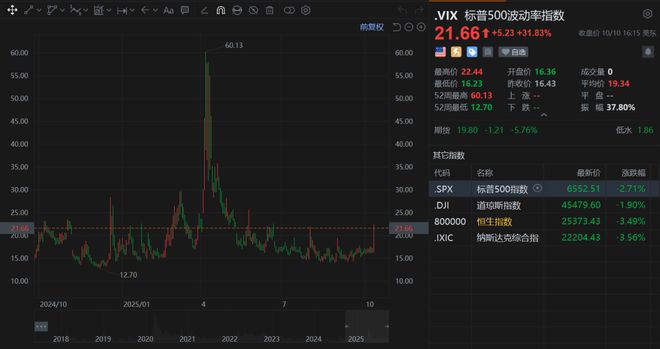
Core Viewpoint - The recent decline in global stock markets, particularly in the U.S., reflects a structural adjustment in investor sentiment towards technology stocks and broader economic concerns, driven by policy changes and trade tensions [2][3][10]. Market Performance - The S&P 500 index fell by 2.71%, marking its largest single-day drop since May, while the Nasdaq index experienced a more significant decline of 3.56%, losing 700 points [1][2]. - The Russell 2000 index, which represents small-cap stocks, dropped by 2.99%, indicating rising concerns about financial stability [2]. Sector Analysis - Major technology companies such as Apple, Tesla, and Nvidia saw declines of 3.45%, over 5.06%, and 4.89% respectively, contributing to the overall market downturn [2]. - The decline in technology stocks has been widespread, affecting the entire industry chain from hardware manufacturing to software services, signaling a general revision of growth expectations in the tech sector [2][3]. Economic Indicators - The U.S. government shutdown has led to over 4000 federal employees being laid off, with a total of 3.4 million employees affected, potentially impacting Q4 GDP growth by 0.3 percentage points [3]. - The unemployment rate in the U.S. rose to 3.8%, highlighting vulnerabilities in the labor market [3]. Trade and Policy Impact - The escalation of trade tensions, particularly the renewed threats of tariffs against China, has increased uncertainty in global supply chains, prompting Goldman Sachs to lower its global economic growth forecast by 0.2 percentage points to 2.4% [3][4]. - The market's response to these developments has been less panicked compared to previous downturns, as indicated by the VIX index, which peaked at 22.6, significantly lower than the 35.2 peak in April [4][8]. Valuation and Market Sentiment - Current valuations are high, with the S&P 500's price-to-earnings ratio at 29.7, up 22.2% from April's low of 24.3 [6]. - The market sentiment has shifted from a focus on external liquidity to an emphasis on internal value, with a need for investors to identify opportunities driven by domestic demand and policy support [10]. Investment Strategy - The focus for investors should shift towards sectors benefiting from domestic consumption and policy support, particularly in consumer and infrastructure sectors, which have shown resilience amid the tech sell-off [3][10]. - Mid-term investment strategies should consider the recovery of global manufacturing and the potential for physical assets to benefit from increased demand [9].