化工过程安全管理

Search documents
美国25起化工安全事故带来的警示—— 从五方面解决系统性缺陷
Zhong Guo Hua Gong Bao· 2025-09-12 02:24
Core Insights - The CSB report highlights systemic deficiencies in safety operations, equipment integrity management, safety instrument management, work permits, and change management across over 20 U.S. chemical companies, emphasizing the need for improved chemical process safety management [1][2] Group 1: Accident Statistics - The report covers 25 chemical accidents from May 2020 to August 2024 across 14 U.S. states, resulting in 7 fatalities, 23 injuries, and approximately $1 billion in property damage [1] - 16 accidents involved the "safety operation" element, with 10 related to abnormal condition handling [1] - Other elements involved include equipment integrity management (12 accidents), safety instrument management (10 accidents), work permits (8 accidents), change management (6 accidents), contractor safety management (5 accidents), risk management (4 accidents), inherently safer design (2 accidents), emergency preparedness and response (2 accidents), safety education and training (2 accidents), and accident event management (1 accident) [1] Group 2: Recommendations for Improvement - Companies should enhance abnormal condition handling by establishing early warning and response mechanisms, focusing on identifying, reporting, and managing abnormal conditions [2] - A dual mechanism of preventive maintenance and predictive monitoring should be implemented for equipment integrity management, including regular inspections and real-time monitoring technologies [3] - A comprehensive safety instrument system covering design, installation, and operation should be established, including redundancy for critical process parameters and regular functional testing [3] - Effective risk control measures should be implemented for operations involving hazardous materials, including dedicated monitoring personnel and energy isolation measures [4] - Change management protocols should be strengthened, requiring risk assessments and control measures for any adjustments in process parameters, material changes, or equipment modifications [4][5]

推动化工过程安全管理更高水平运用——2025中国国际化工过程安全会议召开
Zhong Guo Chan Ye Jing Ji Xin Xi Wang· 2025-06-03 01:02
Core Viewpoint - The conference emphasized the importance of chemical process safety management in enhancing safety standards and promoting high-quality development within the chemical industry [1][3] Group 1: Chemical Process Safety Management - Chemical process safety management is recognized internationally as an effective method for controlling major safety risks associated with hazardous chemicals [1] - China has adopted this management concept for decades, with the release of the industry standard "Guidelines for Chemical Process Safety Management" in 2022, which includes 20 management elements [1] - Challenges in implementing process safety management in China include a lack of systematic consideration in regulations and standards, unclear safety management responsibilities, and insufficient professional capabilities [1][2] Group 2: Accident Statistics and Causes - A statistical analysis of 182 significant accidents in the chemical industry from 2010 to 2024 revealed that the main causes were uncontrolled chemical reactions, chemical leaks, failure of protective layers, non-compliance with operational procedures, and insufficient capabilities [2] - From 2013 to 2024, 144 significant safety accidents occurred, with 56.9% of these accidents related to permit operations, highlighting the importance of contractor management in chemical safety [2] Group 3: Future Directions and Support - The vision for improved chemical process safety involves government leadership, proactive enterprise engagement, and technical support from associations [3] - The conference aimed to promote the establishment of demonstration enterprises and elements, leveraging AI to enhance digital management capabilities in the industry [3]
2025中国国际化工过程安全会议开幕
Zhong Guo Xin Wen Wang· 2025-05-28 15:33
Group 1 - The 2025 China International Chemical Process Safety Conference commenced in Yantai, focusing on enhancing chemical process safety management to improve overall safety levels in the industry [1][2] - The conference highlighted the importance of chemical process safety management as an effective method for controlling major safety risks associated with hazardous chemicals, with China adopting this management concept for several decades [1][2] - Challenges in implementing process safety management in China's chemical industry include a lack of systematic regulations, unclear safety management responsibilities, and insufficient professional capabilities among personnel [1][2] Group 2 - The conference emphasized the need for collaboration among government, enterprises, and industry associations to achieve improved chemical process safety [2] - Key focus areas for enterprises include understanding the hazardous properties of chemicals, preventing uncontrolled chemical reactions, and ensuring effective risk management through updated hazard analyses [2] - The event featured specialized training sessions and exhibitions showcasing innovative solutions for emergency response in hazardous chemical production, with over 70 experts discussing various safety topics [2][3]
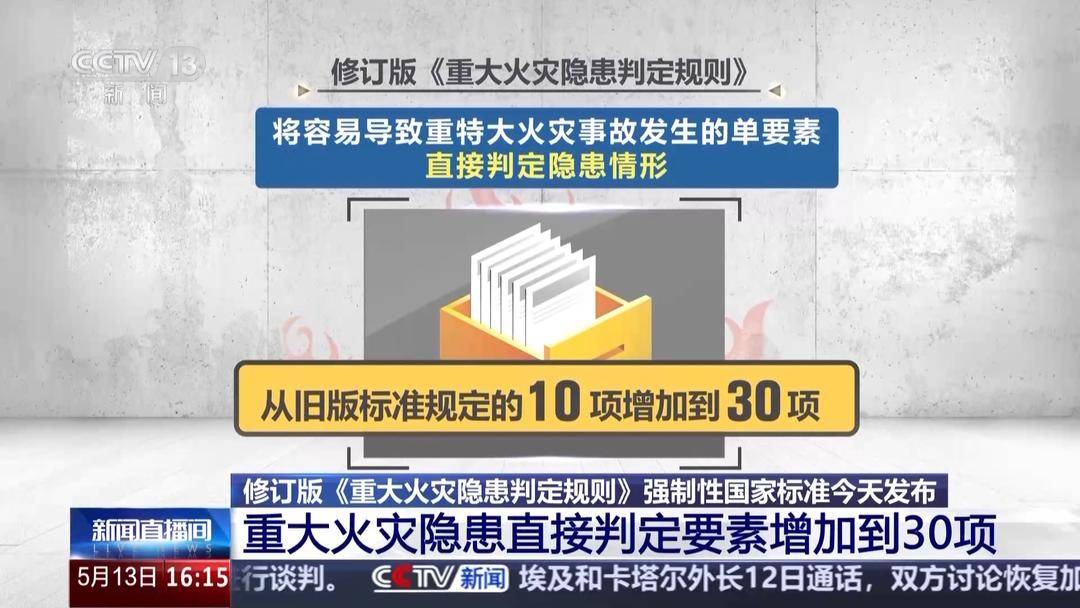
新版《重大火灾隐患判定规则》强制性国标有哪些变化?一文读懂
Yang Zi Wan Bao Wang· 2025-05-13 12:07
Core Points - The revised mandatory national standard for "Major Fire Hazard Determination Rules" will be implemented from November 1, 2023, establishing a grading system for fire hazards to enable early identification and warning of potential risks [1][3] Group 1: Major Fire Hazard Determination Rules - The new standard increases the direct determination factors for major fire hazards from 10 to 30, focusing on high-risk areas such as public entertainment venues, hotels, shopping malls, and densely populated indoor spaces [3][5] - It incorporates direct or indirect disaster factors that have led to significant fire incidents, such as improper storage of flammable materials in crowded places and unclear fire safety responsibilities in mixed-use buildings [5][6] Group 2: Safety Management Standards for Hazardous Chemicals - A new mandatory national standard for safety management in hazardous chemical enterprises will also take effect on November 1, 2023, promoting a shift from passive rectification to proactive prevention [7][9] - This standard integrates content from seven existing industry standards and introduces 14 management requirements covering safety leadership, equipment integrity, operational safety, and change management [7][9] Group 3: Emergency Shelters Standards - Three recommended national standards for emergency shelters were also released, which include technical requirements for planning, design, management, and use throughout the lifecycle of these facilities [9][10] - These standards aim to enhance the overall emergency shelter capabilities of society, ensuring that the public has accessible and orderly refuge during disasters [9][10] Group 4: National Standard System Development - China has established a safety production standard system with over 2,000 national standards across ten major fields, including mining, hazardous chemicals, and fire safety [10][12] - The proportion of mandatory safety production standards has increased from 56% in June 2023 to 80% currently, reflecting a commitment to enhancing safety standards [14]