北魏早期墓葬考古

Search documents
【咸阳】地区首次发现北魏早期墓葬
Shan Xi Ri Bao· 2025-11-23 22:57
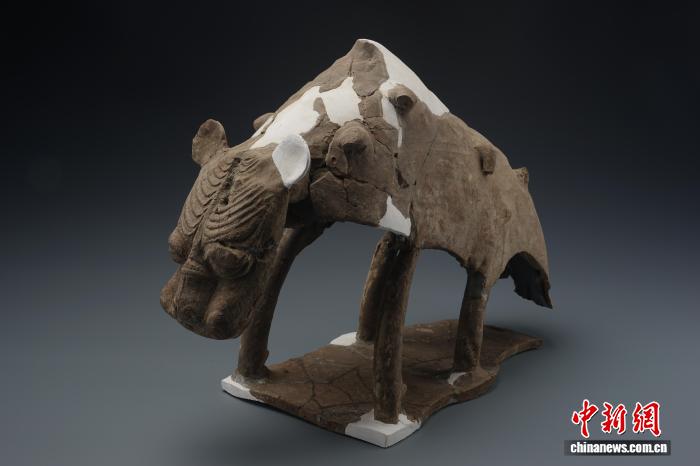
Core Viewpoint - A newly discovered early Northern Wei tomb in Xianyang, which had been sealed for a millennium, provides significant insights into the historical evolution and distribution of tombs in the region [1] Group 1: Archaeological Findings - In 2021, the Xianyang Archaeological Research Institute excavated a series of ancient tombs in the Xixian New Area, uncovering a total of 11 Western Han tombs, 6 Eastern Han tombs, and 5 Northern Wei tombs [1] - The M19 tomb, which is notably large and well-preserved, yielded a rich variety of artifacts, including 26 burial items such as tomb guardian beasts, warrior figurines, saddles, carts, and various pottery [1] Group 2: Tomb Structure and Characteristics - The M19 tomb features a long sloping passageway leading to a single chamber, oriented north-south, consisting of a passage, a corridor, and a burial chamber [1] - The structural characteristics of the M19 tomb are similar to those found in the Sixteen Kingdoms and Northern Dynasties tombs in the Fengqi Yuan and Aerospace City areas, dating back to the period between the Sixteen Kingdoms and the Northern Wei [1] Group 3: Cultural Significance - The pottery figurines found in the M19 tomb are a significant component of Northern Wei burial customs, showcasing a rich variety and clear regional characteristics [1] - The style of the pottery figurines reflects strong Xianbei cultural influences, suggesting that the M19 tomb dates back to the early Pingcheng era of the Northern Wei, prior to Emperor Xiaowen's relocation of the capital to Luoyang [1]
陕西咸阳首次发现北魏早期墓葬 陶俑呈现较浓厚鲜卑文化色彩
Zhong Guo Xin Wen Wang· 2025-11-21 07:46
Core Viewpoint - The discovery of an early Northern Wei tomb in Xi'an, Shaanxi, provides new material evidence for the study of burial distribution and historical evolution in the region [1] Group 1: Tomb Structure and Artifacts - The tomb features a long sloping passageway leading to a single chamber, consisting of a passage, corridor, and burial chamber, with a total of 26 burial items unearthed [2] - Among the artifacts are 20 ceramic figurines, including a guardian beast, warrior figurines, saddles, carts, and ceramic pigs, as well as various pottery items like stoves and mills [2] Group 2: Cultural Significance - The ceramic figurines are a significant component of Northern Wei tombs, showcasing a rich variety and clear regional characteristics, reflecting the cultural transition following Emperor Xiaowen's relocation of the capital to Luoyang [4] - The style of the unearthed figurines exhibits strong Xianbei cultural traits, indicating that the tomb dates back to the early Northern Wei period before the capital's move [4] Group 3: Historical Context - The tradition of including guardian beasts and warrior figurines in tombs was not present in the region from the Western Jin to the Sixteen Kingdoms period, but began to emerge after the Northern Wei's conquest of the Guanzhong region in 426 AD [6] - The evolution of guardian figurines can be traced back to the late Spring and Autumn period, with significant developments occurring during the Tang dynasty, reflecting changes in burial customs over time [6]