
鲜卑文化

Search documents
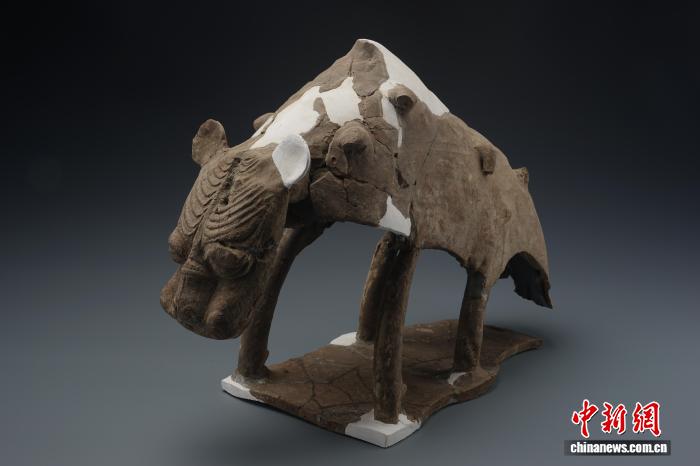
陕西咸阳首次发现北魏早期墓葬 陶俑呈现较浓厚鲜卑文化色彩
Zhong Guo Xin Wen Wang· 2025-11-21 07:46
Core Viewpoint - The discovery of an early Northern Wei tomb in Xi'an, Shaanxi, provides new material evidence for the study of burial distribution and historical evolution in the region [1] Group 1: Tomb Structure and Artifacts - The tomb features a long sloping passageway leading to a single chamber, consisting of a passage, corridor, and burial chamber, with a total of 26 burial items unearthed [2] - Among the artifacts are 20 ceramic figurines, including a guardian beast, warrior figurines, saddles, carts, and ceramic pigs, as well as various pottery items like stoves and mills [2] Group 2: Cultural Significance - The ceramic figurines are a significant component of Northern Wei tombs, showcasing a rich variety and clear regional characteristics, reflecting the cultural transition following Emperor Xiaowen's relocation of the capital to Luoyang [4] - The style of the unearthed figurines exhibits strong Xianbei cultural traits, indicating that the tomb dates back to the early Northern Wei period before the capital's move [4] Group 3: Historical Context - The tradition of including guardian beasts and warrior figurines in tombs was not present in the region from the Western Jin to the Sixteen Kingdoms period, but began to emerge after the Northern Wei's conquest of the Guanzhong region in 426 AD [6] - The evolution of guardian figurines can be traced back to the late Spring and Autumn period, with significant developments occurring during the Tang dynasty, reflecting changes in burial customs over time [6]

鹤山市青少年书法现场挥毫擂台赛在龙口镇霄南村举行
Nan Fang Nong Cun Bao· 2025-08-24 09:32
Core Viewpoint - The event aims to promote traditional Chinese culture and enhance the youth's interest in calligraphy, while also supporting the cultural heritage of the Xianbei community in Longkou Town [5][6]. Event Overview - The "Youth Calligraphy Live Competition" took place in Xiaonan Village, Longkou Town, with 100 middle and primary school students participating [3][4]. - The competition featured two rounds, with primary school students writing four designated characters in 10 minutes and middle school students writing eight characters in 13 minutes [9][10]. Judging and Awards - A panel of judges, including prominent figures from calligraphy associations, evaluated the participants' works and provided feedback [6][7]. - Awards were given in both primary and middle school categories, with two first prizes, three second prizes, and five third prizes awarded in each group [12][16]. Cultural Significance - The event not only showcased the students' calligraphy skills but also emphasized the importance of preserving and promoting the Xianbei culture through art [23][25].
