
医疗保障制度改革

Search documents
【榆林】基本医疗保险参保率超95%
Shan Xi Ri Bao· 2026-01-27 22:59
Group 1 - The core viewpoint of the news is that Yulin City is implementing comprehensive reforms in its medical insurance system during the 14th Five-Year Plan period, aiming to maintain a basic medical insurance coverage rate of over 95% [1] - Yulin has expanded insurance coverage by removing household registration restrictions and implementing subsidy policies, while ensuring that the reimbursement rate for urban and rural residents' hospitalization remains stable at around 70% [1] - The city has established a unique major illness insurance system and optimized maternity insurance policies, including increasing payment limits for prenatal check-ups and including certain reproductive health services in the insurance coverage [1] Group 2 - Yulin is a pilot city for the national medical insurance fund "three settlements," reducing the settlement cycle between insurance agencies and hospitals from 30 days to 1 working day [2] - Currently, 90 medical institutions in Yulin offer a "one-stop" synchronous settlement for basic medical insurance and commercial insurance [2] - Yulin has been designated as a key contact city for long-term care insurance by 2025, with plans to implement this insurance to alleviate the burden on families with disabled members and promote the development of the care industry [2]
2026年,内蒙古医疗保障工作要这样干!
Xin Lang Cai Jing· 2026-01-17 15:40
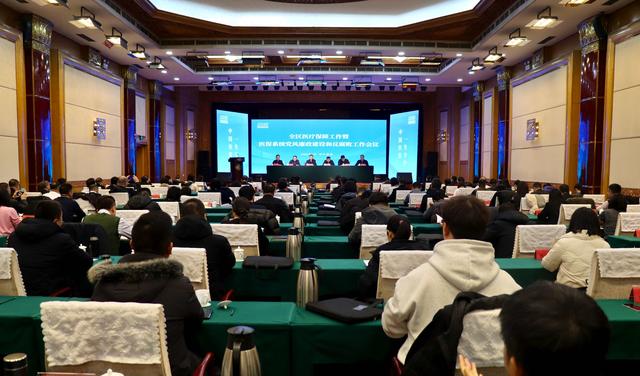
Core Viewpoint - The Inner Mongolia Medical Security Work Conference held on January 16 aims to summarize the achievements of the "14th Five-Year" period and set priorities for 2026, laying a foundation for high-quality development in the "15th Five-Year" period [1]. Group 1: Achievements and Developments - During the "14th Five-Year" period, Inner Mongolia's medical security sector achieved historic progress, with various levels of medical insurance departments actively supporting economic and social development, advancing reforms, and completing all tasks related to medical insurance reform and development [3]. Group 2: Future Plans for 2026 - In 2026, medical insurance departments in Inner Mongolia will continue to deepen reforms, focusing on strengthening guarantees, strict regulation, optimizing services, and promoting empowerment for high-quality development in medical security [4]. - Efforts will be made to consolidate and expand insurance coverage, ensuring a comprehensive medical insurance network for all citizens through targeted actions in various aspects such as time, methods, and technology [4]. - The basic medical insurance system will be continuously improved, with a focus on stabilizing the three-tiered guarantee foundation and advancing the coordination of basic medical insurance at the regional level [4]. - The development of commercial health insurance will be supported to create a multi-tiered medical security system, promoting innovative drug directories and ensuring complementary development with basic medical insurance [4]. - A new mechanism for managing medical service prices will be established, and reforms in medical insurance payment methods will be deepened to enhance the development of medical institutions [4]. - Strengthening the management of medical insurance funds will be prioritized to ensure their safe and reasonable use, with an emphasis on cross-departmental collaboration and regular fund supervision [4]. - The optimization of management services will be pursued to improve the efficiency of medical insurance operations, including the establishment of a service system compatible with regional coordination [4]. - The use of digital intelligence will be enhanced to improve the level of medical insurance information technology, including the establishment of innovative application laboratories and the construction of a medical insurance imaging cloud [4].

内蒙古明确今年医疗保障领域工作任务
Xin Lang Cai Jing· 2026-01-16 18:01
Core Viewpoint - The meeting held in Hohhot on January 16 summarized the achievements of the medical insurance reform during the "14th Five-Year Plan" period and outlined key tasks for 2026 to ensure high-quality development of the medical insurance sector in the "15th Five-Year Plan" period [1][2]. Group 1: Achievements and Future Plans - During the "14th Five-Year Plan" period, the medical insurance sector in the region achieved historic progress, with various levels of medical insurance departments actively supporting economic and social development, advancing reforms, and optimizing management services [1]. - In 2026, the focus will be on deepening the reform of the medical insurance system, emphasizing unified regulations, enhancing security, strict supervision, quality service, and empowerment to promote high-quality development [2]. Group 2: Key Initiatives - The plan includes consolidating and expanding insurance coverage, ensuring a comprehensive medical insurance network for all citizens through targeted efforts in various aspects such as time, methods, and public engagement [2]. - There will be a continued improvement of the basic medical insurance system, with a focus on establishing a three-tiered security foundation and advancing the coordination of medical insurance at the regional level [2]. - The strategy aims to adapt to demographic changes by enhancing services for the elderly and children, improving maternity insurance, and developing long-term care insurance [2]. - Support for the development of commercial health insurance will be promoted, creating a multi-tiered medical security system and facilitating the integration of commercial health insurance with basic medical insurance [2]. - The initiative will also enhance the management of medical service pricing, reform payment methods, and improve the quality and scope of drug and consumable procurement [2]. - Strengthening the management of medical insurance funds will be a priority, ensuring safe and reasonable use of funds while enhancing cross-departmental collaboration for effective regulation [2]. - Continuous optimization of management services will be pursued to improve the efficiency of medical insurance operations, including the establishment of a service system aligned with regional coordination [2]. - The plan emphasizes the importance of digital empowerment and improving the level of medical insurance information technology, including the establishment of innovative applications and platforms [2].
今年辽宁投入109亿元支持医保体系建设
Xin Lang Cai Jing· 2025-12-28 22:35
(辽宁日报记者 唐佳丽) 责任编辑:张刚 今年我省继续提高城乡居民基本医疗保险人均财政补助标准,由2024年的670元提高到700元。同时,增 强医疗救助托底保障功能,通过资助重点救助对象参加基本医疗保险,并对其难以负担的个人自负医疗 费用给予补助,梯次减轻城乡困难群众就医负担。此外,还支持全省医保部门开展医保信息化平台标准 化建设、医保基金监管和支付方式改革等工作,提升管理和经办服务水平。 省财政厅将会同医保部门研究完善医保待遇保障机制,稳步提高医疗保障水平,加强医疗保障基金预算 管理,促进加快建成覆盖全民、城乡统筹、权责清晰、保障适度、可持续的多层次医疗保障体系,使人 民群众有更多的获得感、幸福感、安全感。 (来源:东北新闻网) 今年,省财政厅坚持把推进医疗保障制度改革作为保障和改善民生的重点任务,强化财政保障责任,积 极筹措资金109亿元,支持医疗保障制度各项改革任务有序推进,推动医疗保障和医药服务高质量协同 发展。 ...
山东在全国率先实现五级医保服务全覆盖
Qi Lu Wan Bao· 2025-11-20 02:39
Core Insights - The Shandong Provincial Government is implementing significant reforms in the medical insurance system during the 14th Five-Year Plan period, focusing on building a multi-level medical security system that includes basic medical insurance, major illness insurance, and medical assistance [1] Group 1: Medical Insurance Reforms - The Shandong Provincial Medical Insurance Bureau has initiated a series of measures to enhance the medical insurance experience for residents, resulting in lower medical expenses and more convenient access to healthcare [2] - The province has started the provincial-level coordination of employee basic medical insurance, standardizing the contribution rates and unifying reimbursement policies for outpatient and inpatient services [2] - The reimbursement levels for inpatient care are approximately 70% for insured residents and over 80% for employees, with ongoing improvements to outpatient chronic disease coverage [2] Group 2: Major Illness Insurance and Medical Assistance - The major illness insurance program has standardized the threshold for reimbursement, with a segmented reimbursement rate exceeding 60%, allowing for a maximum reimbursement of 400,000 yuan per medical year [3] - Vulnerable groups, including low-income individuals and those at risk of poverty, can receive subsidies for personal contributions and medical expenses, with the annual assistance limit raised to over 50,000 yuan [3] Group 3: Cross-Province Medical Services - The direct settlement rate for cross-province hospitalization has reached 94.49%, a significant increase from less than 50% during the previous Five-Year Plan [4] - The province has achieved full coverage for ten types of outpatient chronic diseases in terms of cross-province direct settlement, surpassing national targets by three years [4] - A comprehensive grassroots service network has been established, with 35,000 grassroots medical insurance workstations operational, ensuring coverage at all administrative levels [4] Group 4: Intelligent Supervision of Medical Insurance - The Shandong Provincial Medical Insurance Bureau has implemented an intelligent supervision system with 254 standardized rules to enhance oversight and prevent misuse of medical funds [5] - The system includes proactive alerts for unreasonable medical practices, which have helped prevent and reduce improper medical expenses by 4.125 billion yuan [5] - Ongoing audits and post-settlement supervision are in place to identify and address high-risk behaviors and fraudulent activities within the medical insurance system [6]