
医疗器械产业化

Search documents
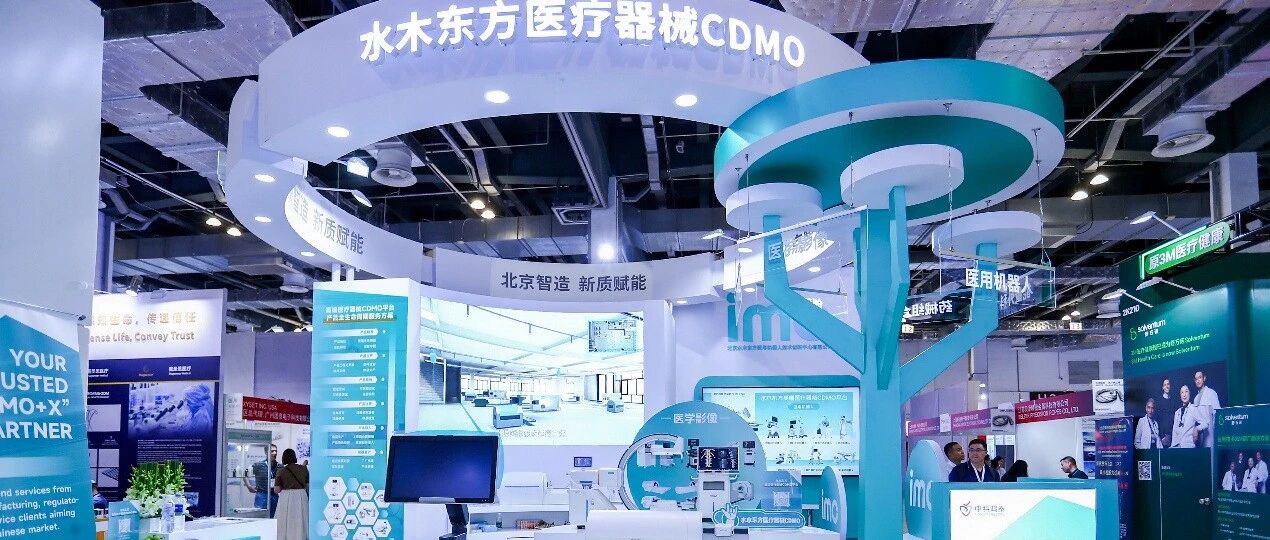
从“资源整合” 到 “产业引擎”:水木东方 CDMO 如何让医疗器械创新跨越产业化鸿沟?
机器人大讲堂· 2025-09-29 04:03
Core Insights - The article highlights the significant opportunities in China's medical device industry, driven by the "Healthy China 2030" strategy and an aging population, leading to increased demand for high-end medical equipment [3] - It emphasizes the challenge of transitioning from laboratory breakthroughs to commercial products, with approximately 70% of original technologies stuck in the "valley of death" during the commercialization phase [3] - The establishment of the Shuimu Dongfang high-end medical device CDMO platform aims to bridge this gap by providing comprehensive solutions for medical innovation [5][10] Industry Overview - The Chinese medical device industry is experiencing unprecedented growth, particularly in advanced fields such as surgical robots, high-end medical imaging, and AI-assisted diagnostics [3] - The shift from "single innovation" to "ecological collaboration" is noted, with global leaders like Lonza and Flex setting examples for integrated platforms in biomedicine and high-end devices [6] Company Evolution - Shuimu Dongfang has transformed from an incubator to a specialized CDMO platform since its establishment in 2017, serving nearly 500 clients and assisting 21 products in obtaining NMPA registration [5] - The strategic evolution focuses on building capabilities rather than merely acting as a resource intermediary, establishing a complete service system that includes R&D design, process engineering, quality control, and regulatory support [10] Technological Foundation - The platform's core competitiveness is based on a "three-in-one" technical architecture, encompassing basic process capabilities, interdisciplinary integration, and system solution capabilities [11] - Notable achievements include precision machining technologies that meet aerospace-level standards, showcasing the platform's engineering prowess [11][13] Case Studies - The article details successful projects, such as the bone fracture repositioning surgical robot, which significantly reduced the development timeline from over 40 months to 18 months through collaborative efforts [15] - Another example is the 4π radiotherapy robot, where the platform facilitated technology transfer and adaptation to local regulatory requirements, ensuring a solid foundation for mass production [17][20] Collaborative Ecosystem - Shuimu Dongfang has established strategic partnerships with leading medical institutions and research organizations, creating a closed-loop mechanism for clinical needs, technology development, and application feedback [21][22] - The collaborative ecosystem enhances the efficiency of product development, as seen in the multi-channel vascular intervention surgical robot project, which benefited from integrated expertise across various domains [22] Conclusion - The development of Shuimu Dongfang reflects a broader transformation in China's medical device industry, moving towards a specialized ecosystem that fosters innovation and collaboration [23] - The platform's role in reducing commercialization barriers and shortening time-to-market for innovative medical devices is underscored, contributing to the advancement of medical technology [23]

心脉医疗: 心脉医疗:关于2025年半年度募集资金存放与实际使用情况专项报告
Zheng Quan Zhi Xing· 2025-08-26 14:12
Core Points - The report details the fundraising and usage of funds by Shanghai MicroPort MedBot (Group) Co., Ltd. for the first half of 2025, ensuring compliance with relevant regulations [1][10] - The company raised a total of RMB 832.14 million from its initial public offering (IPO) in 2019 and RMB 1.81 billion from a subsequent issuance to specific investors in 2022 [1][10] - As of June 30, 2025, the remaining balance of the funds raised from the IPO was RMB 25.49 million, while the balance from the 2022 issuance was RMB 1.17 billion [1][10] Fundraising Overview - The company issued 18 million shares at RMB 46.23 per share in 2019, raising RMB 832,140,000, with a net amount of RMB 729,658,867.93 after deducting issuance costs [1][10] - In 2022, the company issued 10,748,106 shares at RMB 168.33 per share, raising RMB 1,809,228,682.98, with a net amount after costs not specified [1][10] Fund Usage and Balance - As of June 30, 2025, the company had used RMB 166,937.06 from the IPO funds, primarily for the development of medical devices [1][10] - The remaining balance of the IPO funds was RMB 25,494,864.34, while the 2022 issuance funds had a balance of RMB 1,174,150,962.83 after using RMB 89,446,375.42 during the reporting period [1][10] Fund Management - The company has established a dedicated fund management system to ensure that the raised funds are used appropriately and in compliance with regulations [1][10] - The funds are stored in special accounts, and the company has adhered to strict approval procedures for fund usage [1][10] Project Updates - The company has not reported any early investments or replacements of funds for the projects during the reporting period [1][10] - There were no instances of using idle funds for temporary working capital during this period [1][10] Future Plans - The company plans to extend the construction period for the "Global Headquarters and Innovation and Industrialization Base Project" to September 2027 due to various construction challenges [1][10][12]
