
半导体测试技术

Search documents
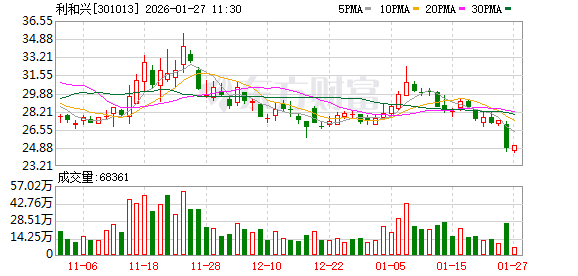
利和兴:公司投资的赛伯宸半导体涉及DRAM相关的测试业务和技术储备
Mei Ri Jing Ji Xin Wen· 2026-01-27 04:56
Core Viewpoint - Lihexing is actively investing in Cybertron Semiconductor, which is involved in DRAM-related testing services and technology reserves, and is collaborating with leading DRAM companies such as Samsung and SK Hynix [2] Group 1 - The company has confirmed its investment in Cybertron Semiconductor [2] - Cybertron Semiconductor is focusing on testing services related to DRAM technology [2] - The company is pursuing business collaborations with major players in the DRAM market, including Samsung and SK Hynix [2]

联动科技:新产品QT-9800SoC测试系统,目前已顺利完成实验室验证的关键阶段工作
Ge Long Hui· 2025-12-19 11:42
Core Viewpoint - The company has successfully completed the key laboratory validation phase of its self-developed QT-9800SoC testing system, which meets performance indicators and is ready for mass production testing [1][2] Group 1: Product Development - The QT-9800SoC testing system targets high-performance integrated circuit testing for system-on-chip (SoC) applications, featuring multi-channel parallel testing capabilities, high-speed signal processing, high precision, and reliability [1] - The product is designed to be flexible and compatible with both hardware and software, making it a core product for the company's future development in the semiconductor testing field [1][2] Group 2: Market Application - The QT-9800SoC testing system can be applied to various types of chips, including computing power chips (CPU/GPU/DPU), edge AI computing, FPGA, and ASIC, and is suitable for a wide range of applications such as robotics, AI boxes, smart terminals, intelligent recognition, and drones [1] - The company aims to accelerate client validation and mass production application of the QT-9800SoC testing system, forming a semiconductor testing product matrix that includes "power/analog testing + SoC testing" to enhance its core competitiveness and market share [2]
科威尔取得半导体功率模块测试用治具专利,提高大电流条件下的导电能力
Jin Rong Jie· 2025-08-28 01:33
Core Viewpoint - Kewell Technology Co., Ltd. has obtained a patent for a semiconductor power module testing fixture, indicating its ongoing innovation in specialized equipment manufacturing [1] Company Overview - Kewell Technology Co., Ltd. was established in 2011 and is located in Hefei City, primarily engaged in the specialized equipment manufacturing industry [1] - The company has a registered capital of 84.070709 million RMB [1] - Kewell has made investments in 4 companies and participated in 319 bidding projects [1] Intellectual Property - The newly granted patent, CN223272631U, was applied for on August 2024 and pertains to a fixture for testing semiconductor power modules [1] - The patent includes a fixture framework, conductive blocks, a PCB, and probes, showcasing the company's technical capabilities [1] - Kewell holds a total of 565 patent records, along with 34 trademark records and 12 administrative licenses [1]

矽电股份(301629) - 301629矽电股份投资者关系管理信息20250515
2025-05-15 12:58
Company Overview - The company specializes in the R&D, production, and sales of semiconductor testing equipment, focusing on the semiconductor testing field, and is a leading manufacturer of chip testing equipment [1][2]. - The product range includes wafer/probe stations, sorting machines, and AOI detection equipment, widely used by major domestic semiconductor manufacturers [1][2]. Competitive Advantages - The company has established a strong technical R&D capability, responsive after-sales service, a complete supply chain system, geographical advantages, and quality customer resources [2]. - It has mastered six core technologies, including high-precision control and machine vision based on intelligent algorithms, gaining recognition from downstream customers [2][3]. R&D Team and Investment - The R&D team consists of 167 members, accounting for 40.93% of total employees, with many having over 5 years of industry experience [3]. - From 2021 to 2024, the average annual compound growth rate of R&D expenses reached 21.26%, with R&D expenses exceeding 10% of revenue for several consecutive years, reaching 68.1 million yuan in 2024, which is 13.41% of revenue [3]. Industry Competition - The probe station equipment industry is highly concentrated, primarily dominated by Japanese and Taiwanese manufacturers, with Tokyo Electron and Tokyo Precision leading the high-end market [4]. - The company has surpassed Taiwanese competitors in performance and market share, positioning itself to compete with leading Japanese firms [4]. Supply Chain and Customer Base - Core components such as guide rails and screws are standard parts and not subject to foreign supply chain restrictions [5]. - The company holds the largest market share among domestic manufacturers, with some major clients sourcing over 50% of their similar products from the company [6]. Performance Insights - The fluctuation in Q1 performance was attributed to changes in product acceptance structure, with a diverse product line leading to varying prices [7]. - The company aims to strengthen its core technologies and market position in various semiconductor testing areas while enhancing its marketing network and operational efficiency [7].
对话产业链大佬-半导体测试机专家电话会
2025-03-04 07:00
Summary of Semiconductor Testing Equipment Conference Call Industry Overview - The conference focused on the semiconductor testing equipment industry, discussing various types of testing machines and their applications in AI chips and other semiconductor technologies [1][2][3]. Key Points and Arguments Types of Testing Machines - Testing machines can be categorized into general-purpose and specialized machines. General-purpose machines, such as those from Teradyne and Advantest, can measure all types of chips, while specialized machines are optimized for specific chip types to reduce costs [2][3]. - Automated Test Equipment (ATE) and System Level Testing (SLT) are also discussed, with SLT used for functional verification of entire systems [2][4]. AI Chip Testing Requirements - AI chips have unique testing demands due to high power consumption, increased transistor density, and longer testing times. For instance, a single test for a 28nm edge AI chip takes about 10 seconds, while 16nm chips, driven by applications in smart driving, can have shipment volumes in the tens of millions [2][6][7]. - Different storage technologies are required for AI chips, including DDR HBM for high data throughput and Flash for data persistence [8]. Challenges for Chinese Semiconductor Companies - Chinese semiconductor equipment companies have advantages in cost control and market responsiveness but face challenges such as insufficient core technology accumulation and a shortage of high-end talent. There is a need to enhance R&D capabilities and strengthen international cooperation to meet the complex demands of AI chips [10][21]. - The testing technology indicators, such as storage depth and vector speed, significantly impact Design for Testability (DFT). Traditional speeds of 100 Mbps have increased to over 80 Gbps, while domestic general-purpose testing machines only reach 400 Mbps, which is inadequate for advanced AI chip testing [14]. High-Speed Interface and Testing Challenges - High-speed interfaces like PCIe have evolved to PAM4 encoding, achieving speeds of 112 Gbps, which domestic equipment struggles to meet. A phased development strategy is necessary for achieving domestic alternatives [16]. - HBM testing faces multiple challenges, including high-speed requirements and complex 3D stacking structures, necessitating high-end equipment for testing [30]. Economic Factors in IC Development - Developing high-end IC chips involves significant economic considerations, including R&D costs and market demand. For example, a 7nm process control chip can cost between $800,000 to $1,000,000 to develop, with limited annual sales volumes [19]. Future Trends and Market Outlook - The semiconductor industry is expected to face challenges in 2026 despite good order backlogs in 2024 and 2025. The development of AI is driving demand, but Chinese design companies are constrained by U.S. entity list restrictions [33][34]. - The internal circulation model presents challenges for Chinese semiconductor companies, particularly in areas like lithography machines and materials, necessitating breakthroughs in self-sufficiency [35]. Additional Important Content - The testing of different speed boards requires specific process requirements based on clock source precision, with high-precision clock sources being dominated by a few U.S. companies [20]. - The importance of memory repair technology is highlighted, as it ensures product quality by replacing defective units with redundant ones [27]. - The verification cycle for chips typically spans two to three years, involving multiple stages from design to stable mass production [36]. This summary encapsulates the critical insights and discussions from the conference call, providing a comprehensive overview of the semiconductor testing equipment landscape and its challenges.