卖出美国资产

Search documents
手握3.6万亿美债 美国最大“债主”开始“卖出美国” 能否遏制特朗普的格陵兰岛野心?
Mei Ri Jing Ji Xin Wen· 2026-01-24 04:14
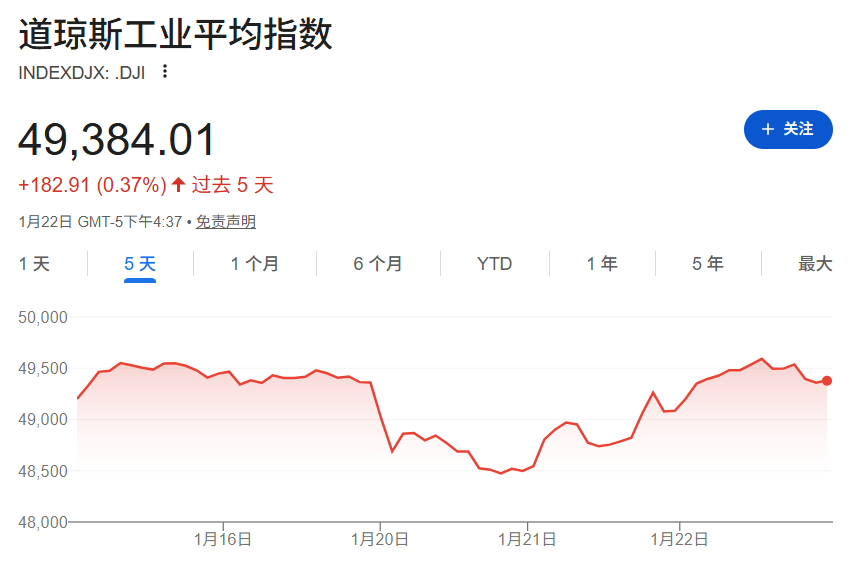
Core Viewpoint - The situation surrounding Greenland has dramatically shifted during the World Economic Forum in Davos, with President Trump initially threatening tariffs and then announcing a framework agreement with NATO, which led to the cancellation of those tariffs [1][3]. Group 1: U.S. Policy and Market Reactions - Following the uncertainty in U.S. policy, European institutional investors, led by Denmark's AkademikerPension, signaled a clear intention to "sell American" assets [2]. - The U.S. stock market experienced significant volatility, with the Dow Jones dropping 870.74 points (1.76%) on January 20, followed by a rebound of 589 points the next day after Trump's announcement [6][9]. - The term "TACO trading" was used to describe the market's reaction to Trump's threats, indicating a pattern of creating panic followed by retraction [9]. Group 2: European Response to U.S. Actions - Denmark and Greenland expressed strong dissatisfaction with the announced "framework agreement," emphasizing that discussions about sovereignty are non-negotiable [5]. - The European Commission announced plans for substantial investment in Greenland and increased defense spending in the Arctic region [5]. - Several Danish pension funds, including AkademikerPension and Alecta, have begun selling off U.S. Treasury bonds, citing increased policy risks and the desire to reduce financial dependence on the U.S. [13][14]. Group 3: U.S. Debt and European Holdings - Europe holds over $3.6 trillion in U.S. Treasury bonds, accounting for approximately 40% of foreign holdings, which is significantly more than the combined holdings of China and Japan [16][17]. - The potential for a sell-off of U.S. debt by European countries raises concerns about the impact on U.S. financial stability and interest rates [18][19]. - Analysts warn that a decline in foreign holdings of U.S. debt could lead to increased yields on U.S. bonds, exacerbating fiscal pressures [18]. Group 4: Strategic Importance of Greenland - Greenland is viewed as a strategic asset due to its location and natural resources, including significant reserves of rare earth elements and untapped oil and gas [21][24]. - The melting ice in the Arctic is making resource extraction more feasible, which is particularly appealing to the U.S. as it seeks to revitalize its manufacturing sector [23][24].