
养老基金

Search documents
丹麦养老基金减持美债,资金或转向欧洲及避险资产
Jing Ji Guan Cha Wang· 2026-02-13 21:41
Funding Trends - AkademikerPension announced the complete liquidation of its U.S. Treasury holdings, approximately $100 million, by the end of January 2026, due to concerns over U.S. policy credit risk and fiscal sustainability [2] - Other Danish funds, including ATP and PFA, have also reduced their exposure to U.S. Treasuries, shifting towards safer assets like euros, Swiss francs, and gold. In 2025, Danish institutions net sold about $1.5 billion in U.S. Treasuries, bringing their holdings to the lowest level since 2020 [2] Industry Policy and Environment - Data from early February 2026 indicates that European equity funds attracted approximately $14 billion in net inflows, as investors seek to reduce reliance on U.S. tech stocks and diversify risk towards European and Asian markets [3] - The reduction in holdings by Danish funds is partly attributed to U.S. tariff threats against Greenland, prompting Nordic investors to reassess risks associated with U.S. stocks and dollar assets, which may influence their allocation towards local European stocks, particularly in the financial and industrial sectors [3] Company Status - Although not directly involving Danish trust funds, the global trust industry has been increasingly divesting non-core financial equity, such as Huachen Trust's transfer of fund company equity, to focus on core business operations. This trend may indirectly affect the collaboration and equity structure of multinational asset management institutions [4]
不是大国,也能引领:加拿大的中等强国之道
Zhong Guo Qing Nian Bao· 2026-01-28 15:14
Core Insights - The 2026 Davos World Economic Forum highlighted the urgent need for dialogue in the face of global uncertainties, particularly regarding security environments and governance challenges [1] - The complexity of achieving genuine dialogue amidst these uncertainties was underscored by various signals from the conference, revealing the fragility of international cooperation [1] Group 1: Geopolitical and Economic Factors - Major factors contributing to global uncertainty include geopolitical conflicts, trade wars, government changes, and new legislative or strategic developments, creating a unique situation not seen since the Cold War [1] - Canada's military exercises now include scenarios of potential invasion from the U.S., reflecting deep concerns over traditional alliances and defense spending criticisms from the Trump administration [2] - Denmark's Akademiker Pension sold $100 million in U.S. Treasury bonds, signaling a European response to U.S. policies and potentially reshaping the economic alliance between the U.S. and Europe [2] Group 2: Market Reactions and Asset Valuation - The uncertainty has led to a significant rise in gold prices, surpassing $5000, indicating a shift in market sentiment towards gold as a safe-haven asset amid declining confidence in the U.S. dollar [3] - The Federal Reserve's statements have intensified market distrust, challenging the foundational pillars of U.S. soft power, including stability, prosperity, and government authority [3] Group 3: Policy Recommendations and Historical Context - Effective policy must be rooted in a deep understanding of specific social contexts rather than abstract ideals, as demonstrated by Canada's inclusion of a Chinese-Canadian MP in its delegation to China [4] - Historical evidence shows that economic globalization can provoke identity politics and sovereignty anxieties, necessitating a strong cultural identity and national narrative for effective global governance [4] - Canada has historically advocated for middle powers to participate in international affairs based on expertise rather than size, promoting ethical international cooperation focused on peace and development [5][6]
日元升至152,市场同时警惕美元走弱
日经中文网· 2026-01-28 02:53
Core Viewpoint - The article discusses the recent appreciation of the Japanese yen against the US dollar, driven by various factors including US political statements and market reactions to currency fluctuations [2][4][6]. Group 1: Currency Movements - On January 27, the yen appreciated to the range of 152.0 to 152.5 yen per dollar, marking a significant rise as the US dollar index fell to its lowest level in about four years [2][4]. - Following comments from US President Trump expressing no concern over the dollar's depreciation, the yen further strengthened, reaching approximately 152.10 yen per dollar in the New York market [6][8]. - The dollar also weakened against other currencies, with the euro rising to about 1.1972 dollars, the lowest since June 2021, and the Swiss franc reaching 0.76 francs per dollar, the highest since 2015 [6][7]. Group 2: Investor Sentiment and Strategies - Global investors are increasingly hedging against the risk of dollar depreciation, with a survey by Bank of America indicating a preference for long positions in gold and large tech stocks, alongside short positions in the dollar [10]. - Australian pension funds are also increasing their foreign exchange hedging against dollar assets, anticipating a weaker dollar due to expected interest rate cuts in the US [10]. Group 3: Market Concerns - Analysts express concerns regarding the potential reversal of "yen carry trades," where investors borrow in low-yielding yen to invest in higher-yielding dollar assets, which could lead to increased market volatility [11][12]. - There is a belief among some market participants that the US government may intentionally induce dollar depreciation, which could have broader implications for the financial markets [11][12].

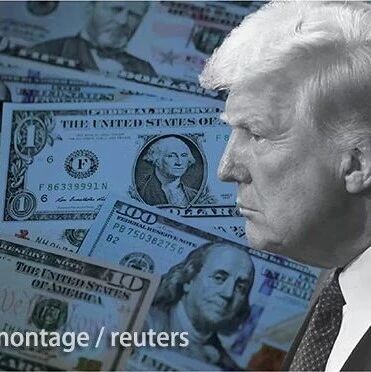
欧洲抛售81亿美债后,不到24小时,特朗普发出警告:再减持就制裁
Sou Hu Cai Jing· 2026-01-27 08:17
Group 1 - A significant financial operation involving U.S. Treasury bonds has drawn global attention, with Danish and Swedish pension funds selling approximately $8.1 billion in U.S. debt within a few days [1] - The sell-off is perceived as a response to geopolitical tensions, with Trump's threats of major retaliation against large-scale asset sales indicating a new battleground in U.S.-Europe relations [3] - The Danish pension fund's decision to divest from U.S. bonds was attributed to concerns over U.S. fiscal instability, while Sweden's largest pension fund cited unpredictable U.S. policies as the reason for its reduction in holdings [7][8] Group 2 - Trump's aggressive rhetoric at the Davos Forum highlighted the seriousness of the U.S. response to European asset sales, suggesting that U.S. Treasury bonds are not to be taken lightly [8] - The U.S. Treasury Secretary attempted to downplay the impact of Denmark's bond sell-off, indicating a desire to control the narrative and prevent other European nations from following suit [8] - The European financial landscape is characterized by a significant reliance on U.S. debt, making large-scale sell-offs risky and potentially destabilizing for the market [13] Group 3 - European countries are cautious in their financial maneuvers due to their heavy debt burdens and economic vulnerabilities, which limit their ability to respond aggressively to U.S. actions [14] - The recent bond sell-offs by private institutions in Europe are seen as tentative moves rather than declarations of financial war, aimed at gauging U.S. reactions [14] - In light of the U.S.-Europe tensions, European nations are seeking to strengthen ties with China, indicating a strategic pivot to diversify their economic partnerships [16]
游戏结束,中方大规模抛美债,欧洲也跟进?特朗普紧急除名反华派
Sou Hu Cai Jing· 2026-01-26 09:12
Group 1 - A Danish pension fund announced plans to liquidate $100 million in U.S. Treasury bonds, indicating a potential trend following China's ongoing sell-off of U.S. debt [1][3] - The Danish pension fund manages approximately $25 billion in assets, and the decision reflects deep concerns about the sustainability of the U.S. credit situation [3] - Sweden's largest private pension fund, Alecta, has also been gradually selling off U.S. Treasuries, amounting to approximately 70 to 80 million Swedish Krona ($7 to $8 billion) since last year [3][4] Group 2 - The collective withdrawal of European capital is driven by concerns over the U.S. credit deficit and debt levels, rather than solely deteriorating U.S.-European relations [4] - The U.S. international image has been declining, with actions such as attempts to acquire Greenland and dismissive comments from U.S. Treasury officials contributing to this perception [4] - The Trump administration recently fired two key officials responsible for addressing perceived technological threats from China, suggesting a potential shift in U.S. policy towards China [4][6] Group 3 - The Office of Information and Communication Technology Services (OICTS) was established during Trump's first term to protect U.S. technology supply chains, primarily targeting China [6] - The dismissal of these officials may indicate a strategic pivot in U.S.-China relations, as Trump appears to be signaling a willingness to engage in dialogue and cooperation [6] - The ongoing sell-off of U.S. Treasuries by European institutions and the changes in the Trump administration's approach to China highlight the risks facing the U.S. economy and its global financial standing [6]
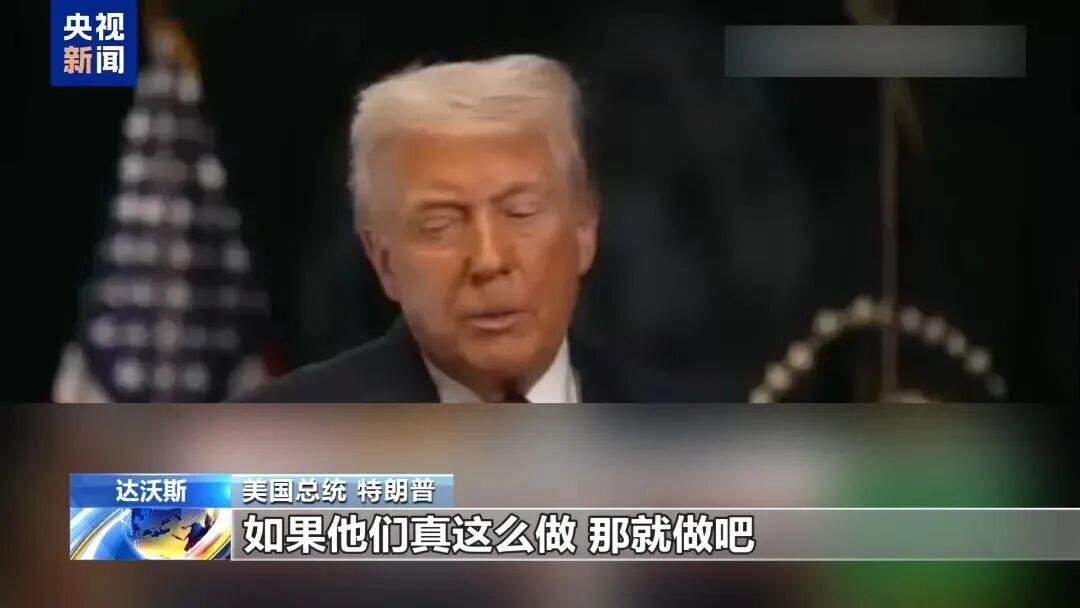
特朗普警告欧洲:若发生,将遭重大报复
Xin Lang Cai Jing· 2026-01-24 10:16
Group 1 - The core viewpoint is that President Trump warns of significant retaliation against Europe if they sell off U.S. assets as a countermeasure to ongoing tensions between the U.S. and Europe [1][3] - European entities, including Sweden's largest private pension fund, have begun to divest from U.S. Treasury bonds due to concerns over the unpredictability of the U.S. government and rising U.S. debt [5] - Denmark's pension funds are also selling U.S. debt, with one fund planning to divest $100 million, citing poor U.S. fiscal conditions and a desire to reduce dependence on the U.S. [5][9] Group 2 - U.S. Treasury Secretary Mnuchin downplays the impact of European divestment from U.S. debt, stating that Denmark's investment is insignificant [7] - The Greenland pension fund is considering whether to continue investing in U.S. stocks, with discussions around divestment being seen as a symbolic resistance to U.S. actions regarding Greenland [9] - British pension funds are reportedly reducing their exposure to U.S. stocks due to concerns over a potential bubble in the U.S. artificial intelligence sector, managing over £200 billion in assets for millions of British savers [9]
手握3.6万亿美债 美国最大“债主”开始“卖出美国” 能否遏制特朗普的格陵兰岛野心?
Mei Ri Jing Ji Xin Wen· 2026-01-24 04:14
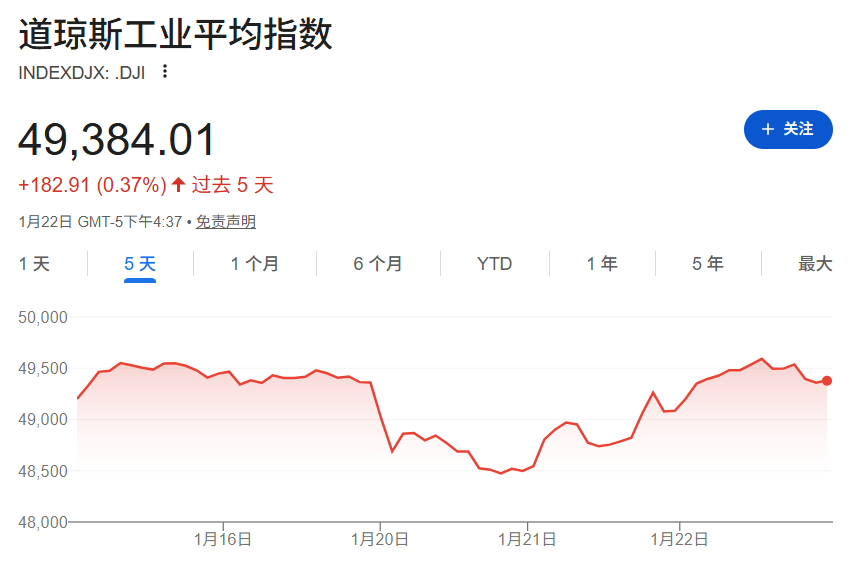
Core Viewpoint - The situation surrounding Greenland has dramatically shifted during the World Economic Forum in Davos, with President Trump initially threatening tariffs and then announcing a framework agreement with NATO, which led to the cancellation of those tariffs [1][3]. Group 1: U.S. Policy and Market Reactions - Following the uncertainty in U.S. policy, European institutional investors, led by Denmark's AkademikerPension, signaled a clear intention to "sell American" assets [2]. - The U.S. stock market experienced significant volatility, with the Dow Jones dropping 870.74 points (1.76%) on January 20, followed by a rebound of 589 points the next day after Trump's announcement [6][9]. - The term "TACO trading" was used to describe the market's reaction to Trump's threats, indicating a pattern of creating panic followed by retraction [9]. Group 2: European Response to U.S. Actions - Denmark and Greenland expressed strong dissatisfaction with the announced "framework agreement," emphasizing that discussions about sovereignty are non-negotiable [5]. - The European Commission announced plans for substantial investment in Greenland and increased defense spending in the Arctic region [5]. - Several Danish pension funds, including AkademikerPension and Alecta, have begun selling off U.S. Treasury bonds, citing increased policy risks and the desire to reduce financial dependence on the U.S. [13][14]. Group 3: U.S. Debt and European Holdings - Europe holds over $3.6 trillion in U.S. Treasury bonds, accounting for approximately 40% of foreign holdings, which is significantly more than the combined holdings of China and Japan [16][17]. - The potential for a sell-off of U.S. debt by European countries raises concerns about the impact on U.S. financial stability and interest rates [18][19]. - Analysts warn that a decline in foreign holdings of U.S. debt could lead to increased yields on U.S. bonds, exacerbating fiscal pressures [18]. Group 4: Strategic Importance of Greenland - Greenland is viewed as a strategic asset due to its location and natural resources, including significant reserves of rare earth elements and untapped oil and gas [21][24]. - The melting ice in the Arctic is making resource extraction more feasible, which is particularly appealing to the U.S. as it seeks to revitalize its manufacturing sector [23][24].
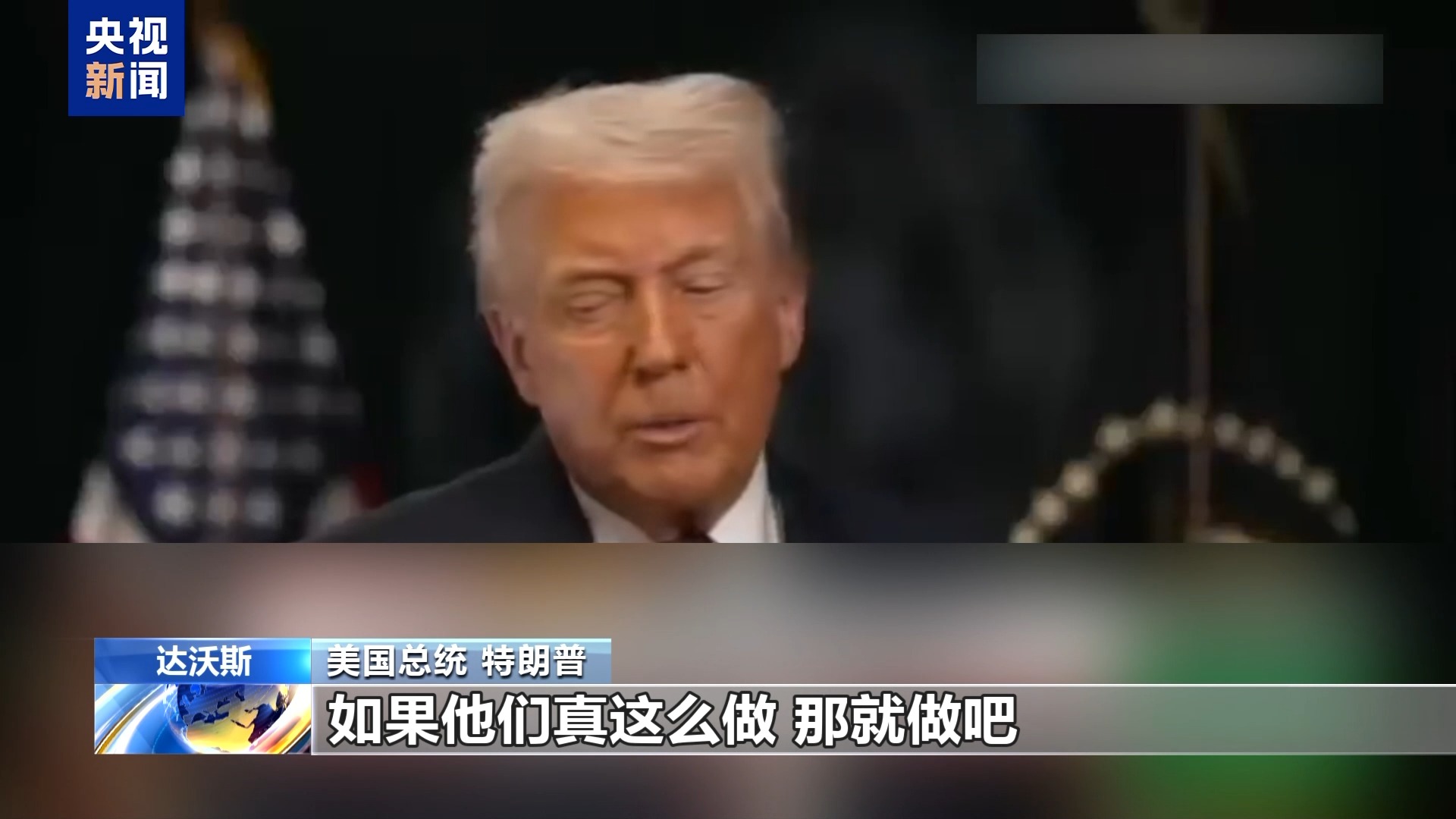
特朗普称若欧抛售美资产将遭报复 西班牙、丹麦首相回应美欧争端
Yang Shi Xin Wen Ke Hu Duan· 2026-01-23 23:54
Group 1 - The core viewpoint of the article highlights the escalating tensions between the US and Europe, particularly regarding the potential for European countries to sell off American assets as a form of retaliation, which President Trump warns would lead to significant repercussions from the US [1][3] - European pension funds, such as Sweden's Alekta and Denmark's AkademikerPension, have begun to divest from US Treasury bonds, citing concerns over the unpredictability of the US government and its growing debt [4] - The Danish government is also considering reducing its investments in US stocks, with the Greenland pension fund discussing the symbolic significance of divesting as a response to US actions regarding Greenland [7] Group 2 - US Treasury Secretary Mnuchin downplayed the impact of European divestment from US debt, stating that Denmark's investment in US bonds is insignificant and expressing no concern over a potential European exit from the US bond market [5] - Spanish Prime Minister Sanchez criticized the US for undermining international law and emphasized the need for European unity and openness to the world, rejecting US invitations to join a so-called Gaza "peace committee" [8] - The Danish Prime Minister is actively engaging with Greenland's government to address issues through diplomatic and political means, reinforcing Denmark's support for Greenland amid rising tensions [9]
Top Charts | 海外债务风险将如何收场?
申万宏源证券上海北京西路营业部· 2026-01-23 02:51
Core Viewpoint - The article discusses the recent global market turmoil characterized by simultaneous declines in stocks, bonds, and currencies, driven by geopolitical tensions and fiscal concerns in the US and Japan [1][6][10]. Group 1: Market Reactions - On January 20, a significant sell-off occurred in global markets, with the Nasdaq futures dropping by 1.9% and the Nikkei 225 falling by 1.11% [6]. - The US 10-year Treasury yield rose to 4.28%, while Japan's 30-year bond yield increased to 5.2% [1][6]. - Gold prices surged to a record high of $4,700 per ounce, indicating a flight to safety among investors [6]. Group 2: Triggering Factors - The first trigger was the US tariff risk stemming from the Greenland dispute, where President Trump threatened to impose tariffs on eight European countries, leading to market fears of a repeat of previous "sell America" trades [1][10]. - The second trigger involved Japan's fiscal risk, as Prime Minister Kishi announced early elections and aggressive tax cuts, raising concerns about Japan's financial stability [1][18]. - A third factor was the announcement by Danish pension fund Akademiker Pension to exit US Treasury investments, signaling potential shifts in investor sentiment [14]. Group 3: Future Outlook - Following Trump's speech at the Davos Forum on January 21, which downplayed military action regarding Greenland and suggested a delay in tariff implementation, market fears regarding geopolitical risks and tariffs were somewhat alleviated [1][21]. - The article suggests that the ongoing fiscal expansion in developed economies may lead to "implicit defaults" through financial repression, such as lowering nominal interest rates and increasing inflation tolerance [2].

美欧摩擦,多方针对美元资产发出警告
Huan Qiu Shi Bao· 2026-01-22 22:35
Group 1 - The core concern is the potential impact of U.S. President Trump's policies on the international status of the dollar, with warnings from Morgan Stanley about the risks of de-dollarization due to U.S. actions in debt, trade, and national security [1][2] - The international price of gold has doubled in the past 18 months, indicating a shift in investor sentiment towards alternatives to the dollar, as foreign central banks now hold approximately $4 trillion in gold, surpassing U.S. Treasury holdings of $3.9 trillion for the first time since 1996 [1] - The uncertainty surrounding U.S. policies is accelerating the global movement towards alternatives to the dollar, as highlighted by the actions of various investors and funds [1] Group 2 - Ray Dalio, founder of Bridgewater Associates, expressed concerns that Trump's actions could lead to a "capital war," prompting countries to sell off dollar assets, which could undermine U.S. credibility and complicate financing for the U.S. fiscal deficit [2] - The Danish pension fund AkademikerPension plans to sell all of its U.S. Treasury holdings, approximately $100 million, due to concerns over the U.S. government's financial stability, reflecting a broader trend of caution among foreign investors [2] - The reliance of the U.S. on foreign investors for debt financing has been highlighted as a critical vulnerability, especially in the context of ongoing trade disputes [2]