美国国债

Search documents
黄金,突发!美债,直线拉升!发生了什么?
券商中国· 2026-03-31 10:11
Core Viewpoint - The article discusses the strong performance of gold and U.S. Treasury bonds amidst escalating tensions in the Middle East, indicating a shift in market expectations towards a post-war recession scenario [1]. Group 1: Gold Market Insights - Gold has shown a strong bullish momentum, with spot gold recording three consecutive days of gains. Joseph Chai from RHB Retail Research notes that the bullish trend in COMEX gold futures is accelerating [1][3]. - On a recent trading day, gold prices broke through the resistance level of $4,500 per ounce, with the next target being $4,800 per ounce. However, there may be significant selling pressure near the downward-sloping 20-day simple moving average around $4,815.63 per ounce [3]. - Goldman Sachs remains bullish on gold, predicting that by the end of 2026, gold prices could reach $5,400 per ounce due to ongoing central bank purchases and anticipated interest rate cuts in the U.S. this year. They also caution about potential tactical downside risks, suggesting prices could dip to $3,800 per ounce if energy supply shocks worsen [3][4]. Group 2: U.S. Treasury Bonds Performance - U.S. Treasury yields have declined as concerns grow over the impact of Middle Eastern conflicts on economic growth. The two-year Treasury yield fell by 2.1 basis points to 3.806%, while the ten-year yield dropped by 1.9 basis points to 4.322% [1][6]. - The ongoing conflict in the Middle East has raised fears of stagflation, with high oil prices potentially increasing inflation and dampening consumer demand, thereby affecting global growth. Analysts suggest a shift in market logic from "war-driven inflation" to "economic growth constraints" [6]. - The cost of insuring high-rated Asian debt is expected to see its largest monthly increase since 2023, with credit default swap rates rising by approximately 27 basis points in March, reflecting growing concerns about the economic impact of the Iranian conflict [7].


Treasury yields fall as traders rethink Fed rate hikes after Powell comments
CNBC· 2026-03-31 09:00
Group 1 - U.S. Treasury yields have decreased, with the 10-year yield at 4.321%, reflecting investor reassessment of Federal Reserve interest rates amid ongoing geopolitical tensions [2][3] - The U.S.-Iran conflict is impacting global investor sentiment, with rising oil prices contributing to inflation concerns and recession fears, complicating the monetary policy outlook [2][4] - Money markets are currently pricing in no rate cuts from the Federal Reserve for the remainder of the year, with a brief spike in the probability of a rate increase by the end of 2026 to 52% [3] Group 2 - Federal Reserve Chair Jerome Powell indicated that inflation expectations remain stable despite rising energy prices, suggesting no immediate need for higher interest rates [3] - The U.S. Secretary of State stated that objectives in Iran would take "weeks, not months" to achieve, indicating a potentially prolonged geopolitical situation that could affect market dynamics [5]

新债王:进入“保全资本”模式,风险仓位已砍到“历史最低”,“美联储加息、美国衰退、美债软违约”都有可能
美股IPO· 2026-03-29 01:47
Core Viewpoint - The long-term decline in U.S. Treasury yields that has lasted for 40 years has ended, and the massive debt burden is pushing the economy towards an unsustainable edge, with risks of a liquidity disaster similar to the 2006 subprime crisis [1][4][5] Group 1: Economic Environment and Interest Rates - The current financial environment is accumulating significant risks, with a warning against the consensus expectation of imminent interest rate cuts by the Federal Reserve [4][7] - Gundlach argues that the Federal Reserve is a follower of the two-year Treasury yield rather than a leader, suggesting that interest rates will not decrease as long as the two-year yield remains high [7][42] - The prediction is that if oil prices remain high, the Federal Reserve will likely raise interest rates instead of cutting them [8] Group 2: Private Credit Market Risks - Gundlach draws parallels between the current private credit market, estimated at $2-3 trillion, and the subprime mortgage market before the 2008 financial crisis, indicating a potential liquidity disaster [9][30] - He highlights the opacity in valuations within the private credit market, where different managers may hold identical positions but report vastly different valuations [9][30] - The fundamental mismatch in private credit, where illiquid assets are packaged for investors needing regular redemptions, is expected to lead to significant market turmoil [9][30] Group 3: Investment Strategy Recommendations - Gundlach recommends a radical shift in asset allocation, advising investors to completely divest from U.S. stocks and instead invest 40% in non-U.S. equities, particularly emerging markets [10][29] - He suggests allocating 25% to short-term fixed income, 15% to commodities (10% in a commodity index and 5% in gold), and holding 20% in cash to wait for better entry points in the market [11][12][29] - The emphasis is on capital preservation in a changing investment landscape, moving away from speculative assets [10][29] Group 4: U.S. Debt Concerns - The U.S. national debt has reached $39 trillion, with Gundlach warning that crossing the $40 trillion mark could trigger a psychological threshold for investors [13][24] - He predicts that in the next recession, long-term Treasury yields will rise rather than fall due to expanding deficits, contradicting traditional expectations [14][24] - Gundlach raises the possibility of a "soft default" or restructuring of U.S. Treasury securities, where the government may forcibly modify bond terms to reduce interest payments [15][25][26]

周五的变化:原油继续大涨、美股再度大跌,但美债“不跟了”,市场开始“定价衰退”了吗?
华尔街见闻· 2026-03-28 02:17
Core Viewpoint - The article discusses the recent decoupling of U.S. Treasury yields from rising oil prices and falling stock markets, indicating a shift in market pricing logic towards concerns about long-term economic growth and potential recession rather than short-term inflation fears [1][2]. Group 1: Market Dynamics - U.S. Treasury yields unexpectedly fell to 3.90%, breaking the recent trend of rising yields alongside oil prices, which reached a multi-year high of $99.64 per barrel for WTI crude [1]. - The decoupling of asset prices suggests that investors are increasingly worried about long-term economic stagnation or recession, moving away from short-term inflation concerns driven by high energy prices [1][2]. Group 2: Oil Market Impact - The strong performance of the oil market is a key driver of recent asset volatility, with ongoing geopolitical tensions in the Middle East pushing prices higher and leading to concerns about supply shortages and inventory depletion [3]. - Investors are pricing in the potential for prolonged conflict and tightening supply rather than expecting a quick resolution to the current energy crisis [3]. Group 3: Stock Market Performance - The Nasdaq Composite Index has officially entered correction territory, dropping over 3% this week and marking a 10% decline from its historical peak, while the S&P 500 has recorded its longest losing streak since May 2022 [4][5]. - Technology stocks have been particularly hard hit, with the Nasdaq's forward P/E ratio premium dropping to 4.4%, the lowest since January 2019, compared to a premium of 35.7% in October of the previous year [5]. Group 4: Debt Market Pressures - The U.S. Treasury market faces upward pressure on yields due to increased borrowing needs to cover war costs and refinance debt at higher interest rates, as indicated by recent Treasury auctions that yielded higher-than-expected rates [6]. - Market expectations for monetary policy have shifted dramatically, with participants moving from anticipating rate cuts to pricing in future rate hikes, reflecting the dual pressures of high inflation and weak growth [6].

周五的变化:原油继续大涨、美股再度大跌,但美债“不跟了”,市场开始“定价衰退”了吗?
美股IPO· 2026-03-28 02:12
Group 1 - The article discusses the unusual market behavior where oil prices surge, U.S. stocks decline, and U.S. Treasury yields unexpectedly fall, indicating a shift in market pricing logic [4][5][7] - The WTI crude oil futures reached a multi-year high of $99.64 per barrel, while the Nasdaq Composite Index entered correction territory, reflecting the impact of ongoing geopolitical tensions [4][9] - Investors are transitioning their focus from short-term inflation fears driven by rising energy prices to deeper concerns about long-term economic stagnation and recession risks [4][7][10] Group 2 - The strong performance of the oil market is identified as a core source of recent asset volatility, with concerns shifting from short-term disruptions to long-term supply shortages [8] - The Nasdaq Composite Index has dropped over 3% this week, officially entering a correction phase, while the S&P 500 Index has recorded its longest losing streak since May 2022 [9] - The U.S. Treasury market faces upward pressure on yields due to increased borrowing needs from the government to address war costs and refinance debt at higher interest rates [10][11]

Iran conflict likely short-lived, markets seem positioned for resolution: Portfolio manager
Youtube· 2026-03-25 04:51
Group 1 - The current situation in the Middle East is viewed as potentially leading to a shorter conflict rather than a prolonged one, with expectations for de-escalation supported by various stakeholders, including the Trump administration [3][4][14] - Market dynamics reflect a belief in a more positive outcome, as evidenced by the relatively stable stock market and oil prices around $103 to $104 per barrel, despite underlying risks [4][6][7] - There is a noted complacency among investors regarding the risks associated with the current geopolitical situation, particularly in oil and equity markets [6][7] Group 2 - Traditional safe havens like US treasuries and gold have not performed as expected during this geopolitical risk event, leading to a narrow range of effective safe havens, primarily energy prices and the strength of the US dollar [9][10][11] - The bond market is influencing policy responses, with concerns about consumer pain points and the upcoming midcycle elections driving the Trump administration's desire for a positive outcome [14][15] - The market is currently underpricing the potential for interest rate cuts from the Federal Reserve, which may occur if the conflict resolves quickly, despite inflationary pressures being a concern [18][21]

3月至今全球债市市值已蒸发2.5万亿美元
第一财经· 2026-03-24 09:57
Core Viewpoint - The article discusses the impact of geopolitical tensions in the Middle East on the U.S. bond market and investor sentiment, highlighting a cautious outlook amid fluctuating interest rates and inflation concerns [3][4]. Group 1: U.S. Bond Market Dynamics - The yield on the benchmark 10-year U.S. Treasury bond fell to 4.34% on March 23, following concerns that the Federal Reserve may not lower interest rates this year [4] - The 2-year Treasury yield also dropped to 3.84%, marking its largest single-day decline in nearly a month, while the 30-year yield retreated to 4.91% after nearing 5% [4] - Despite a temporary rebound, the bond market has seen significant volatility, with the 2-year Treasury experiencing its highest daily price fluctuations since August of the previous year [6][7] Group 2: Investor Sentiment and Market Reactions - Investors remain cautious, preparing for further volatility in the bond market due to ongoing geopolitical tensions and uncertainty regarding the resolution of conflicts in the region [6] - Analysts suggest that the market is sensitive to developments regarding Iran and the status of the Strait of Hormuz, which remains a critical shipping route [6] - The global bond market has lost over $2.5 trillion in value since March, with total market capitalization dropping from nearly $77 trillion to $74.4 trillion, a decline of 3.1% [9] Group 3: Inflation and Interest Rate Expectations - The article notes that rising energy prices due to Middle Eastern conflicts have heightened inflation concerns, leading traders to prepare for potential interest rate hikes [4][9] - Analysts predict that the Federal Reserve may need to raise rates later in the year to curb demand and control inflation [7] - The UK bond market is facing significant challenges, with expectations of multiple rate hikes by the Bank of England due to its reliance on energy imports [9][10]

伊朗局势反转再反转,投资者都懵了
吴晓波频道· 2026-03-24 01:01
Core Viewpoint - The article discusses the significant impact of geopolitical events, particularly the U.S.-Iran tensions, on global markets, highlighting how sudden announcements can lead to drastic price fluctuations in commodities like oil and gold [2][3][4][6]. Market Reactions - Following President Trump's announcement regarding negotiations with Iran, Asian markets experienced a sharp decline, with the Hang Seng Index dropping 3.6%, Nikkei 225 down 3.48%, and the A-share market's Shanghai Composite Index falling 3.63% [3][6]. - Oil prices reacted dramatically, with Brent crude oil falling over 10% from a high of $113 per barrel to below $97, while WTI crude dropped more than 12% to below $85 [3][4]. - Conversely, gold prices initially fell but later showed resilience, with London gold prices recovering from an 8.22% drop to a smaller decline of 1.22% [4][6]. Geopolitical Context - The article emphasizes the volatility caused by geopolitical tensions, particularly the threat of military action in the Strait of Hormuz, which is crucial for global oil supply [11][13]. - Trump's contradictory statements about negotiations with Iran led to further market instability, showcasing the influence of political narratives on commodity prices [19][21]. Economic Implications - The article notes that the rising oil prices have prompted the Chinese government to intervene by adjusting fuel prices, marking the first such action since 2013 [15][16]. - Analysts predict that if a ceasefire is achieved, oil prices may stabilize, but ongoing tensions could keep prices elevated [52][53]. Investment Strategies - The current market environment is characterized by uncertainty, with traditional investment strategies becoming less effective due to the unpredictable nature of geopolitical events [54][58]. - Analysts suggest that investors may need to lower their positions and avoid high-risk bets in the current climate [58]. Future Outlook - The article concludes with insights from economists who believe that while short-term risks for gold prices remain, long-term factors such as geopolitical risks and central bank policies could support gold prices in the future [37][58].
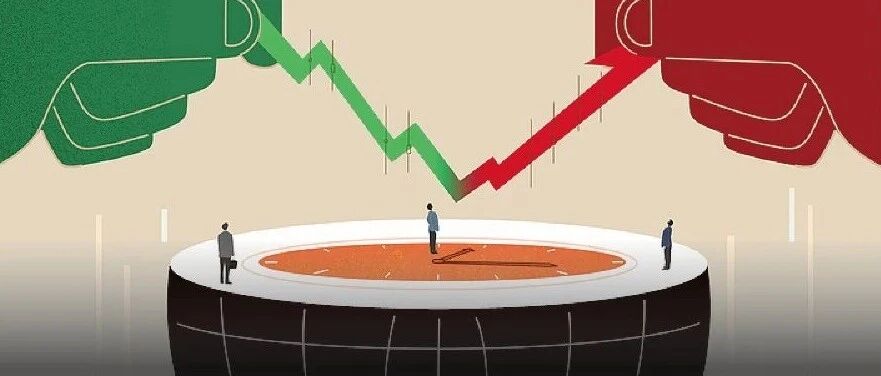
美伊谈判是真是假,至少华尔街已从特朗普引发的五分钟狂飙获得明确信号
华尔街见闻· 2026-03-24 00:11
Core Viewpoint - The article discusses the significant market reactions following Trump's statements regarding the de-escalation of tensions with Iran, highlighting the volatility in oil prices, U.S. Treasury yields, and stock markets, while also addressing investor skepticism about the sustainability of these changes [1][3][4]. Market Reactions - Oil prices, specifically Brent crude, experienced a sharp decline of 14%, dropping below $100 per barrel, following Trump's announcement to halt military actions against Iran [2][4]. - The S&P 500 index surged by 2.2% at one point, marking its largest increase since May, while the two-year U.S. Treasury yield fell by 22 basis points to 3.79% [4]. - Despite initial gains, the S&P 500's increase narrowed to approximately 1.2% by the end of the trading day, indicating a retreat in market confidence [4]. Investor Sentiment - Analysts suggest that Trump's statements were aimed at calming anxious investors and preventing a new wave of selling at the start of the week [3][4]. - There is a prevailing skepticism among investors regarding Trump's ability to effectively end the conflict, with concerns that his remarks may only serve as a temporary measure to stabilize the market [4][6]. Economic Implications - The ongoing conflict with Iran has led to rising energy prices, contributing to inflationary pressures and prompting traders to bet on further interest rate hikes by global central banks, which raises the risk of stagflation [7]. - The market has seen a significant loss, with over $2.5 trillion in value evaporating from the global bond market, potentially marking the largest monthly decline in over three years [7]. Political Dynamics - Trump's fluctuating stance on military actions and negotiations has raised doubts about his credibility in the financial markets, complicating investor positioning [9]. - The article notes that Trump's approach to market communication adds layers of uncertainty, making it difficult for investors to gauge the true state of the situation [9].

通胀警报拉响,加息潮要来了?
第一财经· 2026-03-21 01:44
Central Banks' Response - Central banks globally are on high alert due to escalating tensions in the Middle East, which have led to soaring oil prices and potential inflationary pressures [3][5] - The Federal Reserve decided to maintain interest rates in the range of 3.50% to 3.75%, with inflation expectations revised upwards, indicating concerns over short-term energy price impacts [5][6] - The European Central Bank has signaled readiness to raise rates if high energy prices continue to drive inflation, with 2026 inflation expectations raised to 2.6% [6][7] - The Bank of England is also cautious, acknowledging that monetary policy cannot reverse supply shocks but must respond to persistent inflation risks [6][7] - The Bank of Japan is considering short-term rate hikes if oil price surges are deemed temporary and do not hinder inflation targets [7] Inflation and Economic Growth Concerns - The risk of stagflation is increasing, characterized by high inflation and weak economic growth, which could compress corporate profits and limit monetary policy options [8][9] - The U.S. Treasury market is showing concerning trading patterns, with a flattening yield curve indicating heightened worries about economic growth and inflation [9][10] - The ongoing conflict has escalated, impacting global energy systems and raising concerns about stagflation risks [10]