
卫生经济学

Search documents
阿联酋药品管理局展示“芯片器官”项目
Shang Wu Bu Wang Zhan· 2026-02-23 15:30
Core Viewpoint - The UAE's Emirates Drug Administration (EDE) signed two memorandums of understanding during the World Health Expo in Dubai, aimed at advancing health economics, regulatory innovation, and green laboratory construction [1] Group 1: Collaborations and Initiatives - EDE partnered with the International Society for Pharmacoeconomics and Outcomes Research (ISPOR) to promote the development of health economics [1] - EDE also collaborated with Roche Diagnostics Middle East to enhance regulatory innovation and green laboratory initiatives [1] Group 2: Technological Advancements - EDE showcased the "Organ-on-a-Chip" project, which utilizes micro-engineered chips to simulate human organ functions for precise drug efficacy and toxicity testing [1] - This technology aims to reduce reliance on animal testing and accelerate the research and development process [1] Group 3: Strategic Goals - The initiatives are designed to improve evidence-based decision-making capabilities and enhance national drug safety levels [1] - These efforts reinforce the UAE's position as a regional hub for medical regulation and innovation [1]
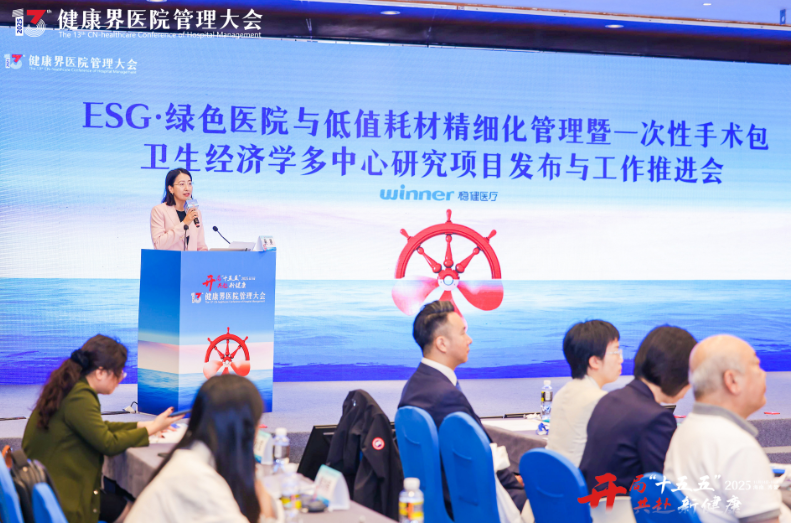
ESG引领绿色医疗,“一次性手术包卫生经济学多中心研究项目”正式发布
Zhong Guo Zhi Liang Xin Wen Wang· 2025-11-21 06:14
Core Insights - The ESG concept is reshaping the healthcare system, with a focus on sustainable development and the construction of green hospitals, particularly in the context of operating rooms balancing low-carbon transformation, medical safety, and operational efficiency [1][3] - The "Economic Research Project on Disposable Surgical Packs" was launched, marking the first systematic study in China focusing on low-value consumables from a full lifecycle perspective, aimed at providing scientific evidence for hospitals to achieve cost reduction and green development [3][5] Group 1: ESG and Green Hospitals - The ESG concept has become a core engine for global healthcare transformation, with China's green hospital construction moving from policy guidance to practical implementation [3] - Operating rooms are identified as key areas for resource consumption, where hidden costs related to labor, energy consumption, and waste management are significant [3][4] Group 2: Research Project on Disposable Surgical Packs - The project is a collaboration between Hainan Boao Medical Innovation Research Institute, Health界, and Steady Medical, focusing on the full lifecycle of low-value consumables [4][5] - The project aims to analyze the economic and social value of disposable surgical packs, which have a usage rate of 80%-90% in Europe and the US, compared to only 30% in China [5][6] Group 3: Methodology and Implementation - The research will utilize minimal cost analysis and decision tree models, targeting tertiary public hospitals, and will be conducted in five phases: plan refinement, pre-experiment, data collection, model analysis, and results publication [7] - The forum highlighted the collaboration among different stakeholders, transforming the concepts of "green hospitals" and "health economics research" into actionable steps for sustainable healthcare development [7]


生育津贴直接到账的背后(新视野)
Ren Min Ri Bao· 2025-10-28 01:13
Core Viewpoint - A nationwide reform in the payment process of maternity allowances is being rapidly implemented, transitioning from employer-based payments to direct payments to individuals, enhancing efficiency and accessibility in maternal health support [1][2]. Group 1: Policy Implementation - As of November 1, 25 provinces, including major regions like Jiangsu and Liaoning, will implement direct payments of maternity allowances to individuals, covering nearly 90% of the total areas [1]. - This shift represents a significant change in the distribution of maternity benefits, aiming to streamline the process and reduce administrative inefficiencies associated with employer-mediated payments [2]. Group 2: Economic Implications - The direct payment model optimizes government transfer payment pathways, minimizing resource loss and distortion in health resource allocation, thus ensuring that funds are effectively utilized for maternal health [2]. - By reducing the marginal cost of health investments during the critical maternity period, the new system empowers mothers to make timely health-related decisions without bureaucratic delays [3]. Group 3: Social Impact - The reform enhances the autonomy and economic capacity of families, particularly pregnant women, in making healthcare decisions, fostering a supportive environment for childbirth and maternal care [4]. - The visibility of direct support for childbirth is expected to cultivate a societal atmosphere that values and encourages childbirth, reinforcing the importance of maternal contributions [4]. Group 4: Broader Context - The direct payment of maternity allowances signifies a shift in management philosophy from "how to manage well" to "how to serve well," reflecting a more compassionate and efficient approach to social support [5].