历史文化保护与传承

Search documents
城市在“长大” 记忆未走远
Ren Min Ri Bao· 2026-01-26 07:06
Core Insights - Hefei, a city in Anhui, has undergone significant transformation, evolving from a small town to a metropolis with a population exceeding 10 million and an economic scale surpassing 1 trillion yuan [1][2] - The city has embraced a protective and meticulous approach to urban renewal, intertwining historical preservation with modern development [1][3] Urban Renewal and Cultural Heritage - The revitalization of Huaihe Road pedestrian street reflects the historical significance of the area, serving as a commercial hub and a living history corridor [2][3] - The renovation process initiated in 2019 focuses on systematic upgrades rather than simple demolition, enhancing both infrastructure and historical aesthetics [3][4] - The project includes the transformation of surrounding alleys, emphasizing unique historical narratives and cultural elements, making them attractive to both locals and tourists [4][6] Park and Public Space Enhancements - The renovation of Xiaoyaojin Park aims to preserve its historical significance while enhancing its recreational offerings, including a digital immersive experience of the Three Kingdoms culture [8][9] - The park's upgrades include the introduction of various cultural performances and improved facilities to cater to diverse visitor needs [8][9] Industrial Heritage and Economic Development - The transformation of old industrial sites, such as warehouses and factories, into cultural and commercial spaces exemplifies Hefei's approach to urban renewal, blending historical preservation with modern creativity [10][11] - Projects like the "Heifei Diesel Engine Factory" and "New Grain Warehouse" have successfully attracted millions of visitors and generated substantial revenue, showcasing the potential of cultural tourism [10][11] Community Engagement and Identity - The ongoing urban renewal efforts in Hefei emphasize the importance of community involvement in preserving cultural identity and collective memory [11]
巷纳万象 古今韵味“最杭州”
Xin Hua Wang· 2026-01-04 02:15
Core Viewpoint - The article discusses the urban renewal and cultural revitalization efforts in Hangzhou's historical districts, focusing on the integration of traditional culture with modern urban life, enhancing both the aesthetic and functional aspects of the neighborhoods [1][2][6]. Group 1: Urban Renewal Projects - The urban renewal project in the historical district of Hangzhou aims to enhance the overall protection and utilization of cultural heritage, with over 100 historical streets undergoing transformation [1]. - The renovation of the 23rd Lane, covering an area of 460,000 square meters, has a total investment of 184 million yuan, with the project set to start in May 2024 [2]. - Specific improvements include the renovation of 117,800 square meters of facades and 128,700 square meters of roofs, addressing issues like leaks and structural safety [3]. Group 2: Cultural Integration - The project emphasizes the importance of cultural heritage, with efforts to document and revive local history through collaboration with cultural experts and institutions [3][4]. - New cultural elements, such as the recreation of historical signage and the integration of local poetry into public spaces, are being introduced to enhance the cultural ambiance [5]. - The initiative aims to create a unique identity for each street, reflecting its historical significance and cultural stories [3]. Group 3: Economic Development - The revitalization efforts are also focused on boosting local commerce, with the introduction of diverse business models and the enhancement of existing commercial spaces [6][7]. - The Dajing Lane has seen a significant increase in property usage rates from 60% to 95%, generating annual revenues exceeding 50 million yuan, with 40% of this from cultural activities [7]. - The integration of traditional and modern business practices aims to create a vibrant economic ecosystem that attracts both residents and tourists [6][8]. Group 4: Community Engagement - The urban renewal strategy includes community involvement through the establishment of neighborhood councils to address local needs and enhance social cohesion [8]. - Initiatives to balance the interests of residents, businesses, and tourists are being implemented to ensure sustainable development [8]. - The overall visitor growth in the area has averaged 13.3% annually, indicating the success of these community-driven efforts [8]. Group 5: Future Prospects - The ongoing projects in the Qiantang Smart City aim to create a new industrial ecosystem, with a focus on digital energy and sustainable development [10][11]. - The expected growth in the digital energy, digital fashion, and smart IoT industries is projected to reach 300 billion yuan by 2030, showcasing the long-term vision for urban and industrial development [10][11].
模式口是个好地方
Bei Jing Ri Bao Ke Hu Duan· 2025-05-06 19:47
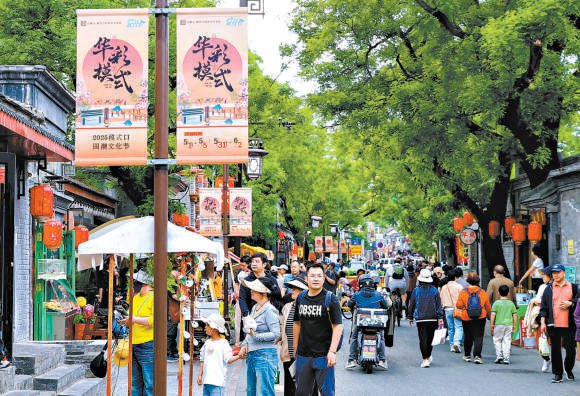
Core Insights - The "Moshi Kou" area has undergone significant transformation, evolving from a neglected space into a vibrant cultural and historical street, attracting both locals and tourists [6][7][11] - The area is recognized for its rich cultural heritage, including historical sites and local traditions, which have been preserved and integrated into the modern development [5][10][12] Group 1: Historical Significance - "Moshi Kou" has a deep historical background, dating back to the Western Zhou period, and was known for its production of grinding stones during the Ming and Qing dynasties [3][4] - The area was historically a key route for trade, contributing to its cultural richness and significance [3][6] Group 2: Urban Renewal - The urban renewal project initiated in 2016 has led to the improvement of infrastructure, environmental conditions, and the restoration of historical features, making it a popular destination [6][7] - The street now features a mix of traditional and modern establishments, including cafes, restaurants, and cultural exhibitions, enhancing its appeal [8][9] Group 3: Cultural Integration - The integration of various cultural elements, such as the Yanjing Eight Wonders Museum and the preservation of ancient murals, showcases the area's commitment to maintaining its cultural identity [10][12] - The presence of local businesses that align with the cultural heritage, such as tea houses and restaurants, reflects a blend of tradition and modernity [8][9] Group 4: Community Engagement - The revitalization of "Moshi Kou" has not only benefited tourists but also the local residents, creating a harmonious living environment where both groups can interact [11][12] - Local markets and community activities continue to thrive, ensuring that the area remains a vibrant part of the community [11]